This website works best with a newer web browser such as Chrome, Firefox, Safari or Microsoft Edge. Internet Explorer is not supported by this website.

Flash flooding in southern Wisconsin

1-minute Mesoscale Domain Sector GOES-16 (GOES-East) “Red” Visible (0.64 µm) images (above) showed multiple clusters of convection which developed across far southern Wisconsin during the late afternoon and early evening hours on 20 August 2018, producing very heavy rainfall and flash flooding (with at least one fatality) that was focused in western Dane... Read More

GOES-16 “Red” Visible (0.64 µm) images, with hourly plots of surface reports [click to play MP4 animation]

1-minute Mesoscale Domain Sector GOES-16 (GOES-East) “Red” Visible (0.64 µm) images (above) showed multiple clusters of convection which developed across far southern Wisconsin during the late afternoon and early evening hours on 20 August 2018, producing very heavy rainfall and flash flooding (with at least one fatality) that was focused in western Dane County (CoCoRaHS | AHPS). As much as 14.33 inches of rain was reported in Cross Plains (Local Storm Reports). which set a new record for 24-hour precipitation in the state of Wisconsin (the old record was 11.72 inches at Mellen in northern Wisconsin on 24 June 1946). Animations of radar base reflectivity and storm total precipitation (courtesy of Pete Pokrandt, UW-AOS) showed that the combination of slow overall motion — and a pivoting of precipitation bands, due to weak flow aloft within a deformation zone (300 hPa analysis) —  along with cell mergers all played a role in producing the heavy rainfall. There was also an EF-0 tornado at Delavan (NWS Milwaukee summary).

The corresponding 1-minute GOES-16 “Clean” Infrared Window (10.3 µm) imagery (below) showed that cloud-top brightness temperatures were generally in the -50º to -60ºC range with these initial areas of convection.

GOES-16 Infrared images [click to play animation]

GOES-16 “Clean” Infrared Window (10.3 µm) images, with hourly plots of surface reports [click to play animation]

A longer Infrared animation (below) with a different color enhancement (adapted for winter convection) better emphasized the colder cloud tops as convective development persisted into the subsequent overnight hours. Note the absence surface observations from Middleton KC29 after 03 UTC or 10 pm CDT — this was due to an extended power outage to that area and other parts of western Dane County.

GOES-16

GOES-16 “Clean” Infrared Window (10.3 µm) images, with hourly plots of surface reports [click to play MP4 animation]

GOES-16 Mid-level Water Vapor (6.9 µm) images (below) revealed the large circulation associated with an occluded low (surface analyses) over the lower Missouri River valley.

GOES-16 Mid-level Water Vapor (6.9 µm) images [click to play MP4 animation]

GOES-16 Mid-level Water Vapor (6.9 µm) images [click to play MP4 animation]

The GOES-16 Total Precipitable Water derived product (below) showed that values of 1.3 to 1.5 inches were being advected northward toward the area.

Composite of GOES-16 Water Vapor (6.9 µm) imagery and Total Precipitable Water product [click to play MP4 animation]

Composite of GOES-16 Water Vapor (6.9 µm) imagery and Total Precipitable Water derived product [click to play MP4 animation]

With widespread cloudiness prevailing across much of the Upper Midwest, the CIMSS All-Sky Total Precipitable Water (TPW) product (below) was helpful to better track the transport of moisture into the region — TPW values of 40-43 mm (1.6-1.7 inches) were seen feeding into southern Wisconsin within a TROWAL airstream around the northern edge of the occluded low pressure system (WPC discussion). The All-Sky products blend GOES ABI clear-sky retrievals with GFS background fields in cloudy regions; these products have been evaluated by the NWS Hazardous Weather Testbed (see here).

GOES-16 AllSky Total Precipitable Water product [click to play animation | MP4]

GOES-16 All-Sky Total Precipitable Water product [click to play animation | MP4]

The Aqua MODIS TPW product at 1943 UTC (below) showed values of 40-45 mm (1.6-1.8 inch) on either side of the frontal boundary in northern Illinois.

Aqua MODIS Total Precipitable Water product [click to enlarge]

Aqua MODIS Total Precipitable Water product [click to enlarge]

One example of the hydrologic impact of this heavy rain was seen at the Pheasant Branch Creek USGS gauge (map), where nearly 11 inches of rainfall were recorded. A dramatic time-lapse video showed the rise of the normally-small creek as it inundated the adjacent multi-use path on 21 August.

Pheasant Branch Creek flows into the northwest corner of Lake Mendota, which crested at 852.3 feet on the morning of 22 August. This was the third highest lake elevation on record — and the highest level on record for so late in the calendar year. Portions of the University of Wisconsin – Madison campus adjacent to the lake experienced some impacts due to the high water, as shown on the map below. There were also several road closures in Madison due to high water.

Map of flood impacts for portions of the UW-Madison campus adjacent to the southwestern shoreline of Lake Mendota [click to enlarge]

Map of flood impacts for portions of the UW-Madison campus adjacent to the southwestern shoreline of Lake Mendota [click to enlarge]

Farther downstream on the Yahara River chain of lakes, Lake Waubesa reached its 100-year flood level on 22 August.


View only this post Read Less

Typhoon Soulik in the northwest Pacific Ocean

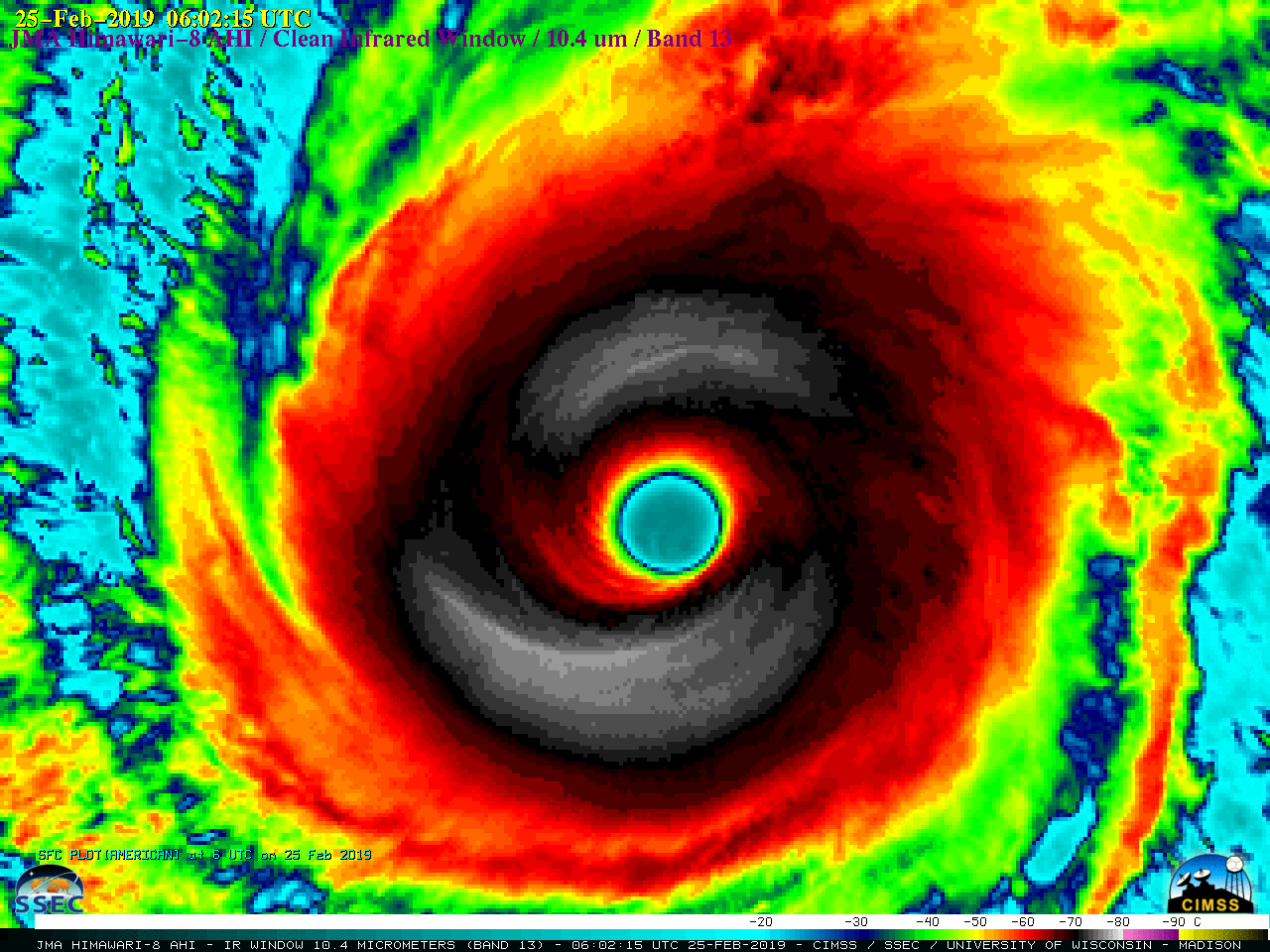
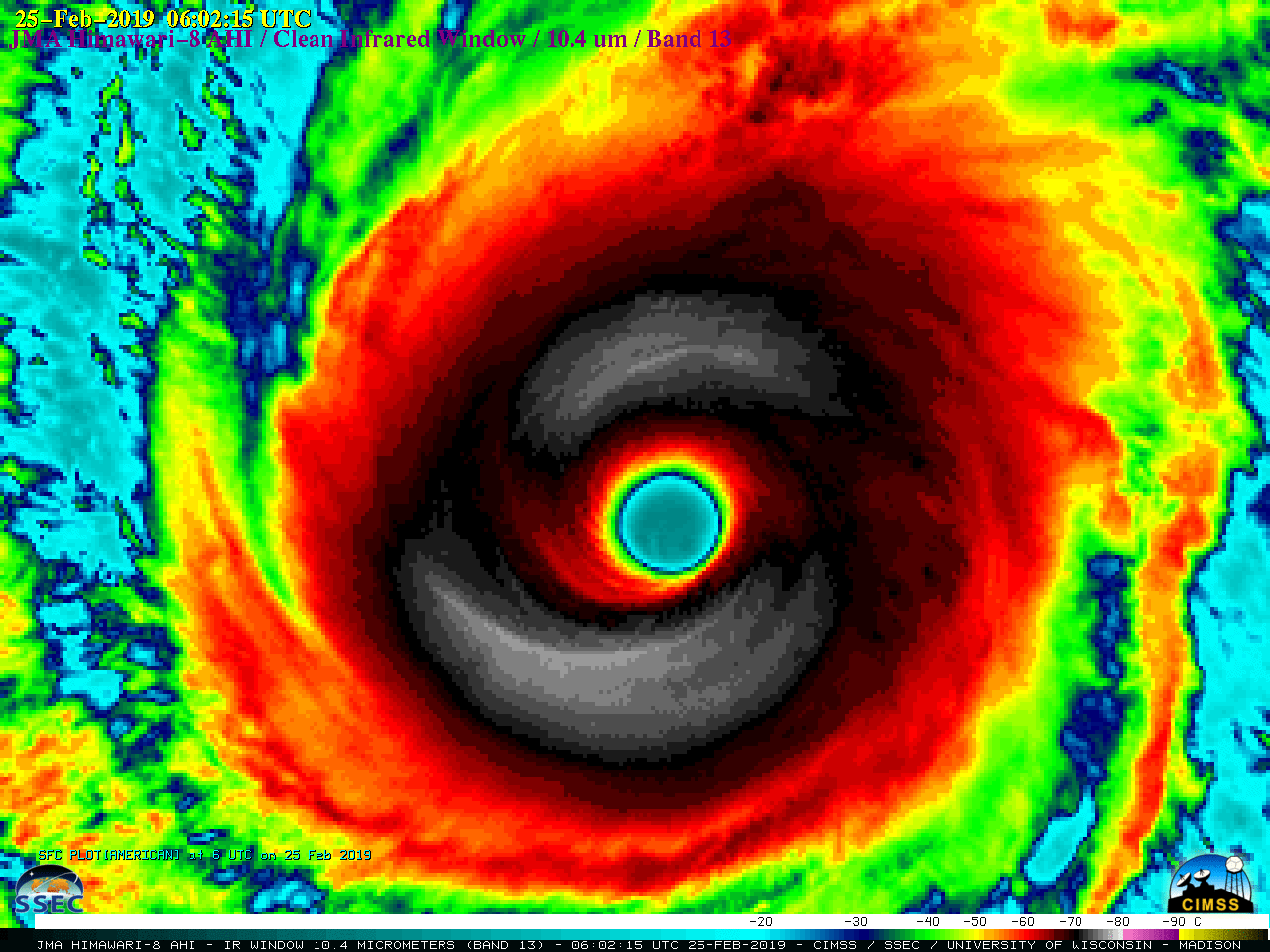
Typhoon Soulik, south of Japan and moving westward, has acquired a very large eye — almost 100 miles across! Himawari-8 imagery, above (courtesy JMA), shows the evolution and enlargement of the eye between 0900 and 1400 UTC on 20 August 2018.GCOM, Suomi NPP and NOAA-20 all passed over Soulik between... Read More

Himawari-8 AHI Band 13 Clean Window (10.4 µm) imagery, 0900-1400 UTC on 18 August 2018 (Click to animate)

Typhoon Soulik, south of Japan and moving westward, has acquired a very large eye — almost 100 miles across! Himawari-8 imagery, above (courtesy JMA), shows the evolution and enlargement of the eye between 0900 and 1400 UTC on 20 August 2018.

GCOM, Suomi NPP and NOAA-20 all passed over Soulik between 1600 and 1715 UTC on 18 August. The Infrared Toggle, below, from NOAA-20 (1608 UTC) and Suomi NPP (1658 UTC) also shows a large eye.

NOAA-20 (1608 UTC) and Suomi NPP (1658 UTC) 11.45 µm Infrared Imagery of Soulik on 18 August 2018 (Click to enlarge)

Day Night Band Imagery from Suomi NPP, below, also shows a large eye. There was little lunar illumination occurring at the time because the moon was below the horizon.

Suomi NPP Day Night Band Visible (0.70 µm) Imagery over Soulik, 1658 UTC on 18 August 2018 (Click to enlarge)

GCOM overflew Soulik at 1702 UTC, and the AMSR-2 instrument on board gave estimates of rain rate, both convective and a the surface. Those are toggled below.

GCOM AMSR-2 Microwave estimates of Precipitation over Soulik, 1702 UTC on 18 August 2018 (Click to enlarge)

(Suomi NPP, NOAA-20 and GCOM imagery courtesy William Straka, CIMSS)

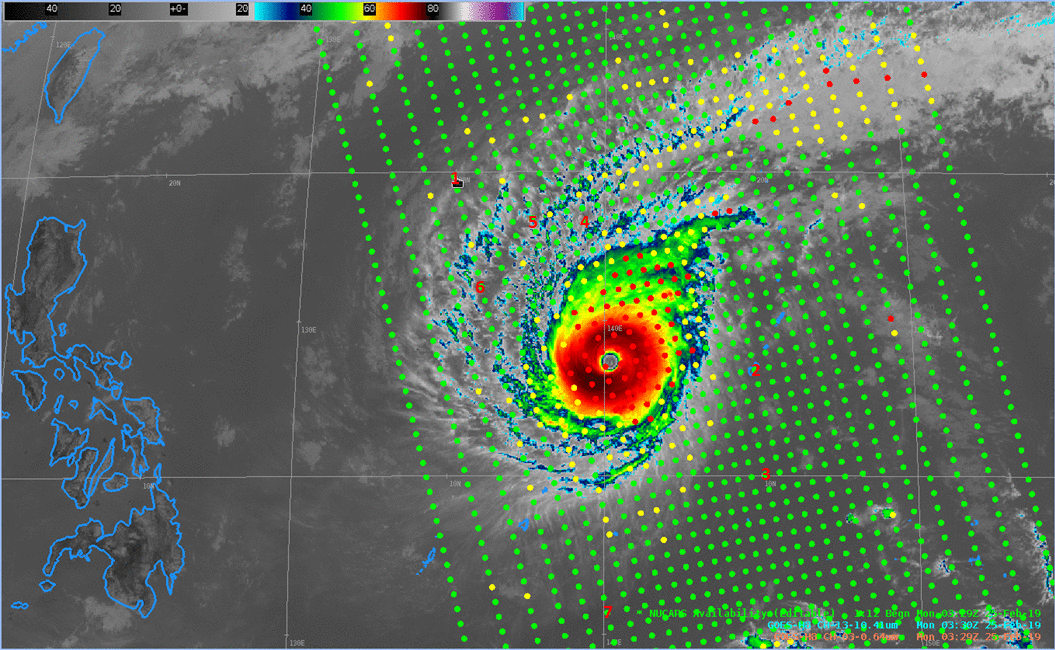
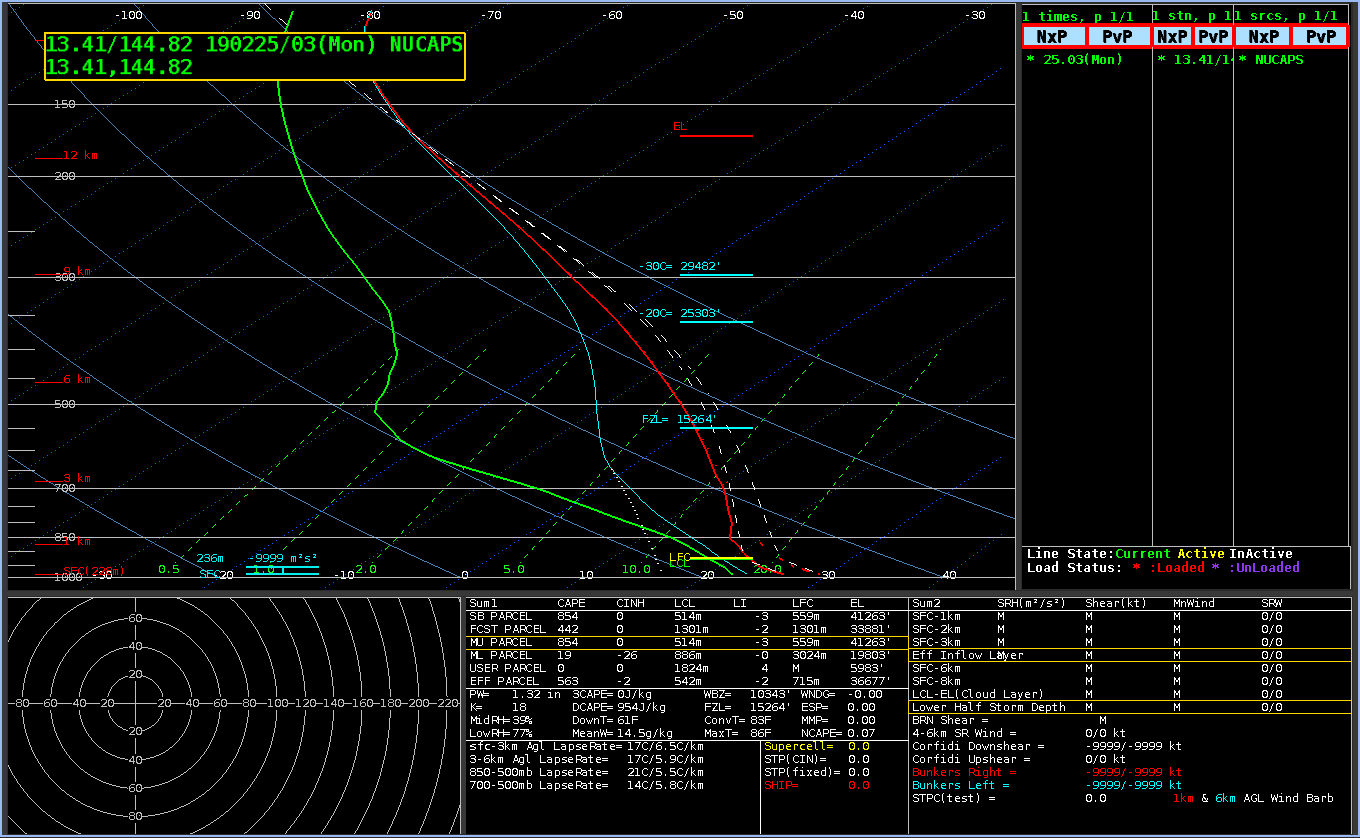
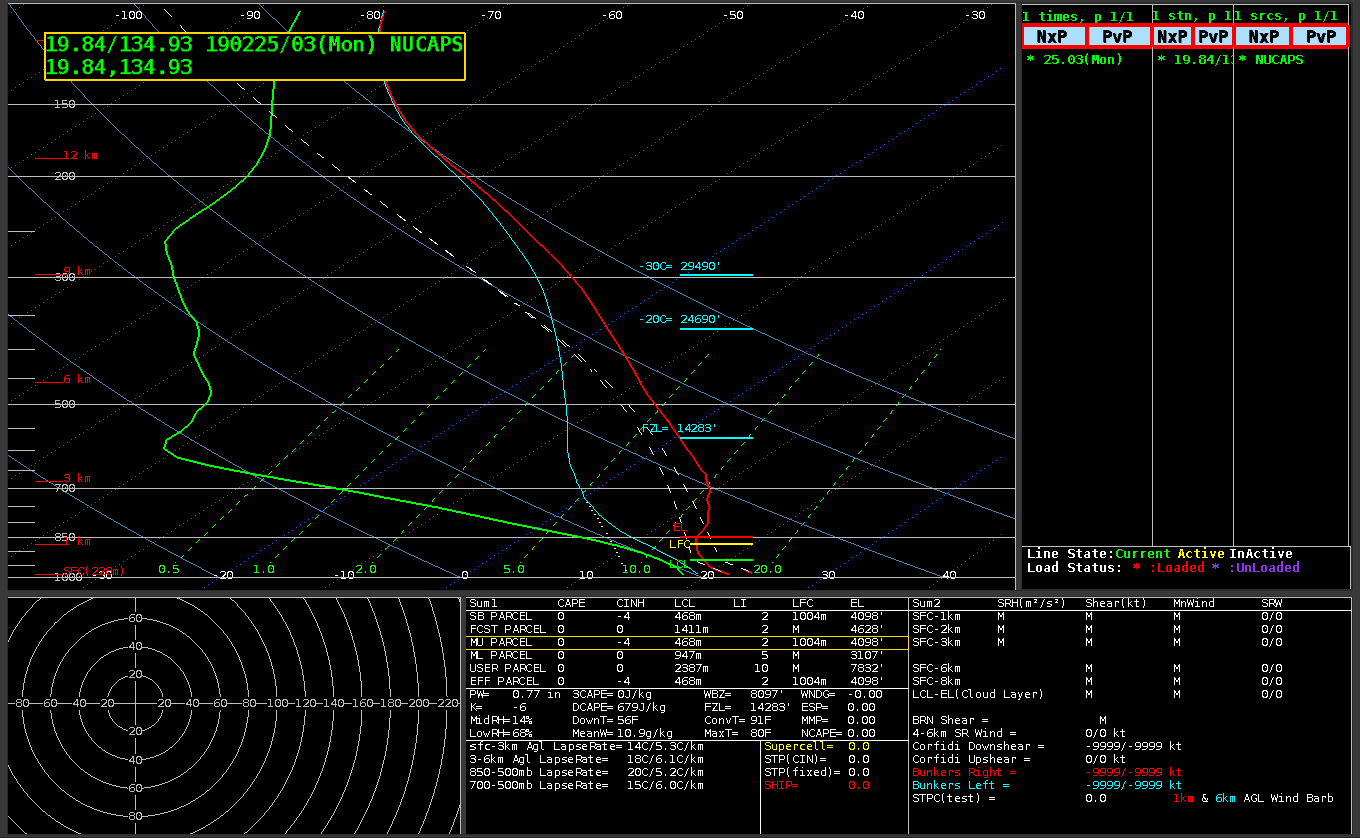
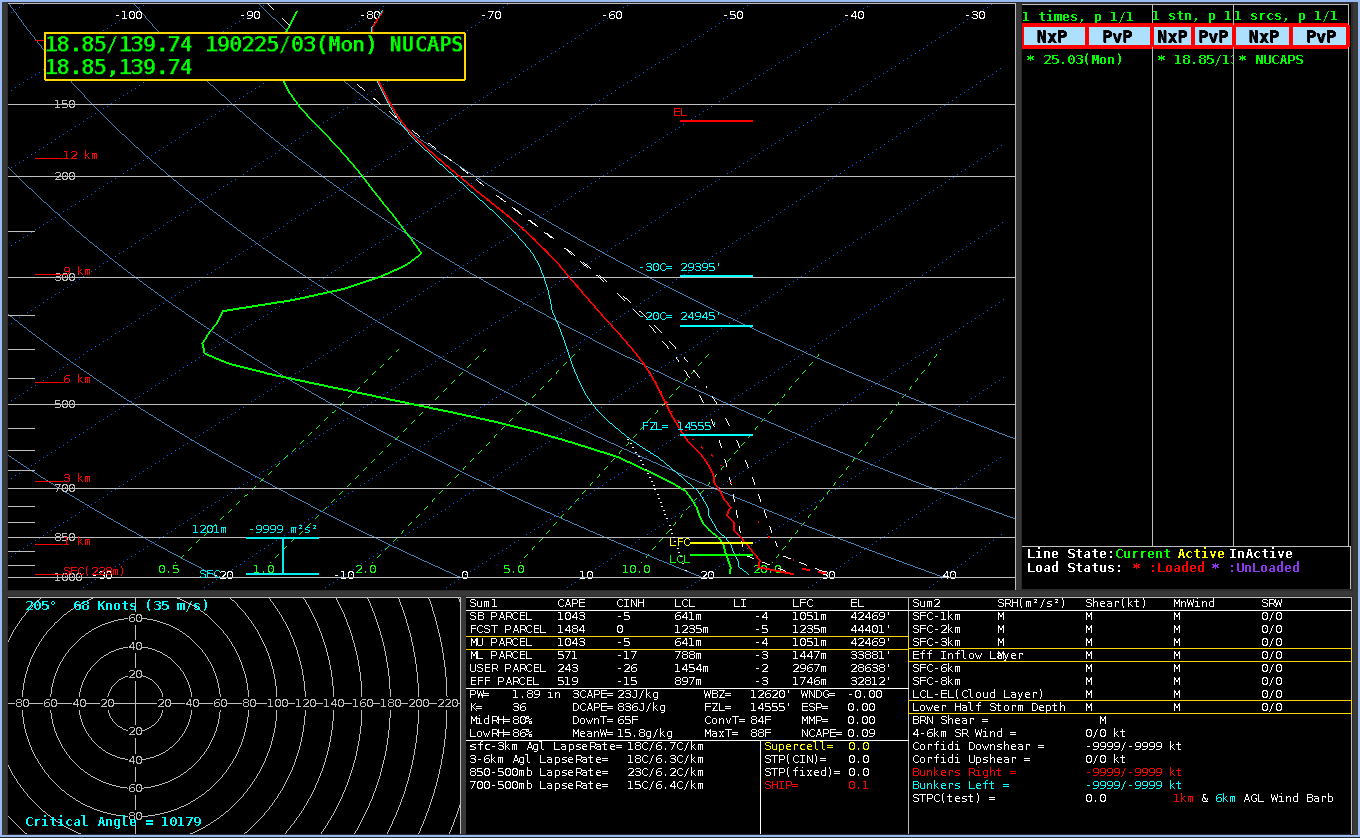
Soulik’s eye was wide enough that a NUCAPS soundings retrieval (Click here for more information on NUCAPS soundings) could be made from data collected during a Suomi-NPP overpass at 0350 UTC on 21 August 2018.  Note the green sounding location within Soulik’s eye — Green dots denote regions where the infrared retrieval was successful.  The sounding at that point is shown below. (NUCAPS imagery courtesy Landon Aydlett, WFO Guam).

Suomi NPP NUCAPS sounding locations at 0350 UTC on 21 August 2018 on top of AHI 10.4 µm Clean Window imagery (Click to enlarge)

Suomi NPP NUCAPS Sounding within the eye of Soulik at 0350 UTC on 21 August 2018 (Click to enlarge)

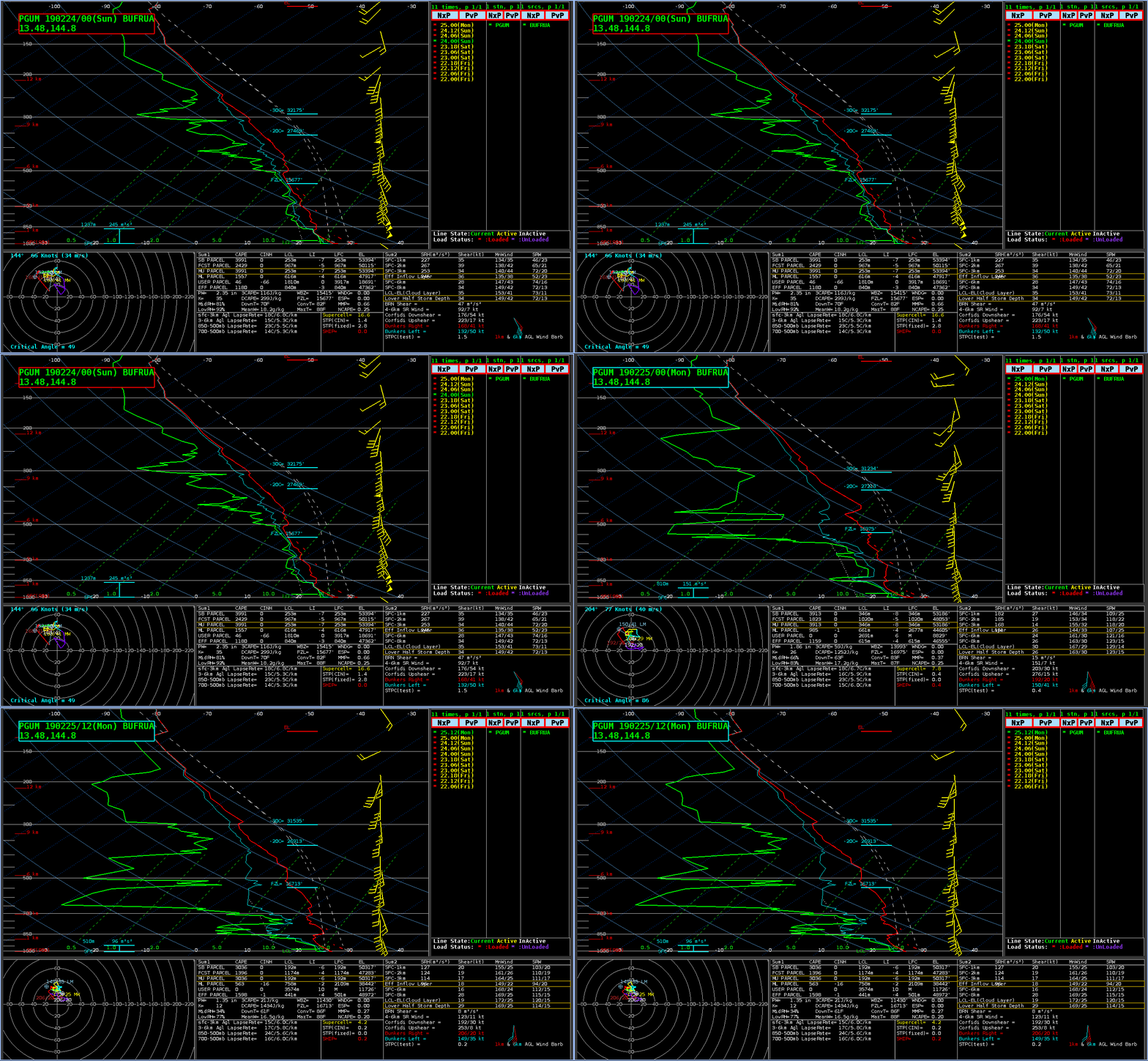
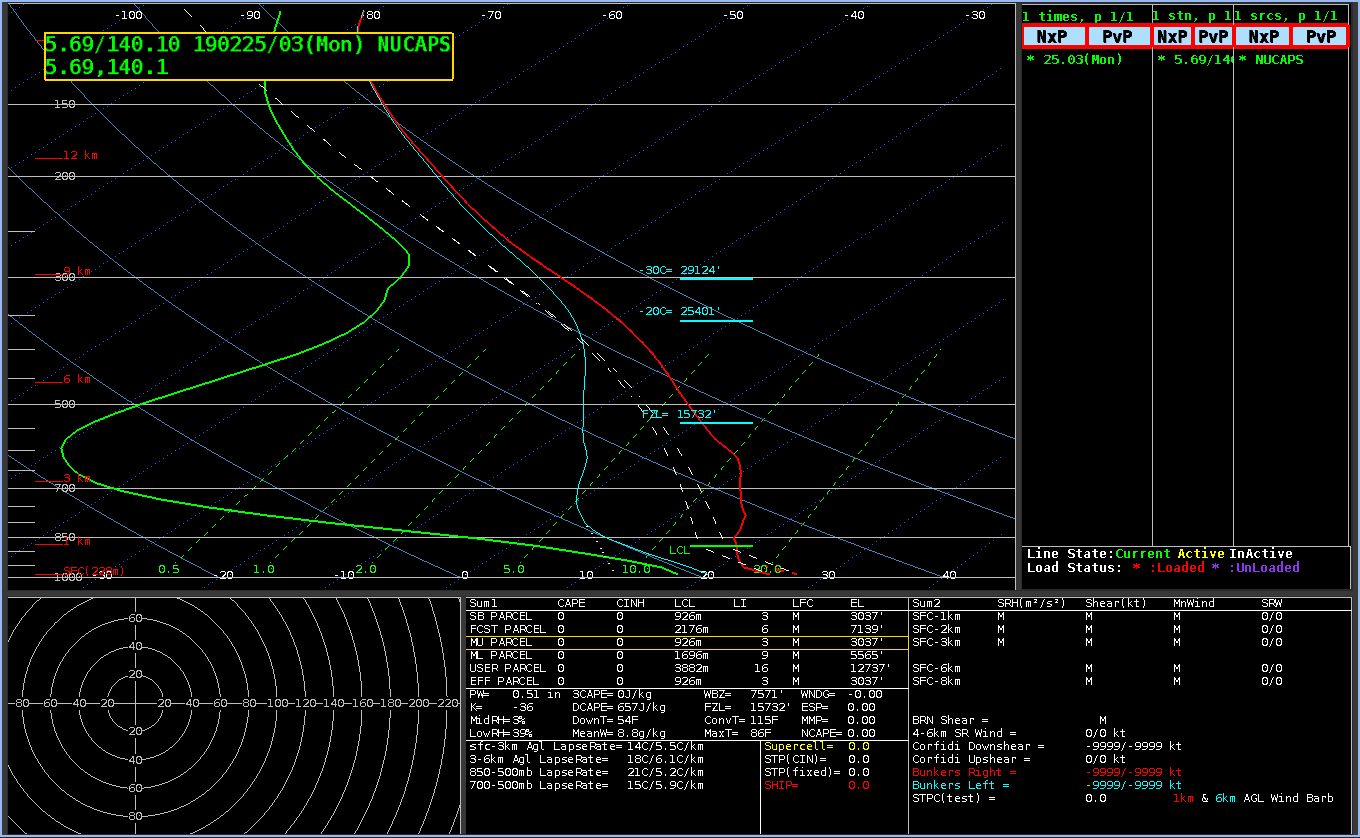
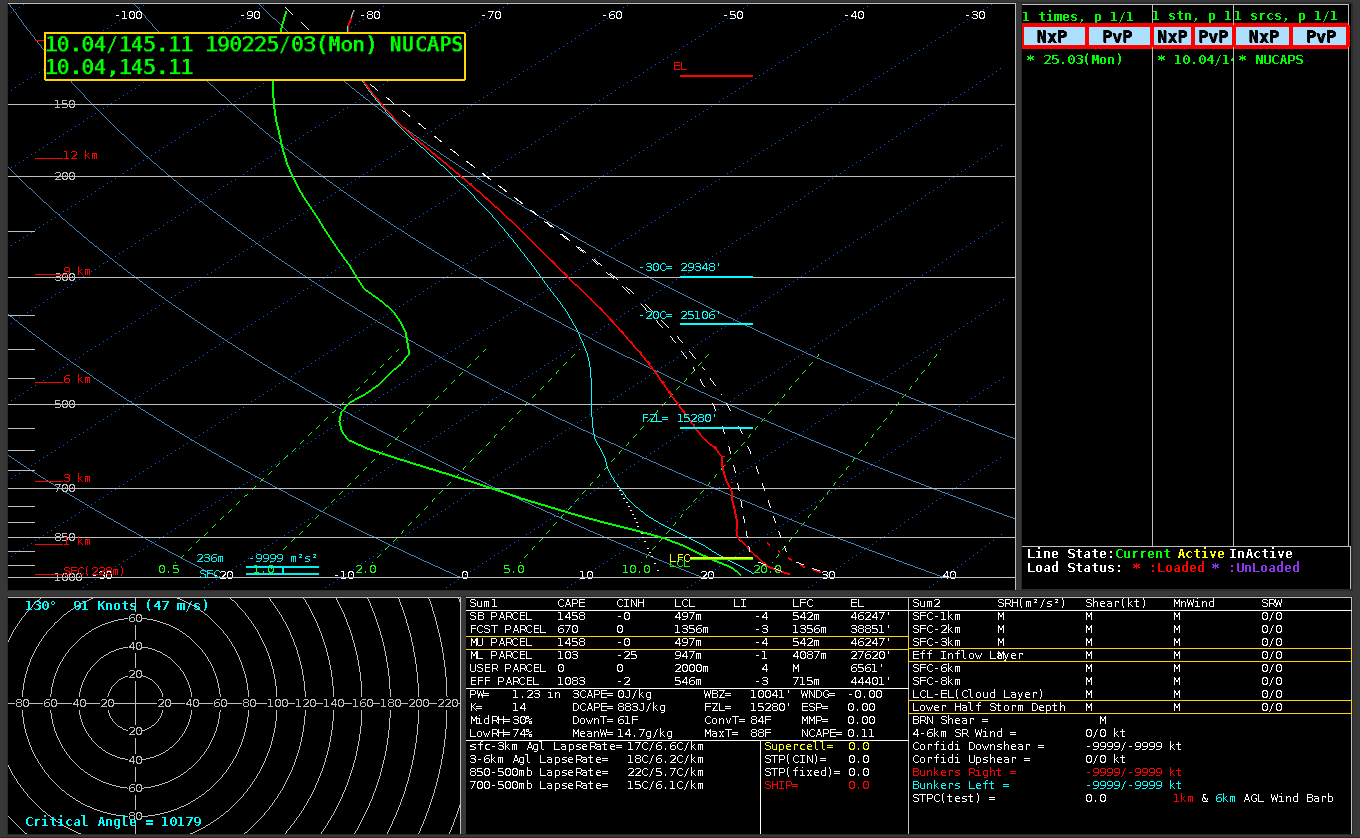
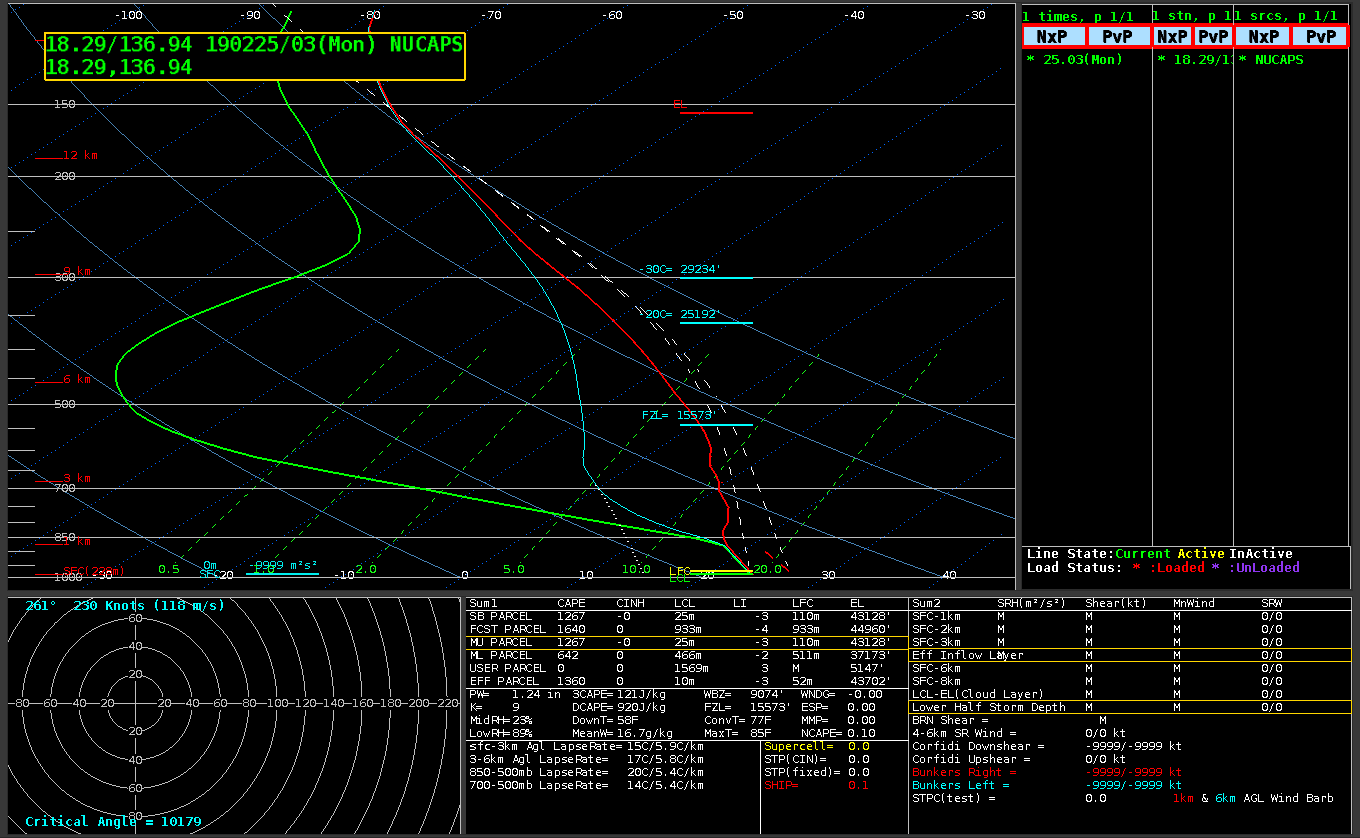
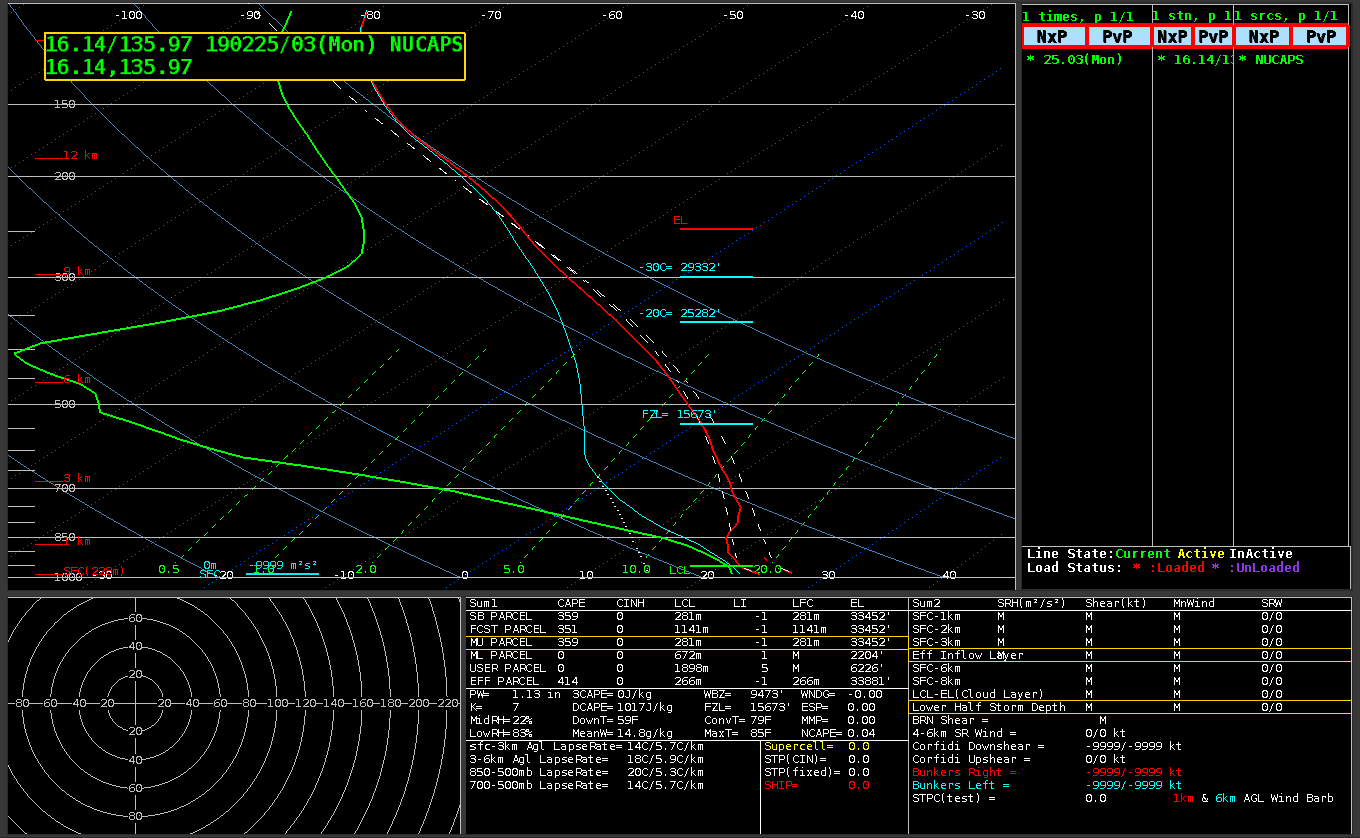
You can use NUCAPS Soundings to diagnose the difference between the environment in the storm eye, and in the surrounding environment. The animation below shows locations of 5 soundings, one in the Eye, and one north, east, south and west of the CDO.  The five selected soundings are shown at the bottom, with insets showing which sounding is which.  The sounding in the eye shows remarkable warmth, as expected:  at 555 hPa, for example, eye temperatures are around 8º C;  values at the 4 outside points range from 0.4º to 2.9º C.  Sounding parameters as viewed in AWIPS can be seen here.

Suomi NPP NUCAPS Sounding Points overlain on a Day Night Band Image, ~0350 UTC on 21 August 2018 (Click to enlarge). Sounding locations are indicated.

NUCAPS Soundings in and around Typhoon Soulik at the locations indicated, ~0350 UTC on 21 August 2018 (Click to enlarge)

Soulik’s path is projected to remain south of Japan and approach the Korean Peninsula by mid-week. For more information on Soulik, consult the CIMSS/SSEC Tropical Weather Website, or the Joint Typhoon Warning Center.

View only this post Read Less

Wildfires in British Columbia

A 2-panel comparison of GOES-16 (GOES-East) “Red” Visible (0.64 µm) and Shortwave Infrared (3.9 µm) images (above) showed the smoke plumes and thermal anomalies or “hot spots” (darker black to red pixels) associated with a flare-up of wildfires in western British Columbia on 17 August 2018.A sequence of Shortwave Infrared (3.7 µm) images from... Read More

GOES-16

GOES-16 “Red” Visible (0.64 µm, left) and Shortwave Infrared (3.9 µm, right) images [click to play MP4 animation]

A 2-panel comparison of GOES-16 (GOES-East) “Red” Visible (0.64 µm) and Shortwave Infrared (3.9 µm) images (above) showed the smoke plumes and thermal anomalies or “hot spots” (darker black to red pixels) associated with a flare-up of wildfires in western British Columbia on 17 August 2018.

A sequence of Shortwave Infrared (3.7 µm) images from Terra / Aqua MODIS and Suomi NPP / NOAA-20 VIIRS (below) revealed the diurnal changes in areal coverage and intensity of the thermal signature of the fires.

Shortwave Infrared (3.7 µm) images from Terra / Aqua MODIS and Suomi NPP / NOAA-20 VIIRS [click to enlarge]

Shortwave Infrared (3.7 µm) images from Terra / Aqua MODIS and Suomi NPP / NOAA-20 VIIRS [click to enlarge]

Toggles between Visible and Shortwave Infrared images from Terra MODIS (1912 UTC), NOAA-20 VIIRS (1950 UTC) ans Suomi NPP VIIRS (2129 UTC) are shown below (note: the NOAA-20 images are incorrectly labeled as Suomi NPP). It is interesting to note the impact that the smoke plume had on the air temperature at Quesnel (CYQZ) — because the smoke layer was optically dense enough (VIIRS True Color image) to significantly reduce incoming solar radiation, the temperature was as much as 14-18ºF (8-10ºC) cooler than Prince George (CYXS) to the north and Williams Lake (CYWL) to the south.

Terra MODIS Visible (0.65 µm) and Shortwave Infrared (3.7 µm) images [click to enlarge]

Terra MODIS Visible (0.65 µm) and Shortwave Infrared (3.7 µm) images at 1912 UTC [click to enlarge]

NOAA-20 VIIRS Visible (0.64 µm) and Shortwave Infrared (3.74 µm) images [click to enlarge]

NOAA-20 VIIRS Visible (0.64 µm) and Shortwave Infrared (3.74 µm) images at 1950 UTC [click to enlarge]

Suomi NPP VIIRS Visible (0.64 µm) and Shortwave Infrared (3.74 µm) images at 2129 UTC [click to enlarge]

Suomi NPP VIIRS Visible (0.64 µm) and Shortwave Infrared (3.74 µm) images at 2129 UTC [click to enlarge]

Farther to the east in Alberta, thick smoke caused very poor air quality in cities like Edmonton and Grande Prairie (photo 1 | photo 2). Daily composites of Suomi NPP VIIRS True Color RGB images from 11 August to 17 August (below) revealed the transport of smoke across British Columbia, Alberta and Saskatchewan.

Daily composites of Suomi NPP VIIRS True Color RGB images (with VIIRS fire detections in red), 11-17 August [click to play MP4 | Animated GIF]

Daily composites of Suomi NPP VIIRS True Color RGB images (with VIIRS fire detections in red), 11-17 August [click to play MP4 | Animated GIF]

A time series of surface reports from Edmonton, Alberta covering the period 14-17 August (below) showed that smoke restricted the surface visibility there to 1.5 miles on 15 August and 17 August.

Time series of surface reports from Edmonton, Alberta during the period 14-17 August [click to enlarge]

Time series of surface reports from Edmonton, Alberta during the period 14-17 August [click to enlarge]

===== 19 August Update =====

* GOES-17 images shown here are preliminary and non-operational *

GOES-17 Near-Infrared

GOES-17 Near-Infrared “Cloud Particle Size” (2.24 µm, left) and Shortwave Infrared (3.9 µm, right) images [click to play 81 Mbyte MP4 animation]

A 2-panel comparison of GOES-17 Near-Infrared “Cloud Particle Size” (2.24 µm) and Shortwave Infrared (3.9 µm) images during the 7-day period of 13-19 August (above) showed the diurnal changes in thermal signatures of the ongoing British Columbia wildfires. The nighttime thermal signatures seen on the 2.24 µm images (brighter white pixels) result from the fact that this spectral band is located close to the peak emitted radiance of very hot features such as active volcanoes or large fires (below).

Plots of Spectral Response Functions for ABI Bands 5, 6 and 7 [click to enlarge]

Plots of Spectral Response Functions for ABI Bands 5, 6 and 7 [click to enlarge]

View only this post Read Less

Hurricane Lane in the eastern Pacific Ocean

The active eastern Pacific Hurricane season continues, as Lane has formed. Suomi NPP and NOAA-20 overflew the system early on 17 August 2018. The toggle above, from NOAA-20’s VIIRS Instrument, shows both the Day Night Band 0.70 µm visible Image and the 11.45 µm infrared channels. Lack of lunar illumination means that only Earthglow is making clouds visible; a... Read More

NOAA-20 VIIRS Imagery at 1023 UTC on 17 August 2018. Day Night Band Visible (0.7 µm) and I05 Infrared (11.45 µm) imagery are shown (Click to enlarge)

The active eastern Pacific Hurricane season continues, as Lane has formed. Suomi NPP and NOAA-20 overflew the system early on 17 August 2018. The toggle above, from NOAA-20’s VIIRS Instrument, shows both the Day Night Band 0.70 µm visible Image and the 11.45 µm infrared channels. Lack of lunar illumination means that only Earthglow is making clouds visible; a distinct eye is not present. The step animation below between the NOAA-20 11.45 µm infrared and, 50 minutes later, Suomi NPP’s 11.45 µm Infrared, right at the limb of the scan, also show no distinct eye.

VIIRS I05 11.45 µm Infrared Imagery from NOAA-20 (1023 UTC) and Suomi NPP (1113 UTC) on 17 August 2018 (Click to enlarge)

In fact, however, an eye was likely present at this time. As noted in the National Hurricane Center’s 0900 UTC Discussion (Link), “Recent microwave images show a well-defined low-level eye, but this feature is not yet apparent in geostationary satellite images.”  AMSR-2 (Advanced Microwave Scanning Radiometer 2) estimates of Convective Precipitation and Surface Rainfall in the toggle below (data from 1003 UTC) show a distinct eye.  AMSR-2 is a microwave instrument that flies on JAXA’s GCOM satellite;  microwave views of tropical cyclones are able to penetrate the cirrus shield that is commonly present, revealing important information about the low-level structure of a developing system.

GCOM AMSR-2 estimates of convective precipitation and surface rainfall rates at 1003 UTC on 17 August 2018 (Click to enlarge)

Polar Orbit tracks are available here. For the latest information on Hurricane Lane, refer to the National Hurricane Center or to the CIMSS/SSEC Tropical Weather Website. Imagery from Polar Orbiters are available at this site that shows data from an antenna in Honolulu.

Thank you to William Straka, CIMSS, for the imagery.

View only this post Read Less