This website works best with a newer web browser such as Chrome, Firefox, Safari or Microsoft Edge. Internet Explorer is not supported by this website.

GOES-13: Improved Navigation Accuracy

A comparison of GOES-12 and GOES-13 visible channel images (Java animation) centered over northeastern Minnesota on 25 December 2006 shows the improvement in navigation... Read More

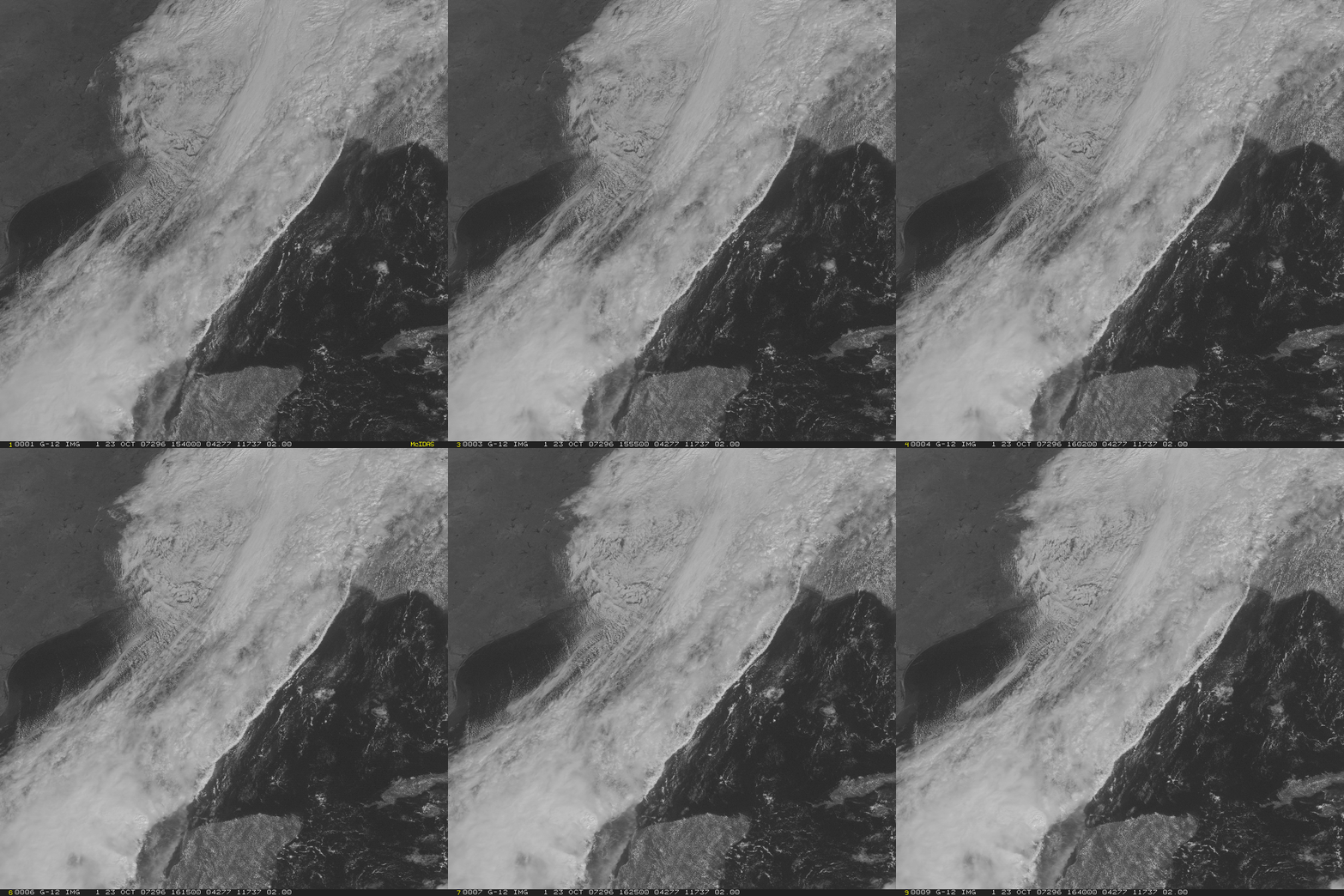
GOES-12 / GOES-13 visible channel images

A comparison of GOES-12 and GOES-13 visible channel images (Java animation) centered over northeastern Minnesota on 25 December 2006 shows the improvement in navigation accuracy with the new GOES-13 satellite. Note how the surface features (such as frozen/snow-covered interior lakes, and the Lake Superior shoreline) appear to have significantly less image-to-image movement on GOES-13 versus GOES-12 — this is a result of changes to the GOES-13 spacecraft bus, which now has an improved Image Navigation and Registration (INR) system that uses star trackers to provide precision image navigation and registration information. This improved navigation will allow for better accuracy of satellite products such as satellite derived winds (or “atmospheric motion vectors”).
.

Another item of interest which is apparent in these images is the fact that Duluth, Minnesota (KDLH) recorded it’s first Christmas Day with no snow on the ground since snowfall records began there in 1875. A MODIS true color image of Wisconsin confirms the lack of snow cover over the immediate Duluth vicinity and adjacent portions of northwestern Wisconsin — while some snow cover did exist to the north, west, and south of Duluth, even those areas generally had only 1-4 inches on the ground.

View only this post Read Less

Snow Cover in the Central US; Hudson Bay Almost Completely Frozen

MODIS true color imagery (above) and false color imagery (below) from 22 December 2006 reveals the widespread snow cover resulting from the major winter storm that moved across the central US on 20Read More

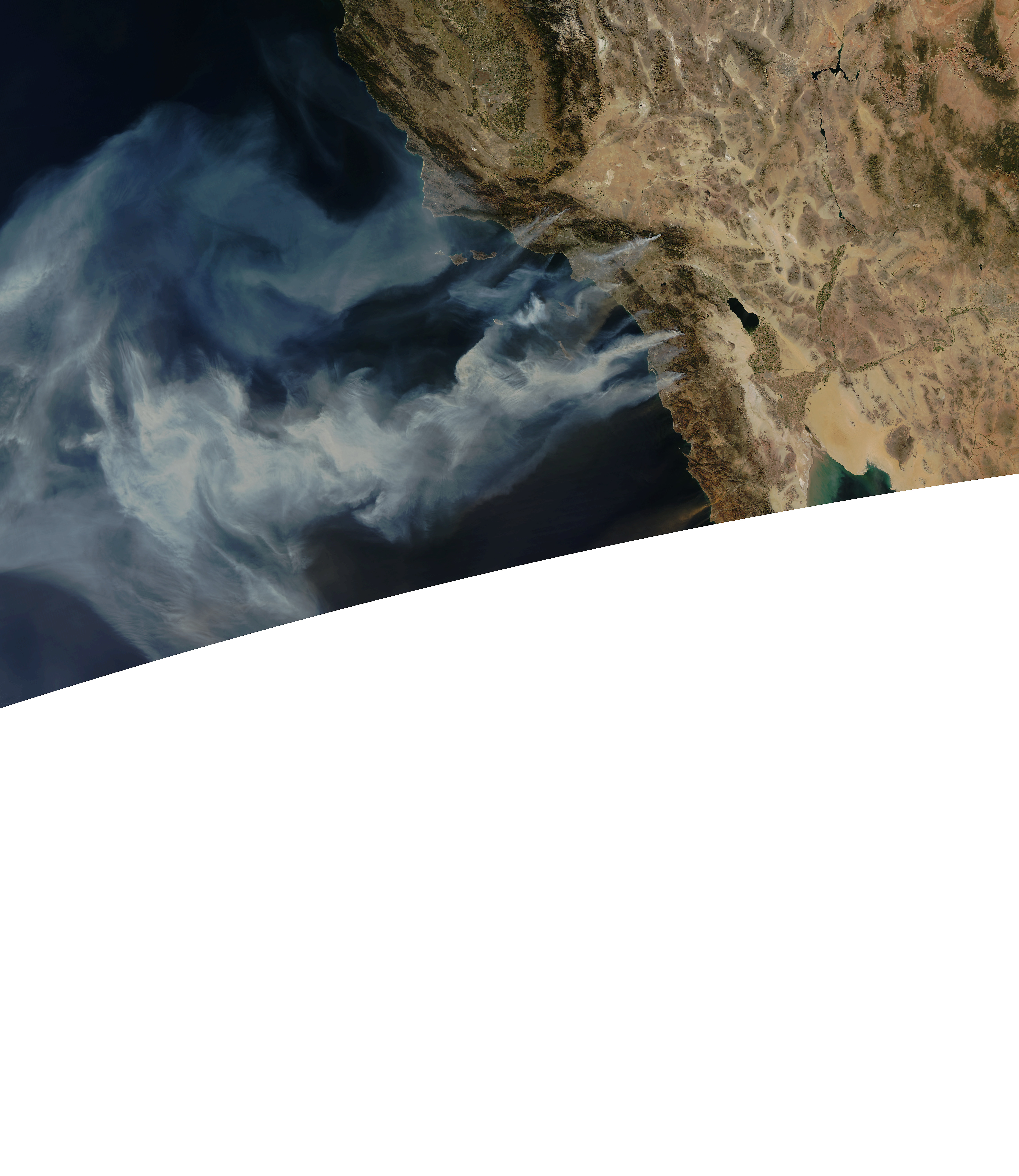
MODIS true color image

MODIS true color imagery (above) and false color imagery (below) from 22 December 2006 reveals the widespread snow cover resulting from the major winter storm that moved across the central US on 2021 December, creating blizzard conditions in Colorado and the adjacent High Plains states (high-resolution image centered over Denver). A Java image fader allows you to discriminate between the snow cover and the cloudiness that was present across the region. Also of interest on this day is the fact that Hudson Bay in Canada is nearly completely ice-covered (MODIS true color image | MODIS false color image | Java image fader). Freeze-up in Hudson Bay normally is completed by early to mid December (for example, see November-December 2001) — so, is this unusually late?
MODIS false color image

View only this post Read Less

GOES-10: Southern Hemisphere Coverage

GOES-10 (which is currently located at approximately 60 degrees West longitude) imager and sounder data are currently being ingested by the SSEC Data Center in support of the Earth Observation Partnership of the Americas (Read More

GOES-10 Sounder coverage (animated GIF)

GOES-10 (which is currently located at approximately 60 degrees West longitude) imager and sounder data are currently being ingested by the SSEC Data Center in support of the Earth Observation Partnership of the Americas (EOPA) project. The animated GIF of GOES-10 sounder coverage (above; Java animation) shows the 4 separate sectors that are scanned at 60 minute intervals. Examples of all 19 channels on the GOES-10 sounder are shown for sector 1, sector 2, sector 3 and sector 4. Of particular interest is the warm signature of the Andes Mountains in the sector 4 images, which is evident on the water vapor (channel 10) and CO2 absorption bands (channels 3,4,5) as well as the other IR channels.

.
An animated GIF of GOES-10 imager IR window channel images (below) shows the larger areal coverage and improved temporal resolution of the GOES-10 imager (Java animation), which has 1 visible and 4 IR channels. These GOES-10 imager and sounder images are shown in their native satellite projections (no remapping has been done).
GOES-10 imager IR window (animated GIF)

View only this post Read Less
Detecting Surface Features in Water Vapor Channel Imagery (Part 2)

Another example of detection of surface features on “water vapor channel” imagery was apparent on 18 December 2006. In this particular case, the “surface” was the high terrain of the Absaroka Range, Wind River Range, and Big Horn Mountains in Wyoming (all... Read More

GOES-11/GOES-12/GOES-13 water vapor images

Another example of detection of surface features on “water vapor channel” imagery was apparent on 18 December 2006. In this particular case, the “surface” was the high terrain of the Absaroka Range, Wind River Range, and Big Horn Mountains in Wyoming (all of which reach altitudes in excess of 13,000 feet / 4000 m), making it easier to sense radiation from the ground using the 6.5µm/6.7µm water vapor channel. Since this channel is essentially an InfraRed (IR) channel, the cold temperature signature of the snow-covered mountain features (morning temperatures were as cold as -30 F / -34 C at Old Faithful in Yellowstone Park, where 22 inches / 56 cm of snow were on the ground) was very obvious against the warmer background temperature of the surrounding bare ground at lower elevations. Very little water vapor was present within the atmospheric column, so the water vapor channel weighting function (calculated using the Riverton, Wyoming rawinsonde profile) for both GOES-11 and GOES-12 peaked at an altitude just below 500 hPa (very near the altitude of the aforementioned mountain features).

A Java animation of GOES-11, GOES-12 and GOES-13 water vapor imagery shows that the mountain features become more apparent as a drier pocket of air passed over the region. Due to the higher spatial resolution (4km) of the spectrally-wider 6.5µm water vapor channel on both GOES-12 and GOES-13, the mountain features are resolved with greater clarity compared to the 8km resolution 6.7µm channel on GOES-11. In addition, since the mid-tropospheric winds across that region were fairly light (and generally parallel to the orientation of the terrain), there were no “mountain wave” signatures to the lee of these mountain ranges.

View only this post Read Less