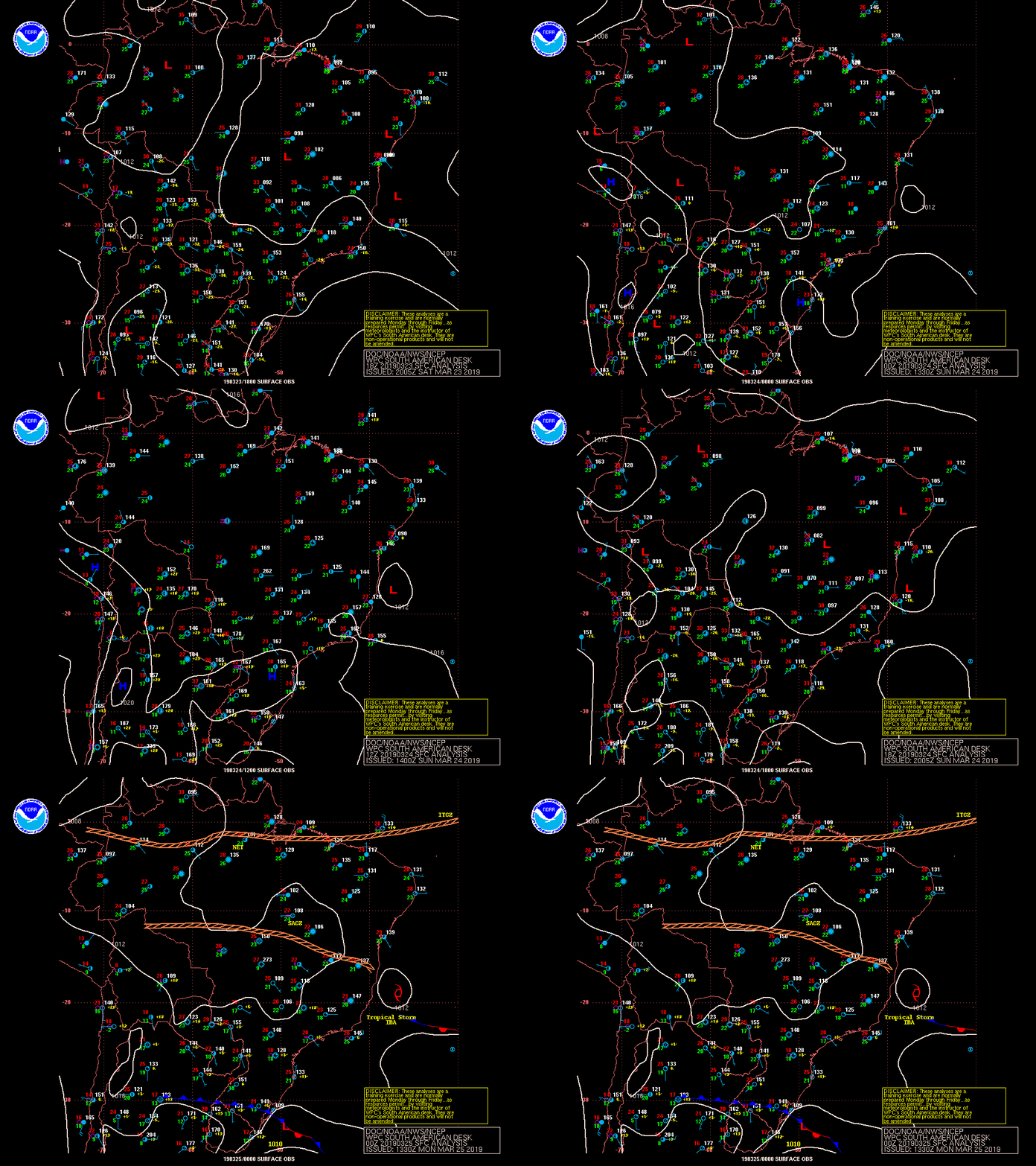
1-minute Mesoscale Domain Sector GOES-16 (GOES-East) “Red” Visible (0.64 µm) images (above) and “Clean” Infrared Window (10.3 µm) images (below) showed the formation of Tropical Storm Iba off the east coast of Brazil at 16 UTC on 24 March 2019 (surface analyses). Plots of GLM Groups revealed some intermittent lightning activity. Tropical cyclones in the South Atlantic... Read More
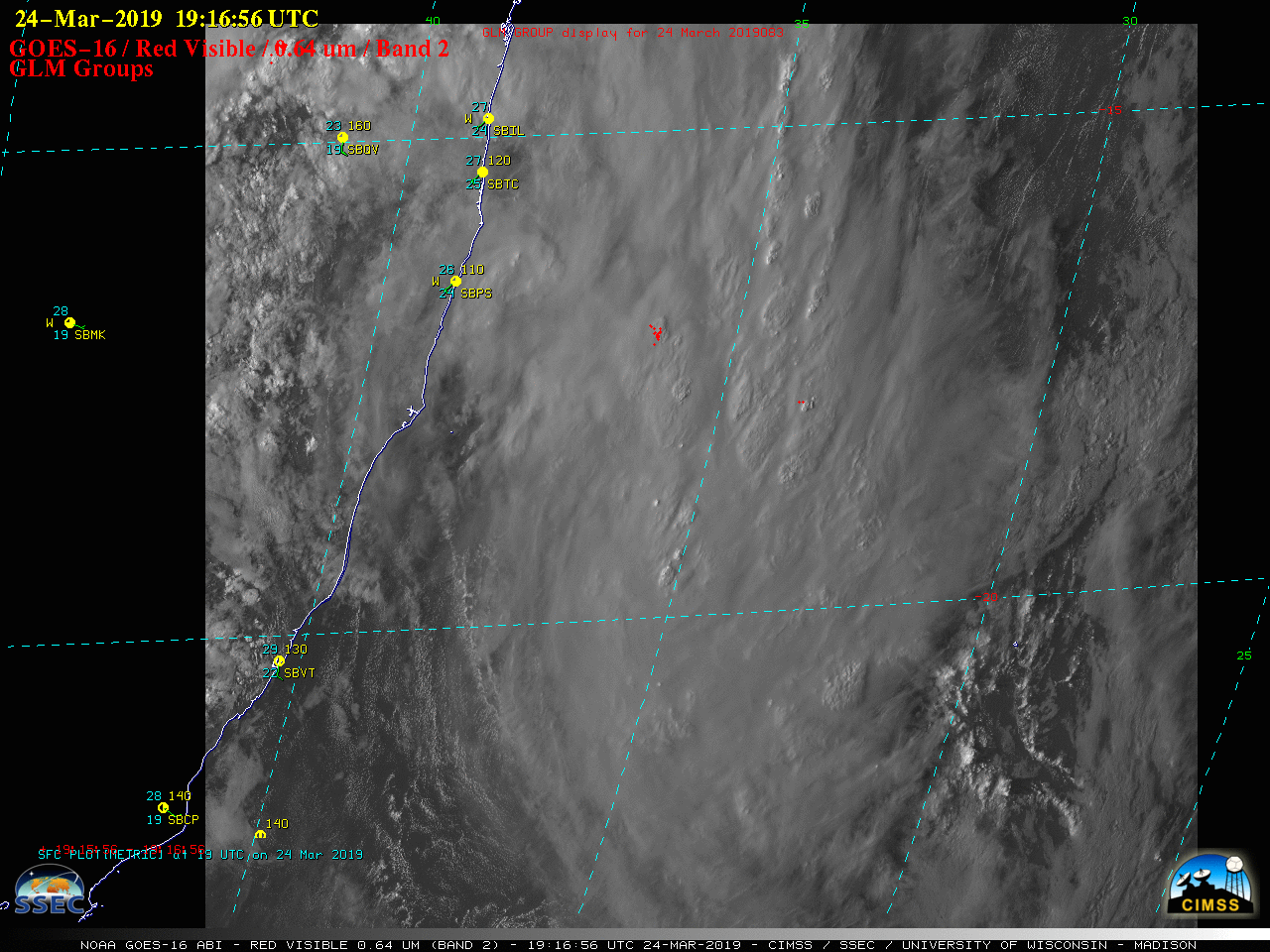
GOES-16 “Red” Visible (0.64 µm) images, with GLM Groups plotted in red [click to play animation | MP4]
1-minute
Mesoscale Domain Sector GOES-16
(GOES-East) “Red” Visible (
0.64 µm) images
(above) and “Clean” Infrared Window (
10.3 µm) images
(below) showed the formation of Tropical Storm Iba off the east coast of Brazil at
16 UTC on 24 March 2019 (
surface analyses). Plots of
GLM Groups revealed some intermittent lightning activity. Tropical cyclones in the South Atlantic basin are rare — the last was in 2010, and only one example (
Catarina in March 2004) is known to have reached hurricane intensity.
![GOES-16 "Clean" Infrared Window (10.3 µm) images [click to play animation | MP4]](https://cimss.ssec.wisc.edu/satellite-blog/wp-content/uploads/sites/5/2019/03/G16_IR_TS_IBA_24MAR2019_2019083_160056_GOES-16_0001PANEL.GIF)
GOES-16 “Clean” Infrared Window (10.3 µm) images [click to play animation | MP4]
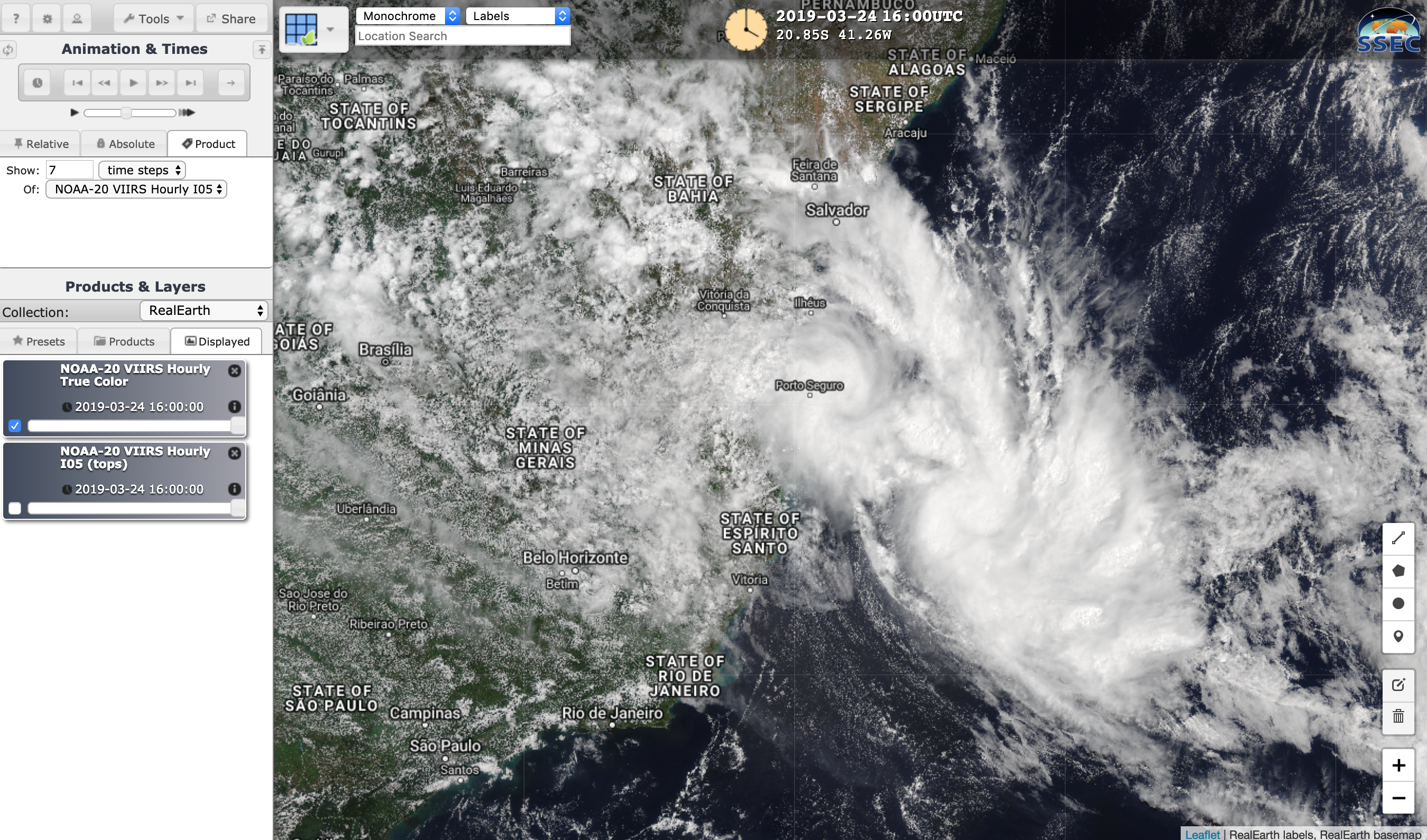
A toggle between NOAA-20 VIIRS True Color Red-Green-Blue (RGB) and Infrared Window (11.45 µm) from
RealEarth (below) showed Iba at 1610 UTC.
![NOAA-20 VIIRS True Color Red-Green-Blue (RGB) and Infrared Window (11.45 µm) images at 1610 UTC [click to enlarge]](https://cimss.ssec.wisc.edu/satellite-blog/wp-content/uploads/sites/5/2019/03/190324_16utc_noaa20_viirs_ttuecolor_infrared_TS_Iba_anim.gif)
NOAA-20 VIIRS True Color Red-Green-Blue (RGB) and Infrared Window (11.45 µm) images at 1610 UTC [click to enlarge]
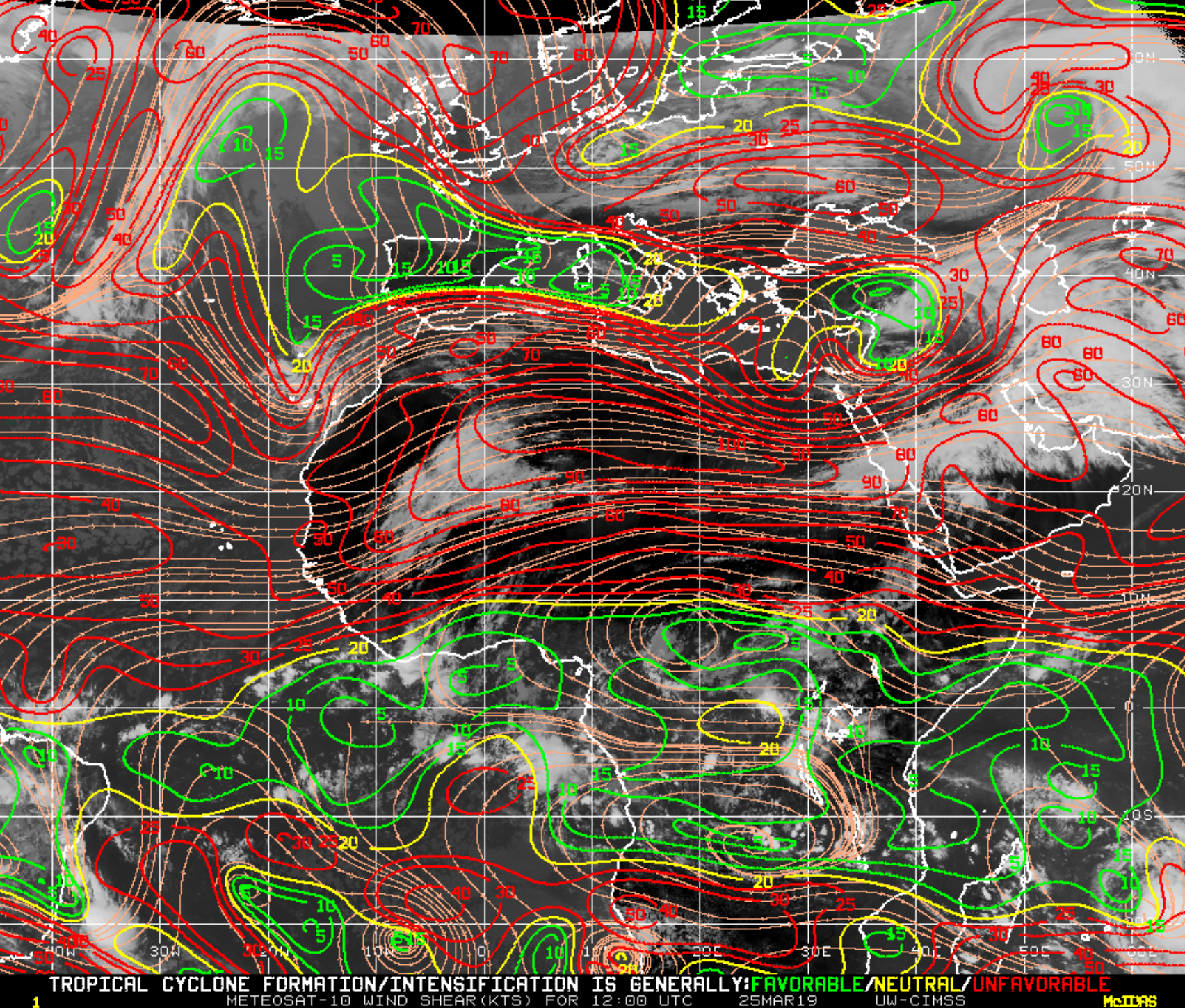
GOES-16 Infrared images with an overlay of
deep-layer wind shear valid at 18 UTC from the
CIMSS Tropical Cyclones site
(below) revealed a very tight gradient of shear over Iba. However, the shear gradient began to relax somewhat by
21 UTC.
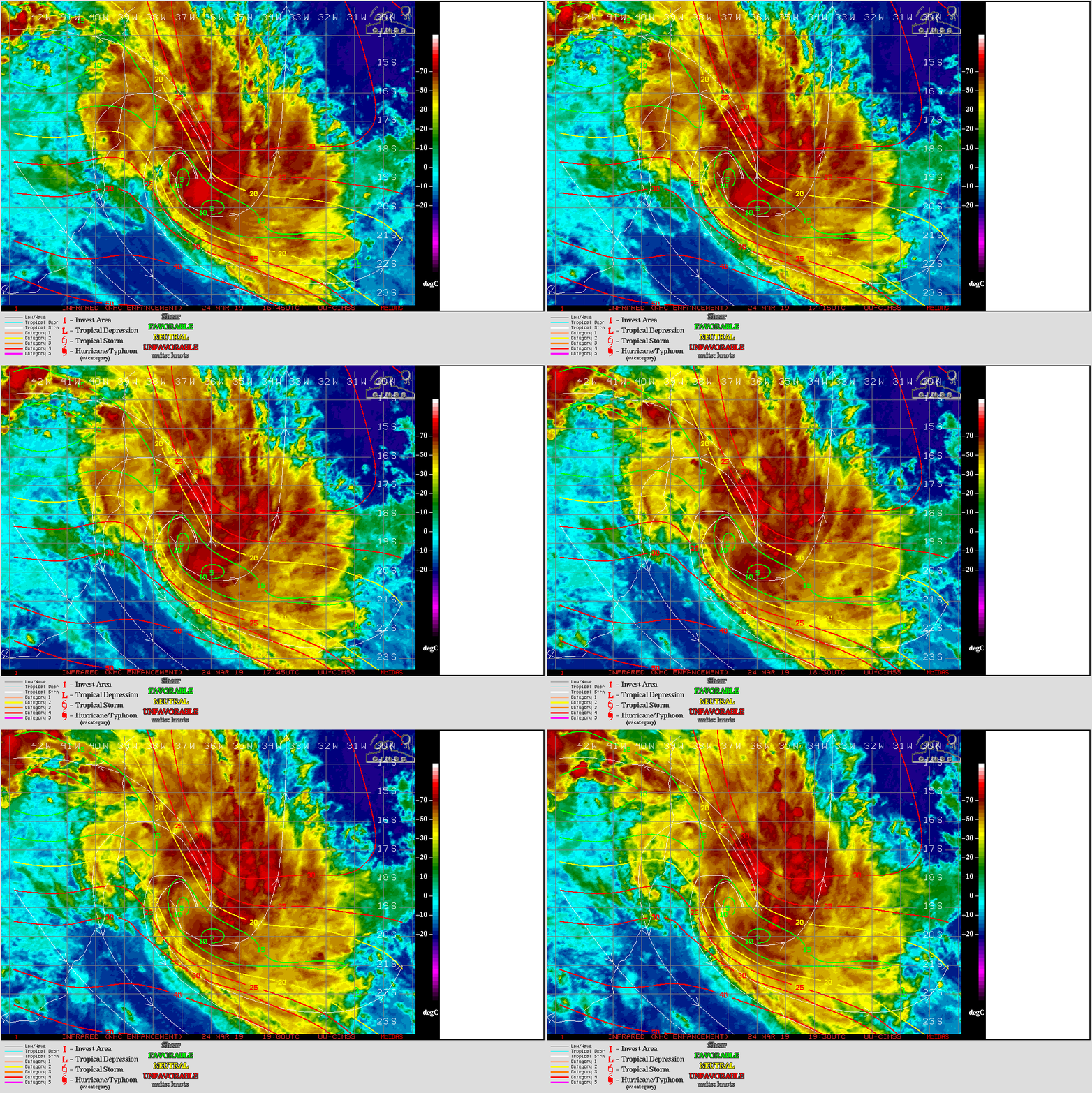
GOES-16 “Clean” Infrared Window (10.3 µm) images, with an overlay of 18 UTC deep-layer wind shear [click to enlarge]
In a sequence of GOES-16 “Clean” Infrared Window (10.3 µm) and Infrared-Water Vapor (10.3-6.9µm) brightness temperature difference (BTD) images
(below), the clusters of deep convection propagating southward — east of Iba’s center of circulation, denoted by “I” — exhibited large negative BTD values
(darker shades of red) suggestive of significant cloud-top penetration into the lower stratosphere (
reference).
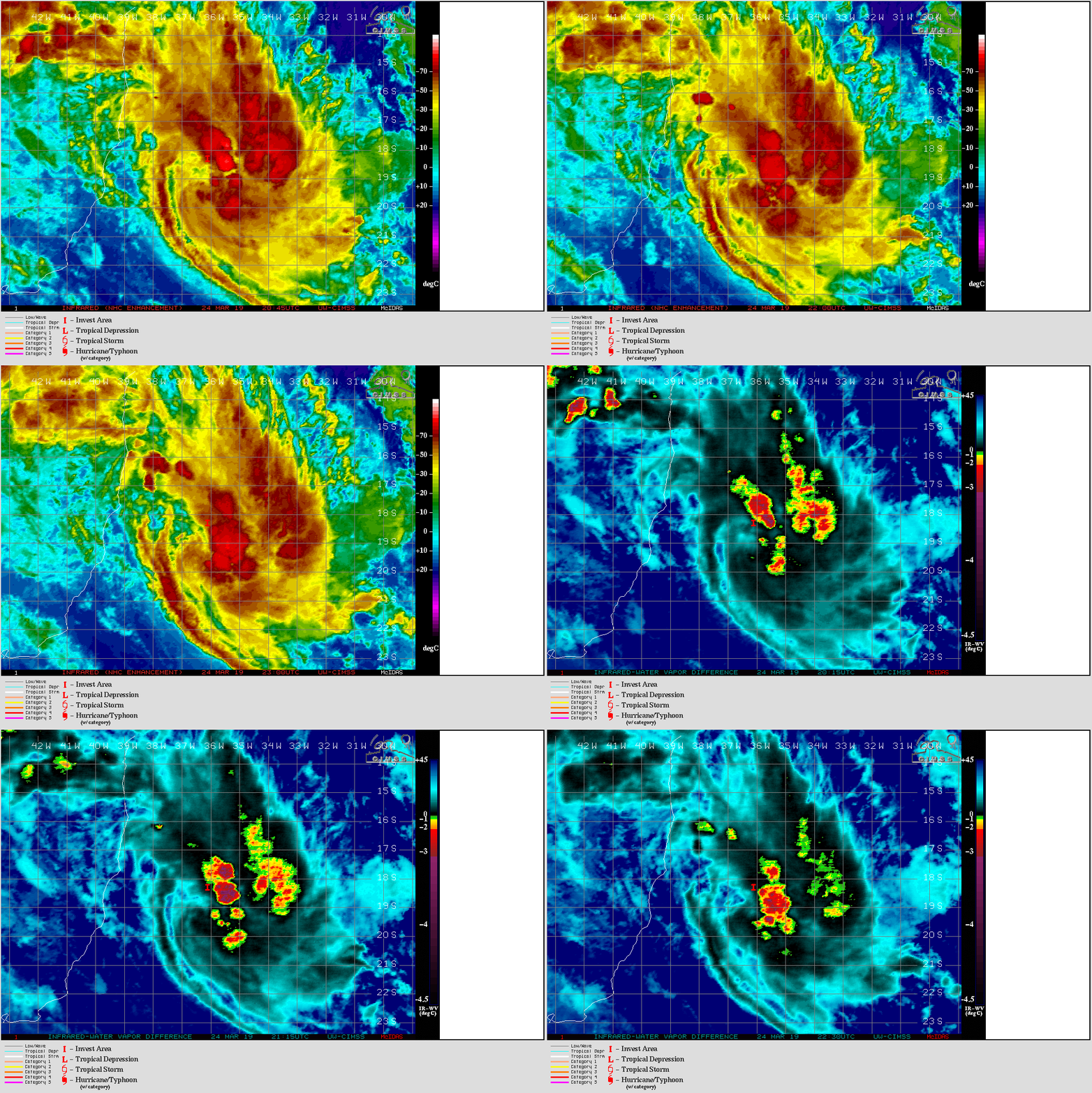
GOES-16 “Clean” Infrared Window (10.3 µm) and Infrared-Water Vapor (10.3-6.9µm) BTD images [click to enlarge]
GOES-16 Visible images with an overlay of 1138 UTC ASCAT surface scatterometer winds from the Metop-A satellite
(below) showed speeds in the 40-49 knot range
(yellow barbs).
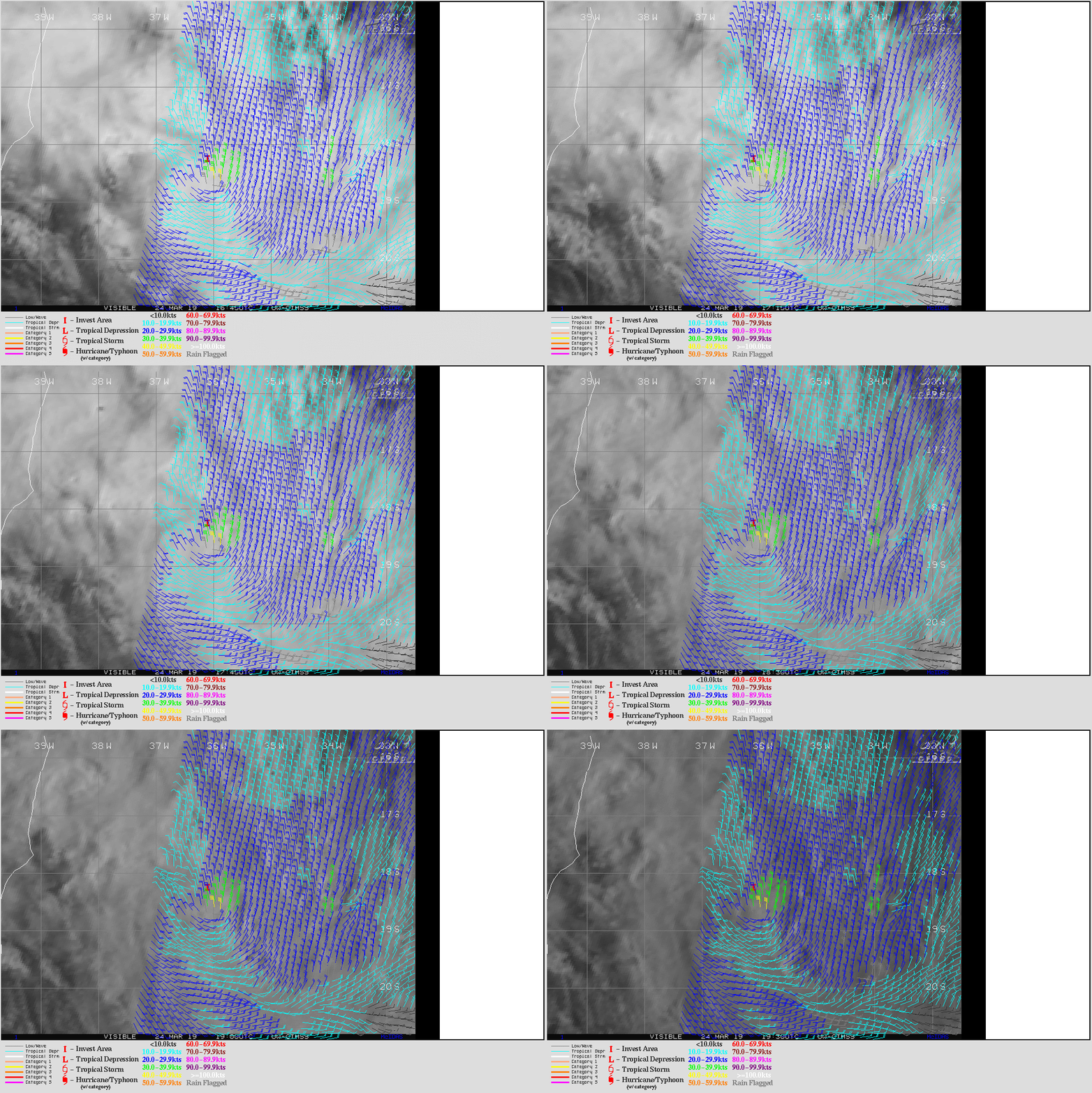
GOES-16 “Red” Visible (0.64 µm) images, with Metop-A ASCAT winds at 1137 UTC [click to enlarge]
The
MIMIC Total Precipitable Water product
(below) showed that Iba was embedded within a plume of moisture that extended southeastward off the coast of Brazil.
![MIMIC Total Precipitable Water product [click to play animation]](https://cimss.ssec.wisc.edu/satellite-blog/wp-content/uploads/sites/5/2019/03/190324_16utc_mimicTPW.png)
MIMIC Total Precipitable Water product [click to play animation]
Sea Surface Temperature values
(below) were around 30ºC in the waters where Iba intensified.
![Sea Surface Temperature analysis at 2230 UTC on 23 March [click to enlarge]](https://cimss.ssec.wisc.edu/satellite-blog/wp-content/uploads/sites/5/2019/03/190323_2230utc_sst_Iba.png)
Sea Surface Temperature analysis at 2230 UTC on 23 March [click to enlarge]
===== 25 March Update =====
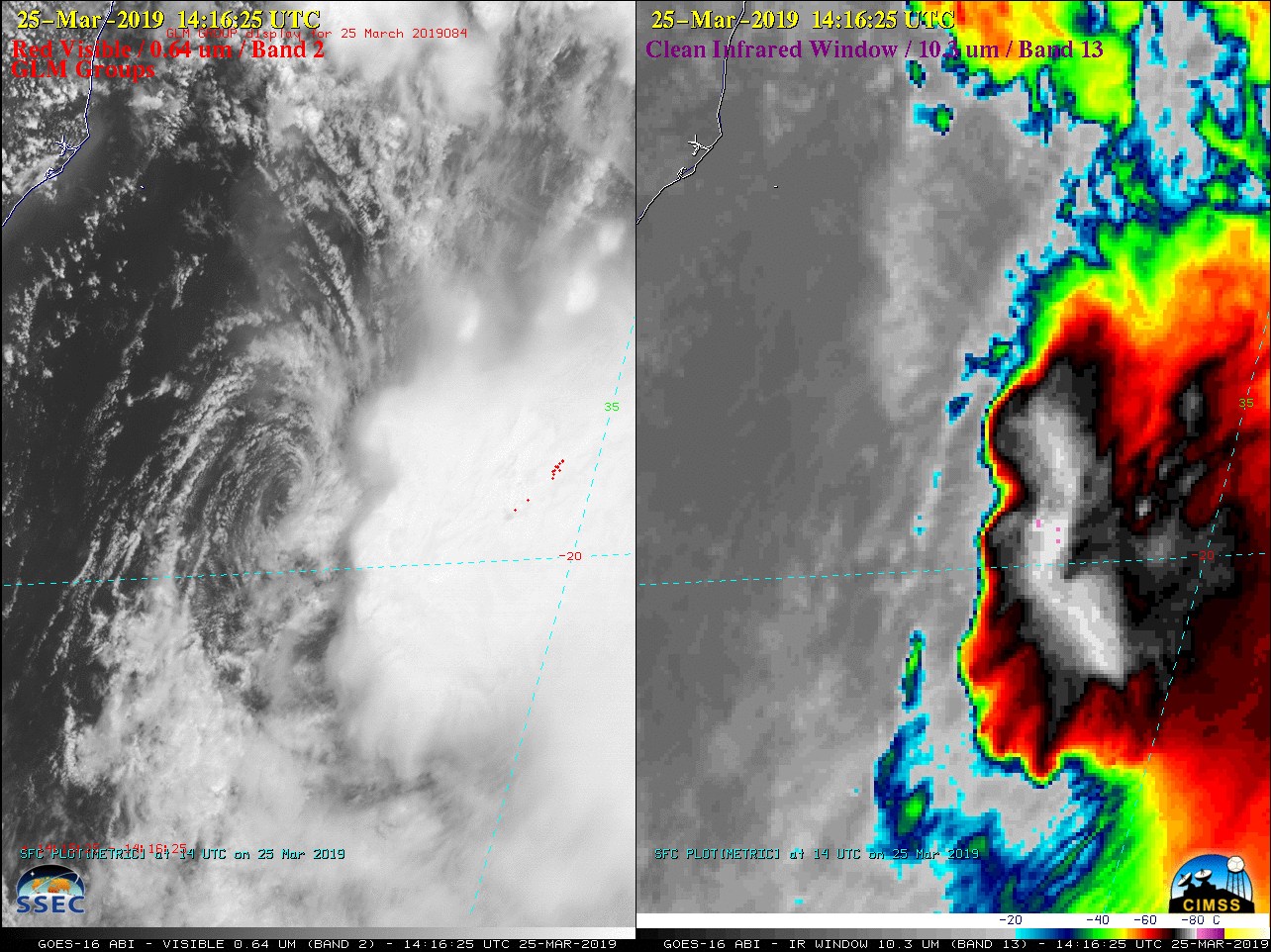
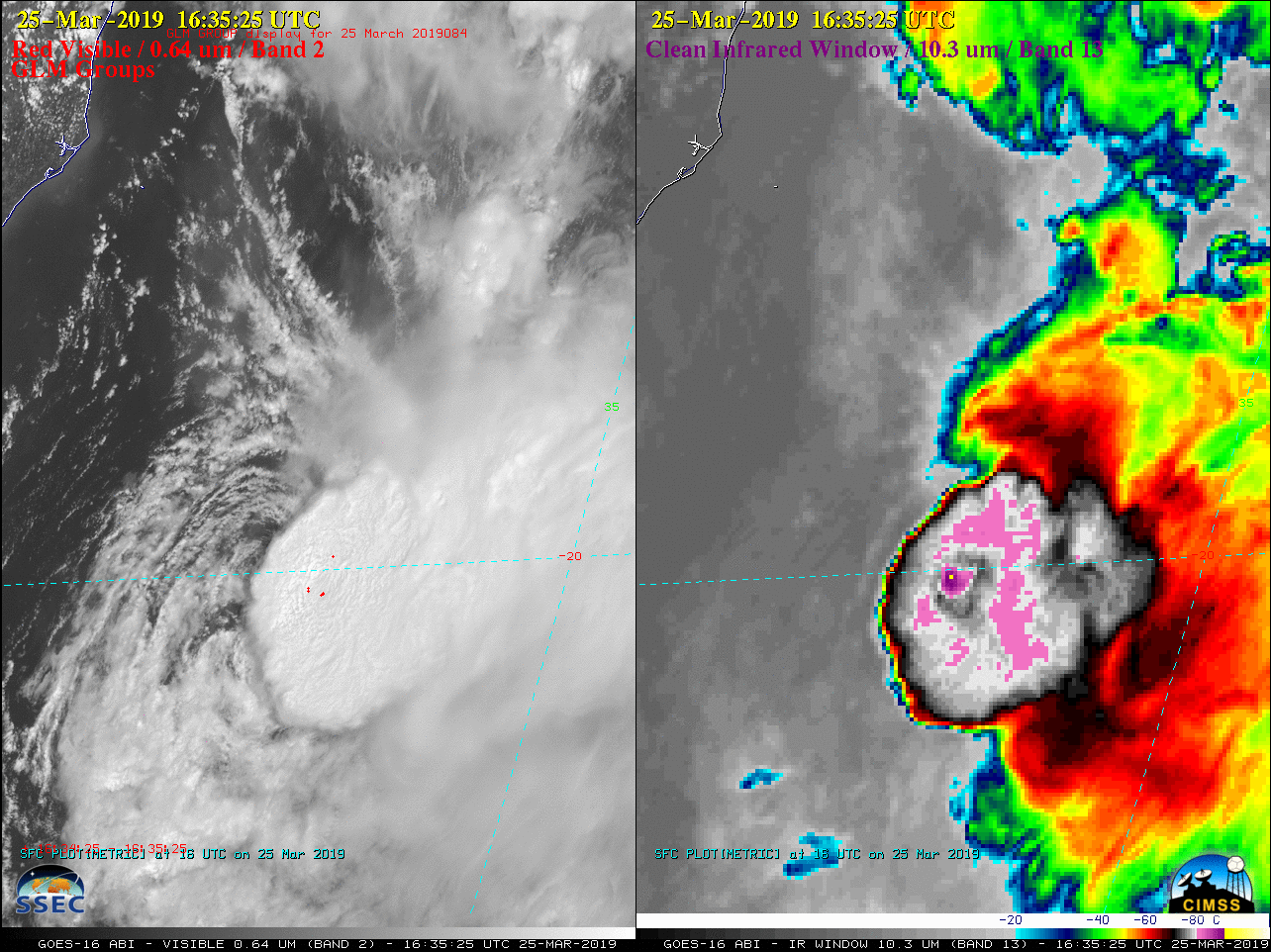
GOES-16 “Red” Visible (0.64 µm) with GLM Groups (left) and “Clean” Infrared Window (10.3 µm, right) images [click to play animation | MP4]
A comparison of GOES-16 Visible and Infrared images
(above) showed that increasing
deep-layer wind shear had exposed the low-level circulation center of Iba. However, GLM Groups plotted on the Visible images revealed an increasing amount of lightning activity associated with a convective burst that began to wrap around the southern edge of the storm center after 15 UTC — and a brief cloud-top infrared brightness temperature of -90ºC
(yellow pixel embedded with darker purple shades) was seen at
1635 UTC.
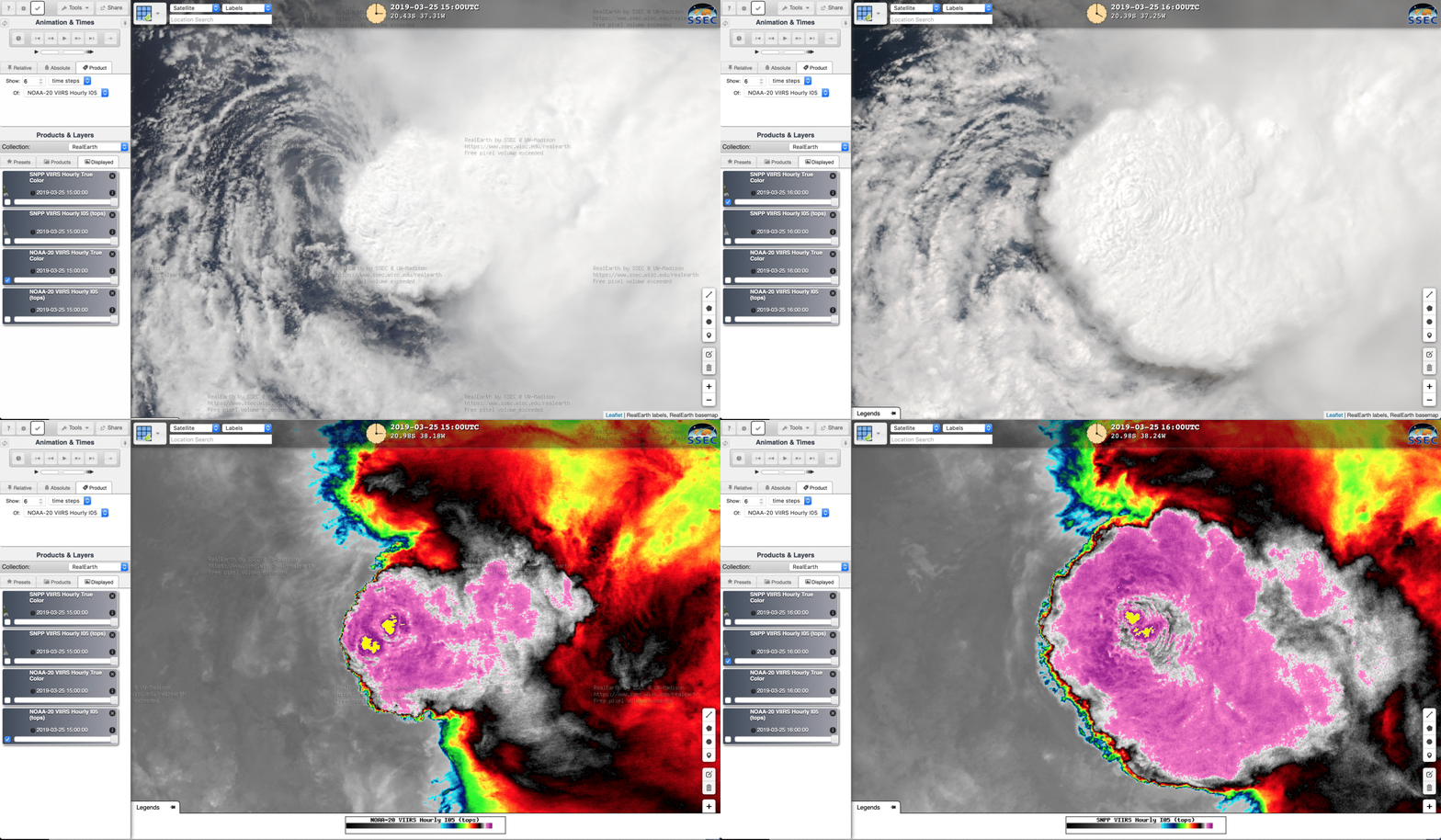
A timely overpass of the Suomi NPP satellite at 1639 UTC provided 375-meter resolution VIIRS True Color RGB and Infrared Window (11.45 µm) images (below), which showed a large overshooting top that exhibited infrared brightness temperatures of -90ºC and colder (yellow), with a warmer ring of compensating subsidence immediately surrounding it. The coldest pixel had a brightness temperature of -103.7ºC — which is almost 1ºC colder than the -102.96ºC value noted over Australia in 2008.
![Suomi NPP VIIRS True Color RGB and Infrared Window (11.45 µm) images [click to enlarge]](https://cimss.ssec.wisc.edu/satellite-blog/wp-content/uploads/sites/5/2019/03/190325_16utc_suomiNPP_truecolorinfraredWindow_Iba_anim.gif)
Suomi NPP VIIRS True Color RGB and Infrared Window (11.45 µm) images [click to enlarge]
The explosive growth of that convective burst was very apparent in a toggle between VIIRS Infrared images from NOAA-20 at 1549 UTC and Suomi NPP at 1639 UTC
(below, courtesy of William Straka, CIMSS). Note that the images use a slightly different variant of the color enhancement. A comparison of VIIRS True Color and Infrared images from NOAA-20 and Suomi NPP viewed using RealEarth is available
here.
![VIIRS Infrared (11.45 µm) images from NOAA-20 at 1549 UTC and Suomi NPP at 1639 UTC [click to enlarge]](https://cimss.ssec.wisc.edu/satellite-blog/wp-content/uploads/sites/5/2019/03/190325_noaa20_suomiNPP_viirs_truecolor_infraredWindow_Iba_v2_anim.gif)
VIIRS Infrared (11.45 µm) images from NOAA-20 at 1549 UTC and Suomi NPP at 1639 UTC [click to enlarge]
View only this post
Read Less


![Composites of geostationary and polar orbiter Infrared imagery [click to play animation]](https://cimss.ssec.wisc.edu/satellite-blog/wp-content/uploads/sites/5/2019/03/190325_infrared_composite_Antarctica_anim.gif)
![Composites of geostationary and polar orbiter Water Vapor imagery [click to play animation]](https://cimss.ssec.wisc.edu/satellite-blog/wp-content/uploads/sites/5/2019/03/190325_waterVapor_composite_Antarctica_anim.gif)
![GOES-16 Mid-level Water Vapor images [click to play animation | MP4]](https://cimss.ssec.wisc.edu/satellite-blog/wp-content/uploads/sites/5/2019/03/190325_goes16_waterVapor_South_Pacific_anim.gif)
![GOES-16 "Red" Visible (0.64 µm) images [click to play animation | MP4]](https://cimss.ssec.wisc.edu/satellite-blog/wp-content/uploads/sites/5/2019/03/190325_goes16_visible_South_Pacific_anim.gif)
![GOES-17 + GOES-16 True Color RGB image [click to enlarge]](https://cimss.ssec.wisc.edu/satellite-blog/wp-content/uploads/sites/5/2019/03/g16-g17-noon-composite-2019086.jpg)
![Tiime series of surface observation data from AWS station 8930 Thurston Island [click to enlarge]](https://cimss.ssec.wisc.edu/satellite-blog/wp-content/uploads/sites/5/2019/03/190327_15z_8930_Thurston_Island_sfcmg_ant.GIF)
![GOES-16 "Red" Visible (0.64 µm. left) and Low-level Water Vapor (7.3 µm, right) images [click to play animation | MP4]](https://cimss.ssec.wisc.edu/satellite-blog/wp-content/uploads/sites/5/2019/03/190326_goes16_visible_waterVapor_Peter_Island_anim.gif)
![Landsat-8 False Color image [click to enlarge]](https://cimss.ssec.wisc.edu/satellite-blog/wp-content/uploads/sites/5/2019/03/190326_1456utc_landsat8_falsecolor_Peter_I_Island_anim.gif)
![Suomi NPP VIIRS True Color RGB and Infrared Window (11.45 µm) images 1t 19 UTC and 21 UTC [click to enlarge]](https://cimss.ssec.wisc.edu/satellite-blog/wp-content/uploads/sites/5/2019/03/190326_suomiNPP_viirs_truecolor_infraredWindow_South_Pacific_anim.gif)

![GOES-17 True Color RGB images [click to play animation | MP4]](https://cimss.ssec.wisc.edu/satellite-blog/wp-content/uploads/sites/5/2019/03/190325_goes17_truecolor_BC_smoke_plume_anim.gif)
![VIIRS Visible (0.64 µm) and Day/Night Band (0.7 µm) from Suomi NPP at 2104 UTC and NOAA-20 at 2154 UTC [click to enlarge]](https://cimss.ssec.wisc.edu/satellite-blog/wp-content/uploads/sites/5/2019/03/190325_viirs_visible_dayNightBand_BC_smoke_anim.gif)

![Suomi NPP VIIRS True Color RGB image and Aerosol Optical Depth product at 2015 UTC [click to enlarge]](https://cimss.ssec.wisc.edu/satellite-blog/wp-content/uploads/sites/5/2019/03/190325_2015utc_suomiNPP_truecolor_aerosolOpticalDepth_fires_BC_anim.gif)
![Suomi NPP VIIRS Visible (0.64 µm) image, with available NUCAPS locations [click to enlarge]](https://cimss.ssec.wisc.edu/satellite-blog/wp-content/uploads/sites/5/2019/03/190325_2202utc_suomiNPP_visible_nucaps_BC_anim.gif)
![NUCAPS profiles at Points 1, 2 and 3 [click to enlarge]](https://cimss.ssec.wisc.edu/satellite-blog/wp-content/uploads/sites/5/2019/03/190325_nucaps_profiles_BC_anim.gif)

![GOES-16 "Clean" Infrared Window (10.3 µm) images [click to play animation | MP4]](https://cimss.ssec.wisc.edu/satellite-blog/wp-content/uploads/sites/5/2019/03/190324_goes16_infrared_TS_Iba_anim.gif)
![MIMIC Total Precipitable Water product [click to play animation]](https://cimss.ssec.wisc.edu/satellite-blog/wp-content/uploads/sites/5/2019/03/190324_mimicTPW_Iba_anim.gif)

![GOES-16 "Clean" Infrared Window (10.3 µm) images, with SPC storm replorts plotted in cyan [click to play animation | MP4]](https://cimss.ssec.wisc.edu/satellite-blog/wp-content/uploads/sites/5/2019/03/190322_goes16_visible_infrared_spcStormReports_TX_anim.gif)
![Plot of 00 UTC rawinsonde data from Amarillo, Texas [click to enlarge]](https://cimss.ssec.wisc.edu/satellite-blog/wp-content/uploads/sites/5/2019/03/190323_00utc_kama_raob.png)
![GOES-16 "Red" Visible (0.64 µm) and Near-infrared "Snow/Ice" (1.61 µm) imagery [click to play animation | MP4]](https://cimss.ssec.wisc.edu/satellite-blog/wp-content/uploads/sites/5/2019/03/190323_goes16_visible_snowIce_TX_hail_swath_anim.gif)
![GOES-16 Land Surface Temperature product at 1402 and 1502 UTC [click to enlarge]](https://cimss.ssec.wisc.edu/satellite-blog/wp-content/uploads/sites/5/2019/03/190323_goes16_landSurfaceTemperature_TX_anim.gif)
![Suomi NPP VIIRS Day/Night Band (0.7 µm) image at 0748 UTC and GOES-16 "Red" Visible (0.64 µm) image at 1427 UTC [click to enlarge]](https://cimss.ssec.wisc.edu/satellite-blog/wp-content/uploads/sites/5/2019/03/190323_0748utc_viirs_dayNightBand_1427utc_goes16_visible_TX_hail_swath_anim.gif)