This website works best with a newer web browser such as Chrome, Firefox, Safari or Microsoft
Edge. Internet Explorer is not supported by this website.
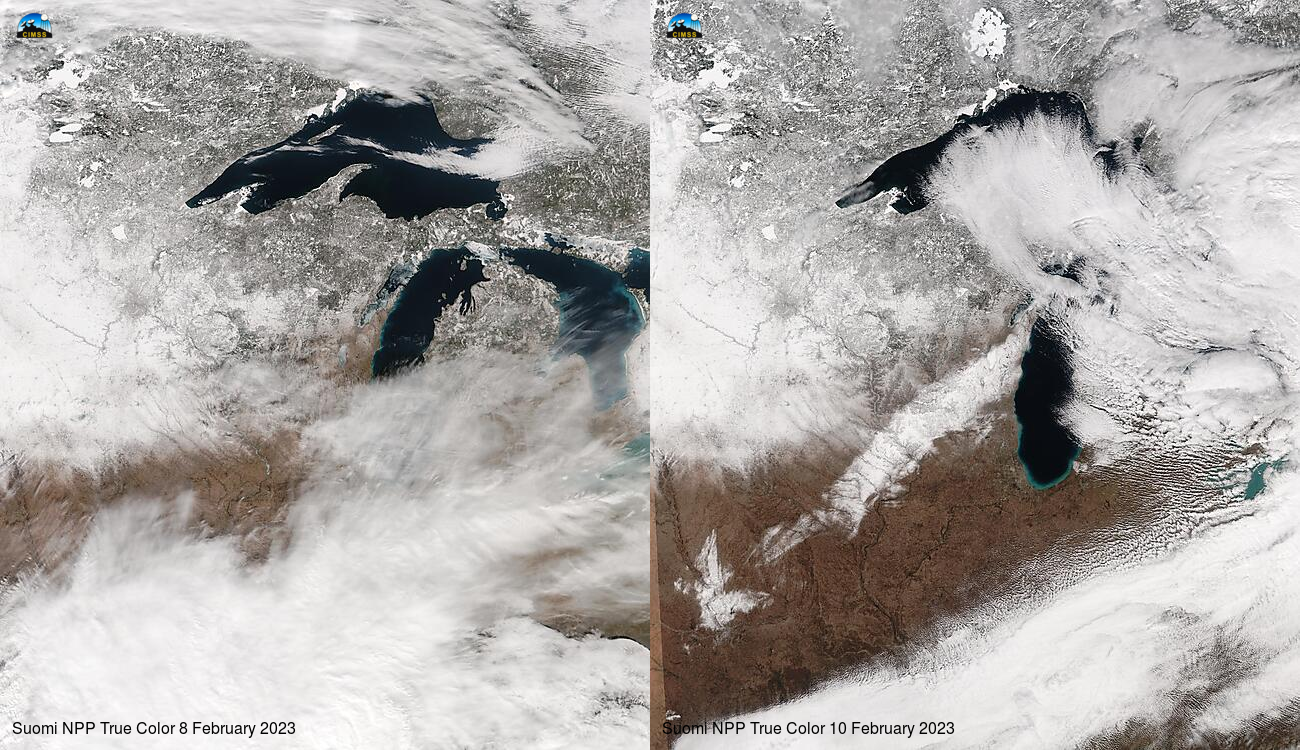
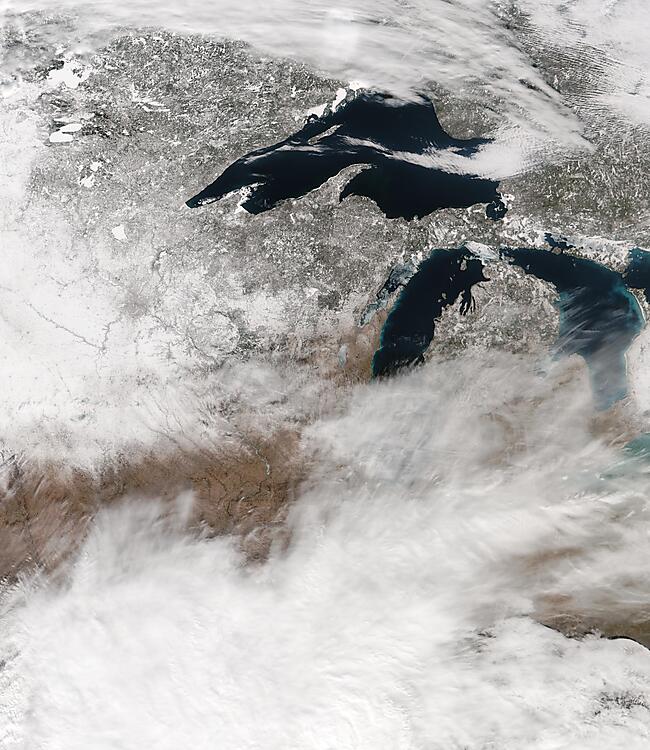
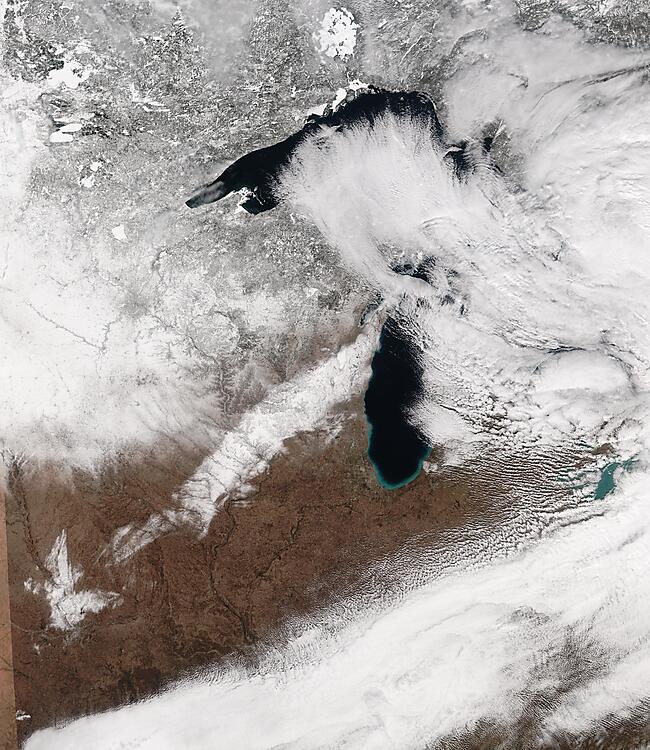
A modest snow storm affected southern/central Wisconsin on 9 February (WFO ARX story), depositing 6-12″ of snow in a band from northeast Iowa to central Lake Michigan, as shown above: the snowfall caused an obvious change in the Suomi NPP imagery between 08 February and 10 February 2023, shown above using imagery taken from the... Read More
True-Color imagery from the VIIRS Instrument on Suomi NPP, 8 February 2023 (left) and 10 February 2023 (right) (Click to enlarge)
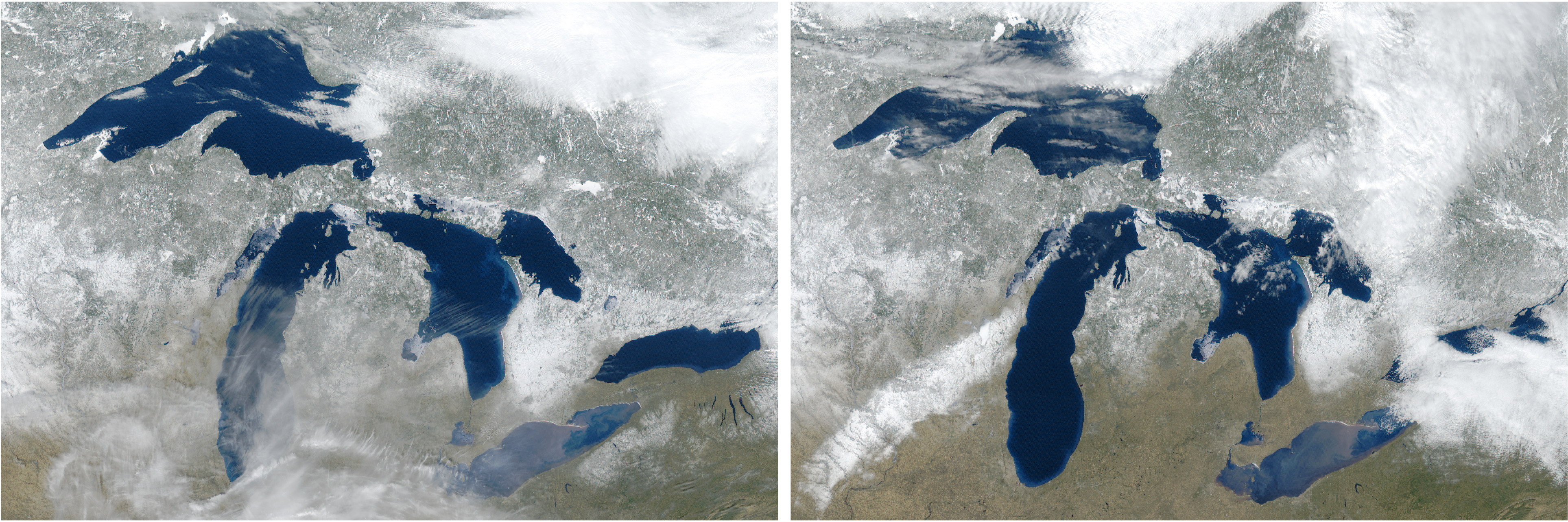
A modest snow storm affected southern/central Wisconsin on 9 February (WFO ARX story), depositing 6-12″ of snow in a band from northeast Iowa to central Lake Michigan, as shown above: the snowfall caused an obvious change in the Suomi NPP imagery between 08 February and 10 February 2023, shown above using imagery taken from the VIIRS Today website. (A similar before/after pair of images using GOES-16 data is below).
GOES-16 True Color imagery on 8 February 2023 (left) and 10 February 2023 (right) (Click to enlarge)
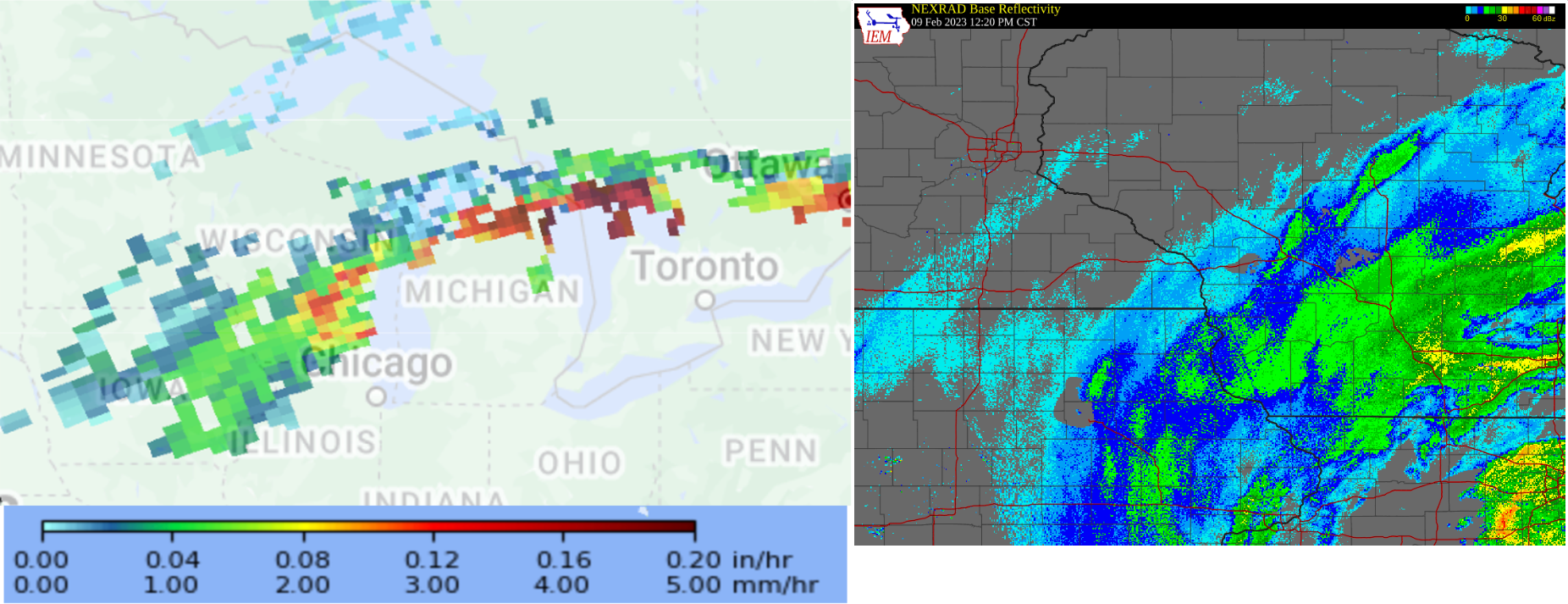
A variety of NOAA/STAR snowfall products gave information about this snowstorm during and after its passage through the midwest. The image below shows the Snowfall rate (data source) over Wisconsin and Michigan at 1816 UTC on 9 February (derived from ATMS data on NOAA-20), and a NEXRAD radar image (from the ‘radar’ tab here) over Wisconsin at about the same time. There is very good agreement between the two representations of falling precipitation over Wisconsin!
NOAA-20 Snowfall Rate (SFR) at 1816 UTC on 9 February 2023 (left) and NEXRAD radar at 1820 UTC on 9 February 2023 (Click to enlarge)
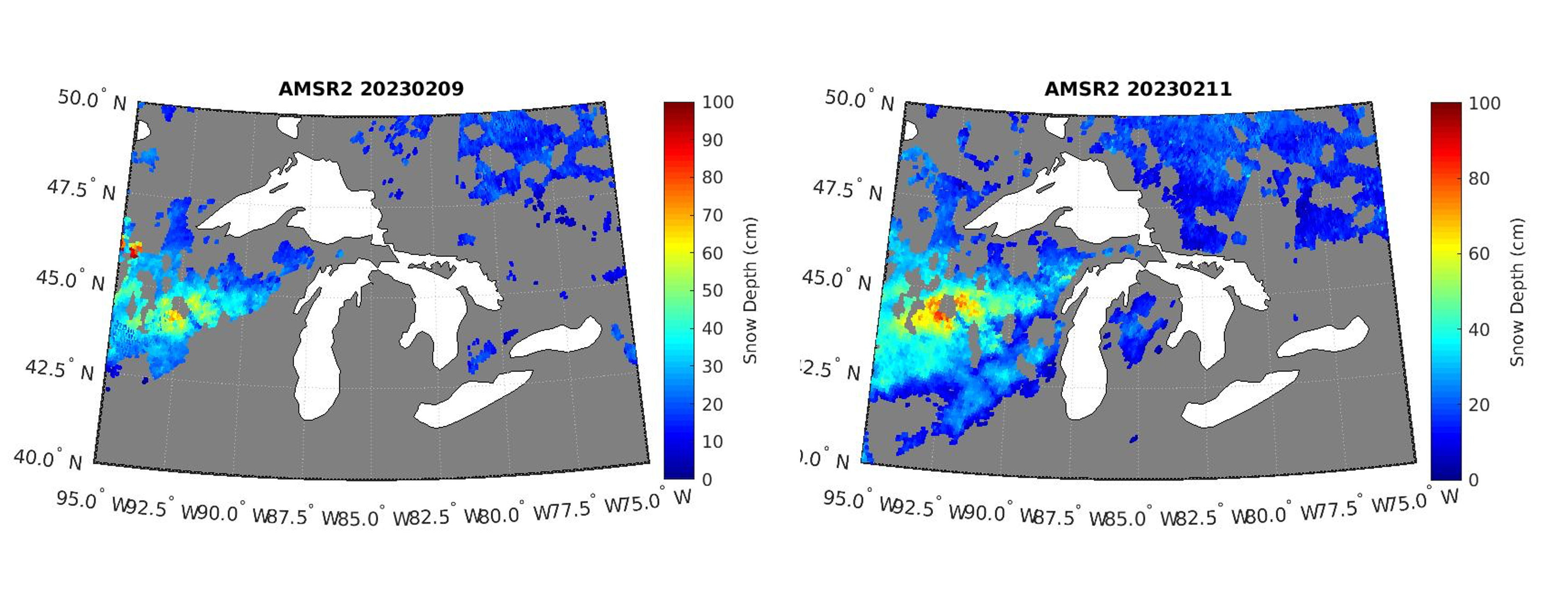
The NOAA/STAR cryosphere team developed AMSR-2 snow products using data from JAXA’s GCOM-W polar orbiter. The snowdepth product, below, shows the change in snowdepth over Wisconsin between 9 February (left) and 11 February (right). The deepest diagnosed snow on 11 February in the new snow band is about 35 cm (around 13″).
Microwave estimates of snow depth on 9 February (left) and 11 February (right) 2023 (Click to enlarge)
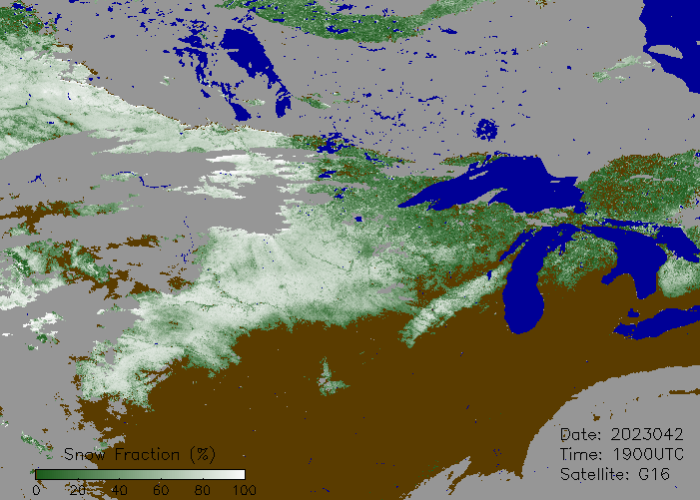
The GOES-16 Fractional Snow Cover product, below, from 1900 UTC on 11 February 2023, shows the snow band as well.
GOES-16 Level 2 Snow Fraction product, 1900 UTC on 11 February 2023 (Click to enlarge)
Thanks to Yinghui Liu, NOAA/STAR at CIMSS, and Huan Meng, NOAA/STAR in College Park, for imagery for this blog post. Thanks also to Peter Romanov, CUNY/CREST, for contributions.
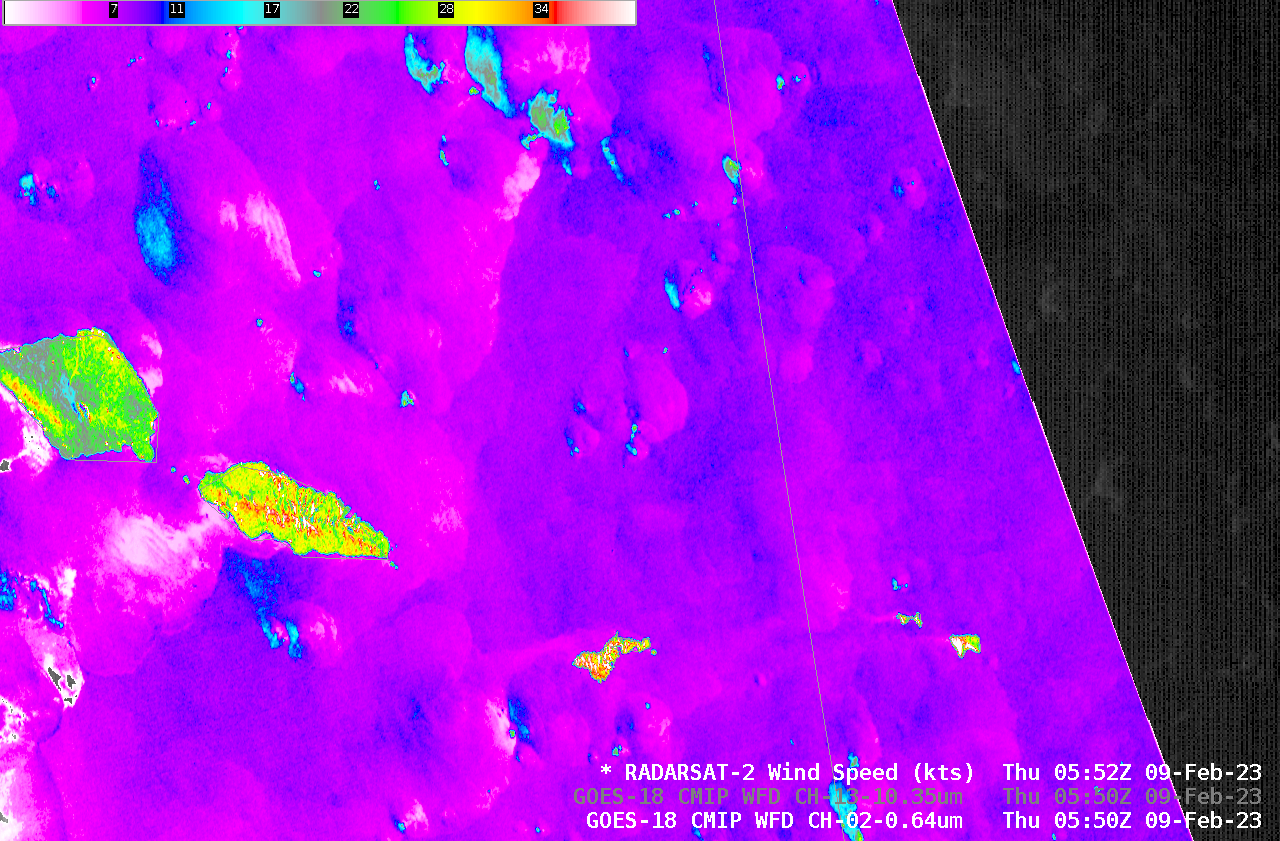
RADARSAT-2 passed over Samoan waters again on 9 February 2023, just after sunset (above) and near sunrise (at bottom). The imagery above compares the SAR winds to GOES-18 visible (with a changed enhancement to account for low light conditions, with reflectance values ranging from 0 to 6.3 only vs. the... Read More
GOES-18 Clean Window Infrared (10.3 µm) imagery, Visible (0.64 µm) imagery, RADARSAT-2 SAR Winds, 0550 UTC on 9 February 2023 (Click to enlarge)
RADARSAT-2 passed over Samoan waters again on 9 February 2023, just after sunset (above) and near sunrise (at bottom). The imagery above compares the SAR winds to GOES-18 visible (with a changed enhancement to account for low light conditions, with reflectance values ranging from 0 to 6.3 only vs. the maximum default of 130) and infrared imagery at the same time. Several features of note deserve comment: both the strong convection just west/southwest of Savai’i, Samoa, and the cold cloud tops at the southern edge of the domain, have very little signal in the surface wind field.
A feature of interest to me is the slight change in windspeeds highlighted in the toggle below, extending north from the Samoan Islands. Is this slight change in SAR-derived winds, from 6 knots (bright purple, to the west) to 8 knots (darker purple, to the east) related to any obvious linear feature in the visible and infrared imagery? At first blush, a disappointing no is the answer!
SAR Winds and GOES-18 visible (Band 2, 0.64 µm) and infrared (Band 13, 10.3 µm) imagery zoomed in over the region north of the Samoan Islands, 0550 UTC on 9 February 2023 (Click to enlarge)
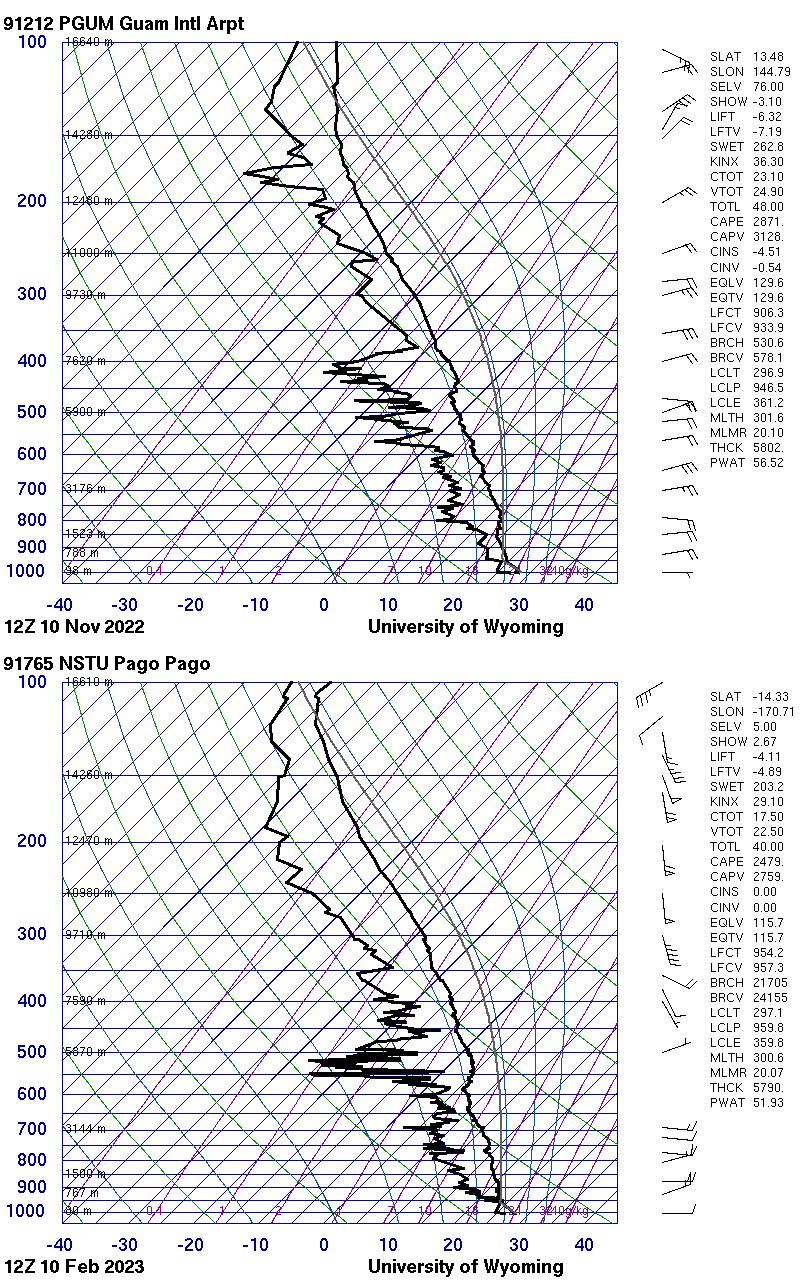
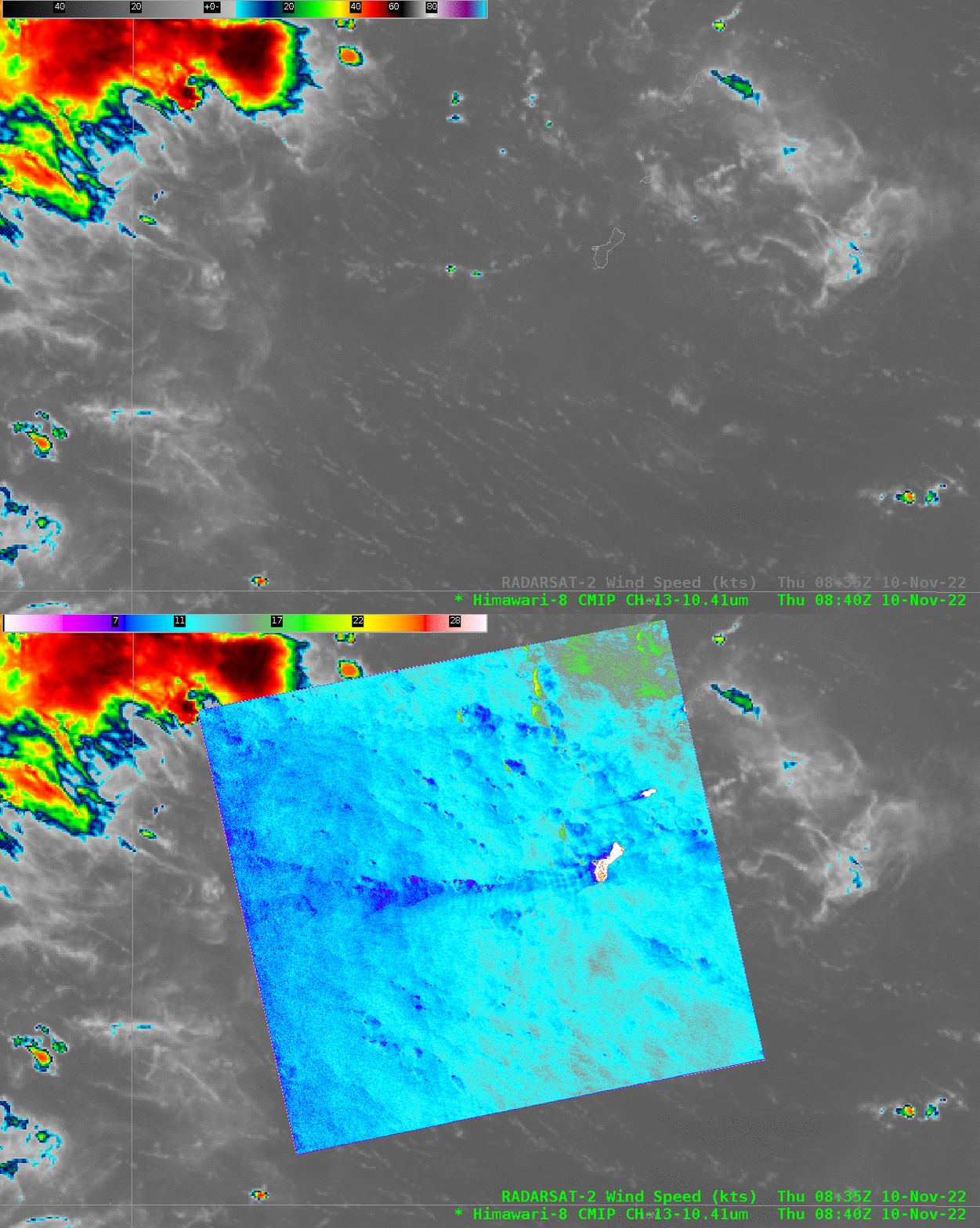
An image below shows RADARSAT-2 SAR winds at 0552 and 1655 UTC (Note: the color enhancement of the winds has been changed to have a maximum of 25 kts, vs. 40 knots in the imagery above). When SAR observations occurred over Guam in November 2022, the effect of the Marianas island chain on winds extended a significant distance downwind of the island, as shown in this image from 0840 UTC on 10 November from this blog post. Why might the effects of the Samoan Islands not extend as far downstream; that is, why is the effect of the island not trapped? The toggle below shows the Guam SkewT from 1200 UTC on 10 November 2022 and the SkewT from Pago Pago at 1200 UTC on 9 February 2023; (both SkewTs are from the University Of Wyoming sounding site). One thing the Guam sounding features that is missing from the Pago Pago sounding is a stable layer from 850 to 750 hPa; that stable layer might affect how the Island Effect persists downwind.
RADARSAT-2 SAR Winds over the Samoan Islands, 0552 and 1655 UTC on 9 February 2023 (Click to enlarge)
The toggle below compares SAR winds with GOES-18 clean window imagery. At 1655 UTC, the coldest cloud tops are related to perturbations in the wind field, especially in the southern part of the domain.
GOES-18 Clean Window infrared (10.3 µm) imagery and RADARSAT derived SAR winds, 1650-1655 UTC on 9 February 2023 (Click to enlarge)
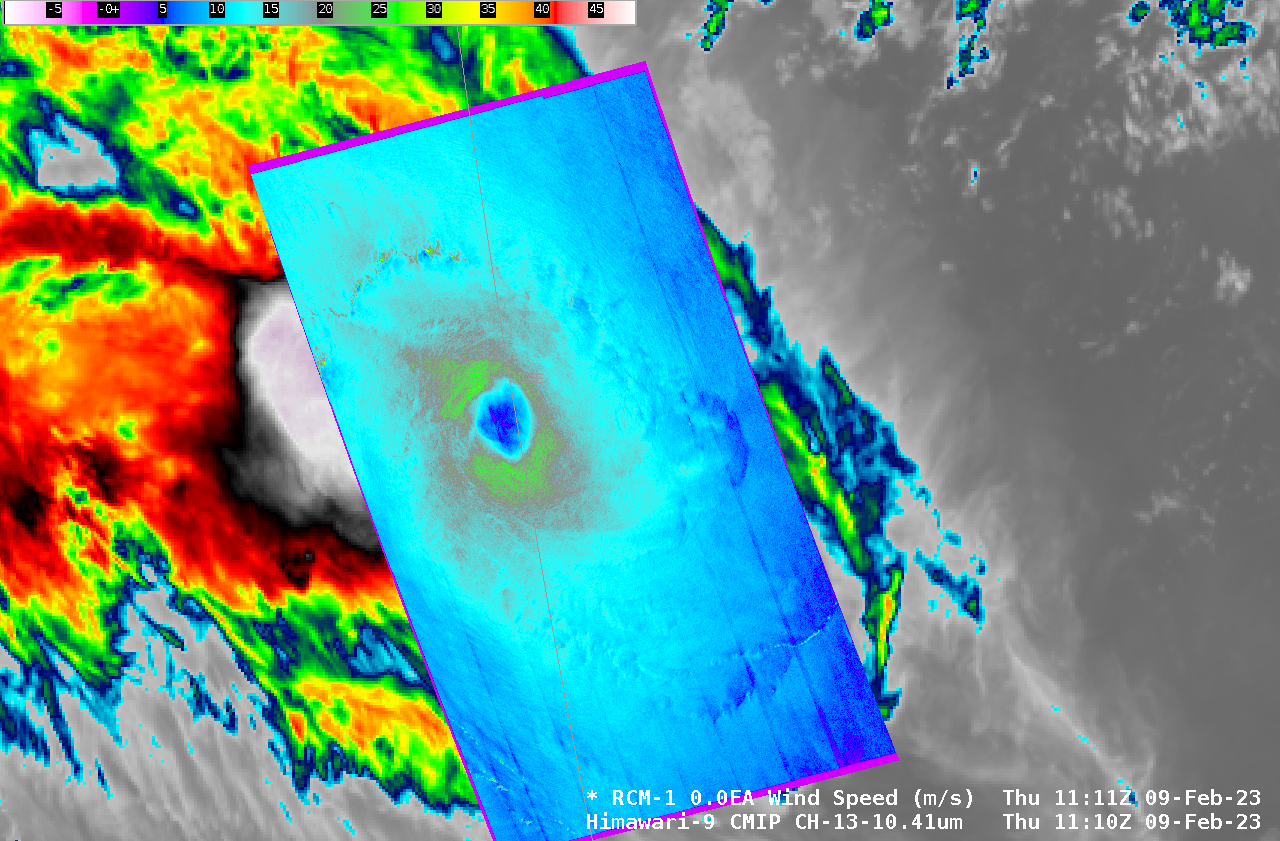
RADARSAT Constellation Mission Satellite 1 (RCM-1) overflew tropical cyclone Freddy in the eastern Indian Ocean on 9 February, and Synthetic Aperture Radar (SAR) winds from the satellite captured a well-developed eye with (instantaneous) surface winds that peaked around 25 m/s. More information on SAR winds with Freddy is available here. The toggle above shows the storm center displaced significantly to the east... Read More
Himawari-9 Clean Window infrared (10.41 µm) imagery, and SAR winds from RCM-1, 1110 UTC on 9 February 2023 (Click to enlarge)
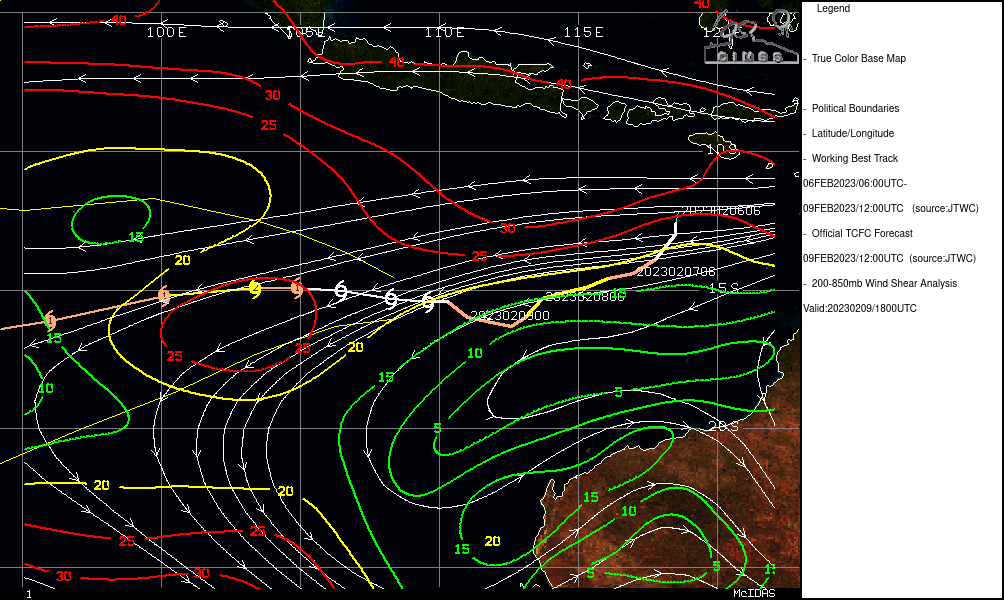
RADARSAT Constellation Mission Satellite 1 (RCM-1) overflew tropical cyclone Freddy in the eastern Indian Ocean on 9 February, and Synthetic Aperture Radar (SAR) winds from the satellite captured a well-developed eye with (instantaneous) surface winds that peaked around 25 m/s. More information on SAR winds with Freddy is available here. The toggle above shows the storm center displaced significantly to the east of the coldest cloud tops. Freddy was experiencing shear (see the 1800 UTC shear analysis below taken from the CIMSS Tropical Website) that may have helped to cause this displacement, but parallax error in the Himawari-9 imagery likely also has an affect. (This website shows the parallax error for Himawari-9 imagery).
1800 UTC 9 February 2023 850-200 mb shear analysis over Freddy (Click to enlarge)
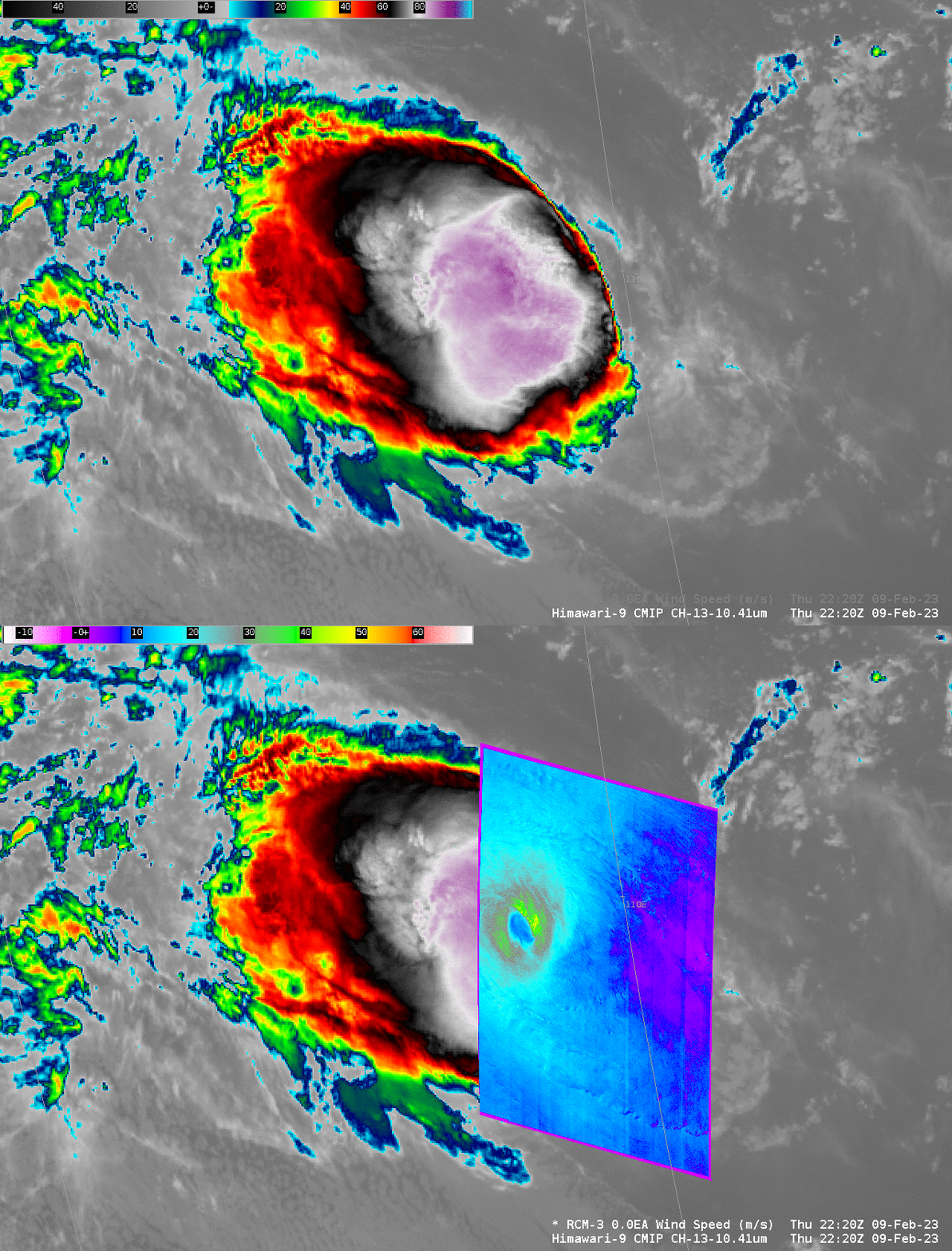
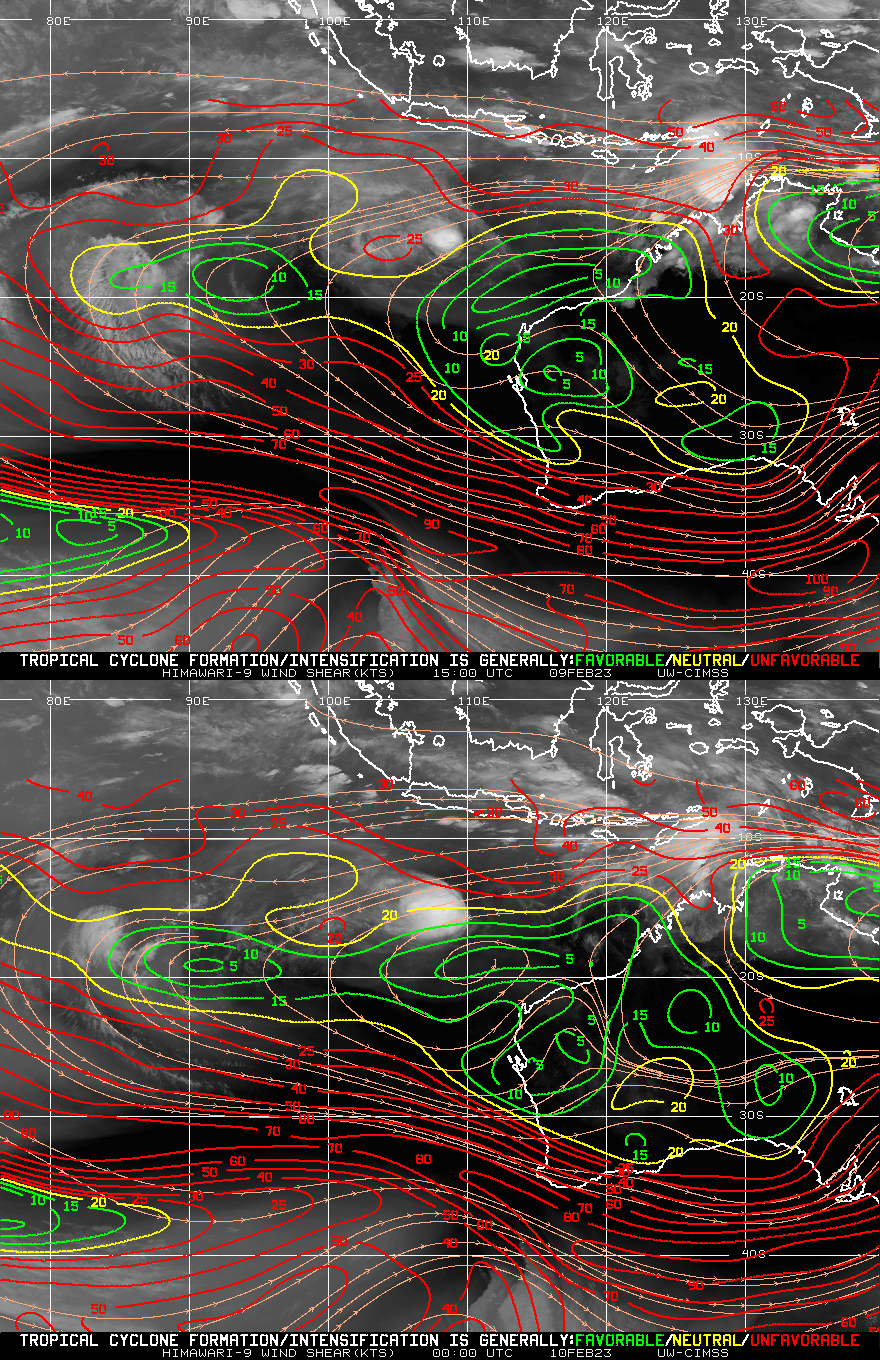
A second overpass (RCM-3) later at 2200 UTC 9 February showed significantly stronger winds — 50 m/s! — that were more centered underneath the Central Dense Overcast, suggesting weaker shear. Indeed, the Shear Analysis (at bottom, showing shear at 1500 UTC 9 February and 0000 UTC 10 February) showed weakening shear over the storm.
Himawari-9 Clean Window infrared (10.41 µm) imagery, and SAR winds from RCM-3, 2220 UTC on 9 February 2023 (Click to enlarge)850-200 mb shear analysis, 1500 UTC on 9 February and 0000 UTC on 10 February 2023 (Click to enlarge)
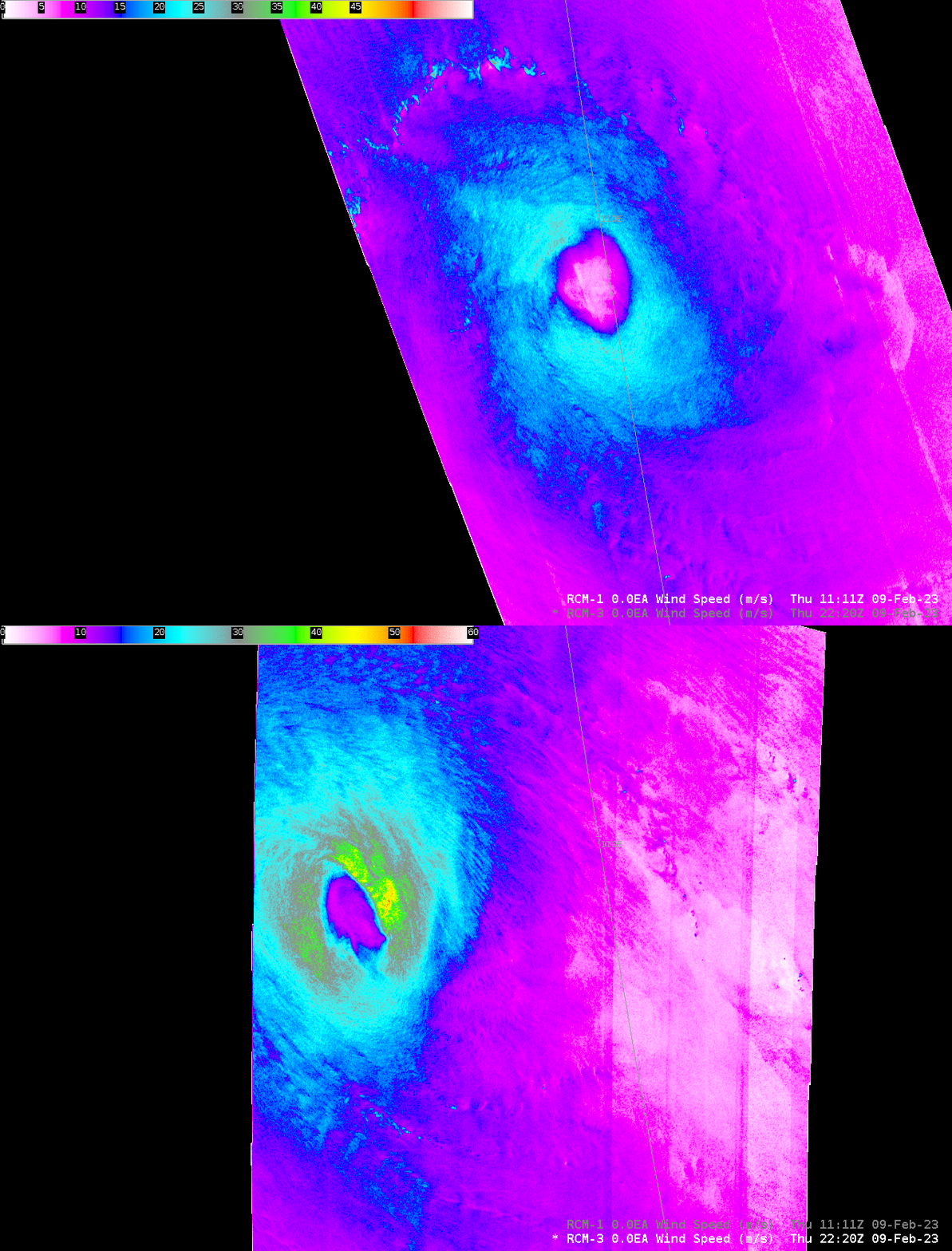
The toggle below compares the derived winds from RCM1 at 1111 UTC and from RCM3 at 2220 UTC with the same color enhancement, and over the same domain. Significant strengthening is shown!
Derived SAR winds over Cyclone Freddy, 1111 UTC (from RCM1) and 2220 UTC (from RCM3) on 9 February 2023 (Click to enlarge)
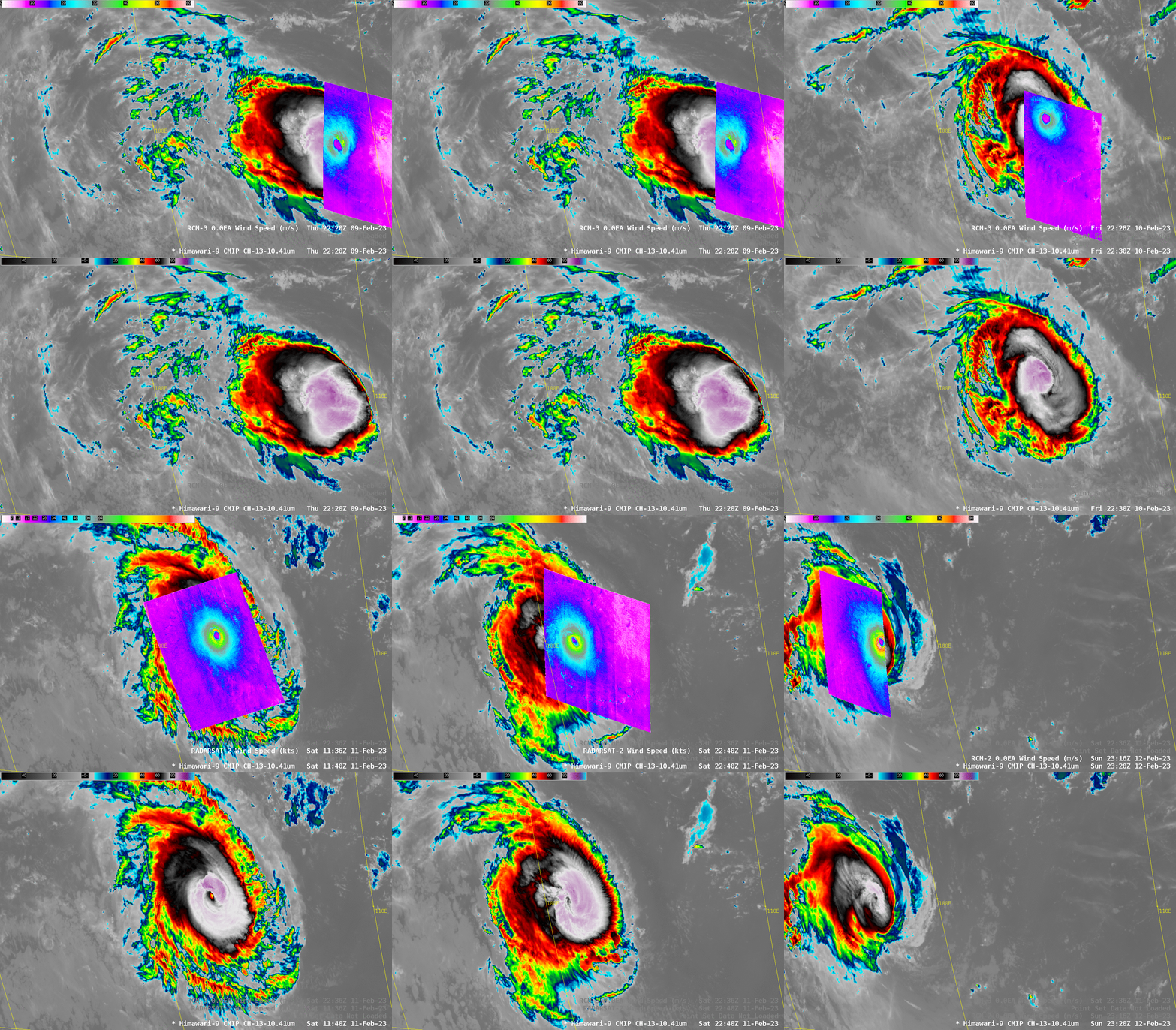
SAR observations continued as Freddy intensified to a Category 4 storm (blog post). The animation below shows five images between 9 and 12 February 2023.
Himawari-9 Clean Window infrared (Band 13, 10.41 µm) imagery during the times of SAR overpasses (Click to enlarge)
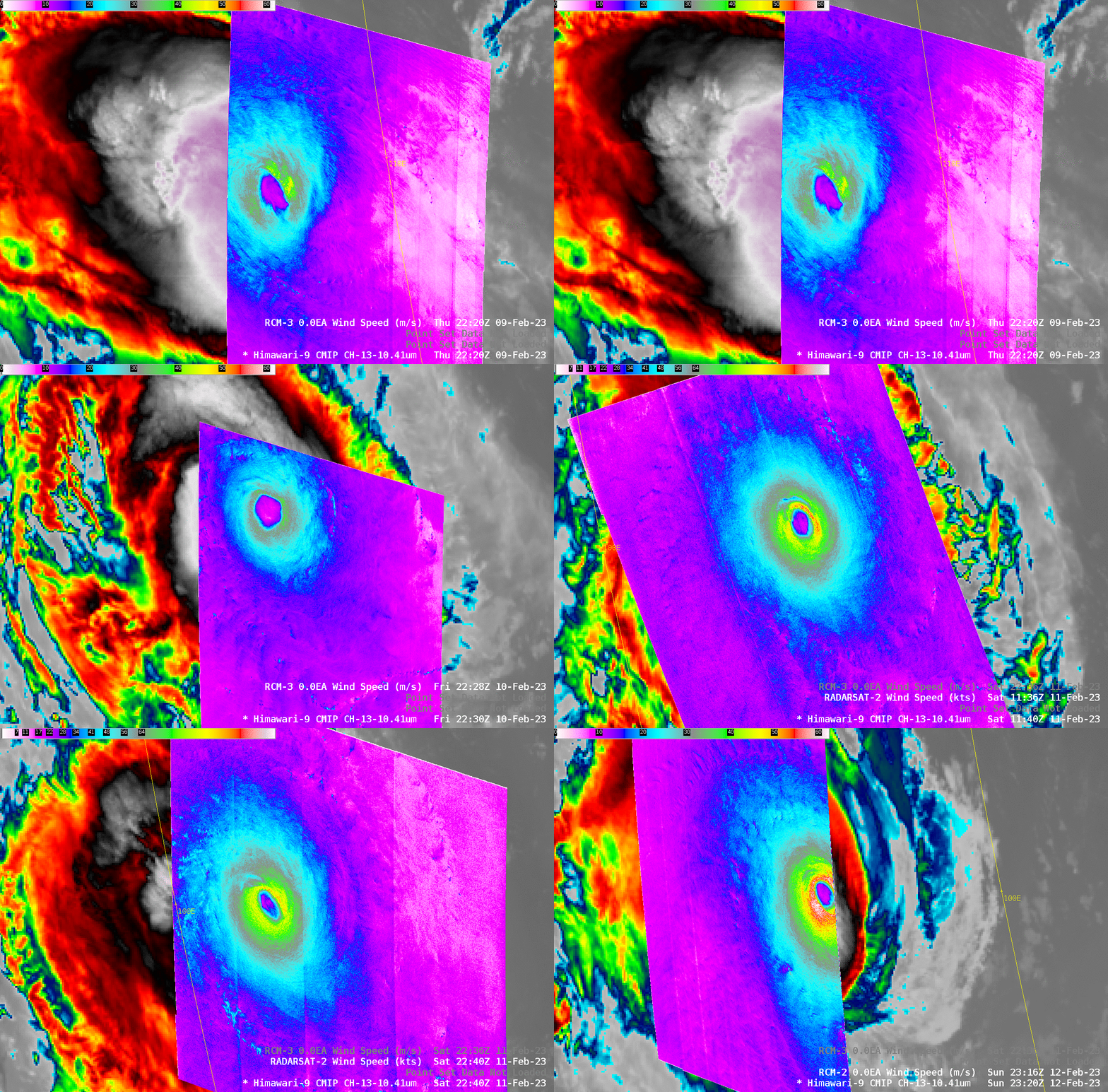
The imagery below shows the 5 scenes from above, but zoomed in so that maximum wind speeds can be identified. Note that some of the windspeeds are in knots, and some are in m/s. The color enhancement has been altered so that the windspeed to color association is similar. SAR Winds and diagnoses for Freddy are available here.
SAR Winds overlain on top of Band 13 Himawari-9 (Clean window, 10.41 µm) imagery, 9-12 February 2023. (Click to enlarge)
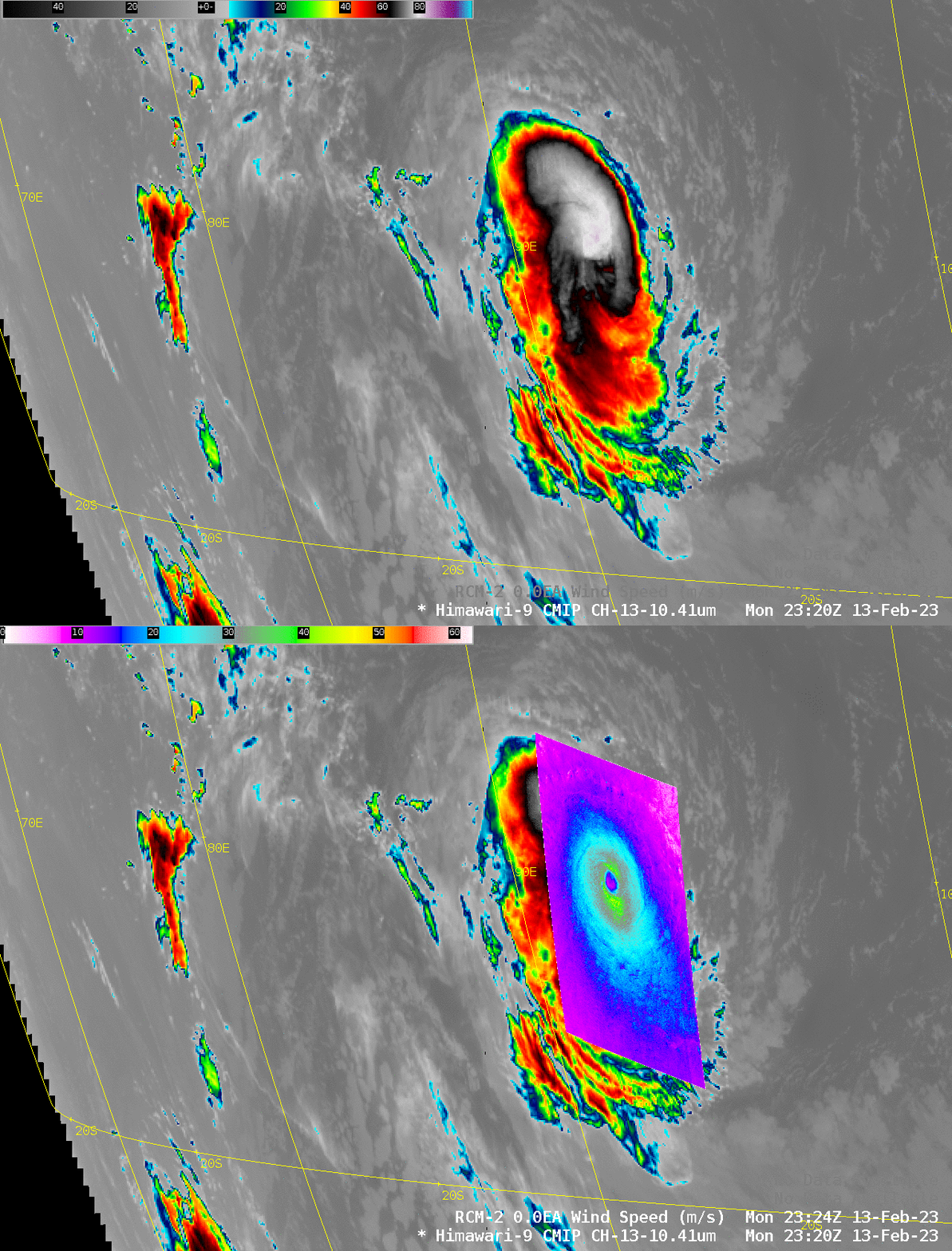
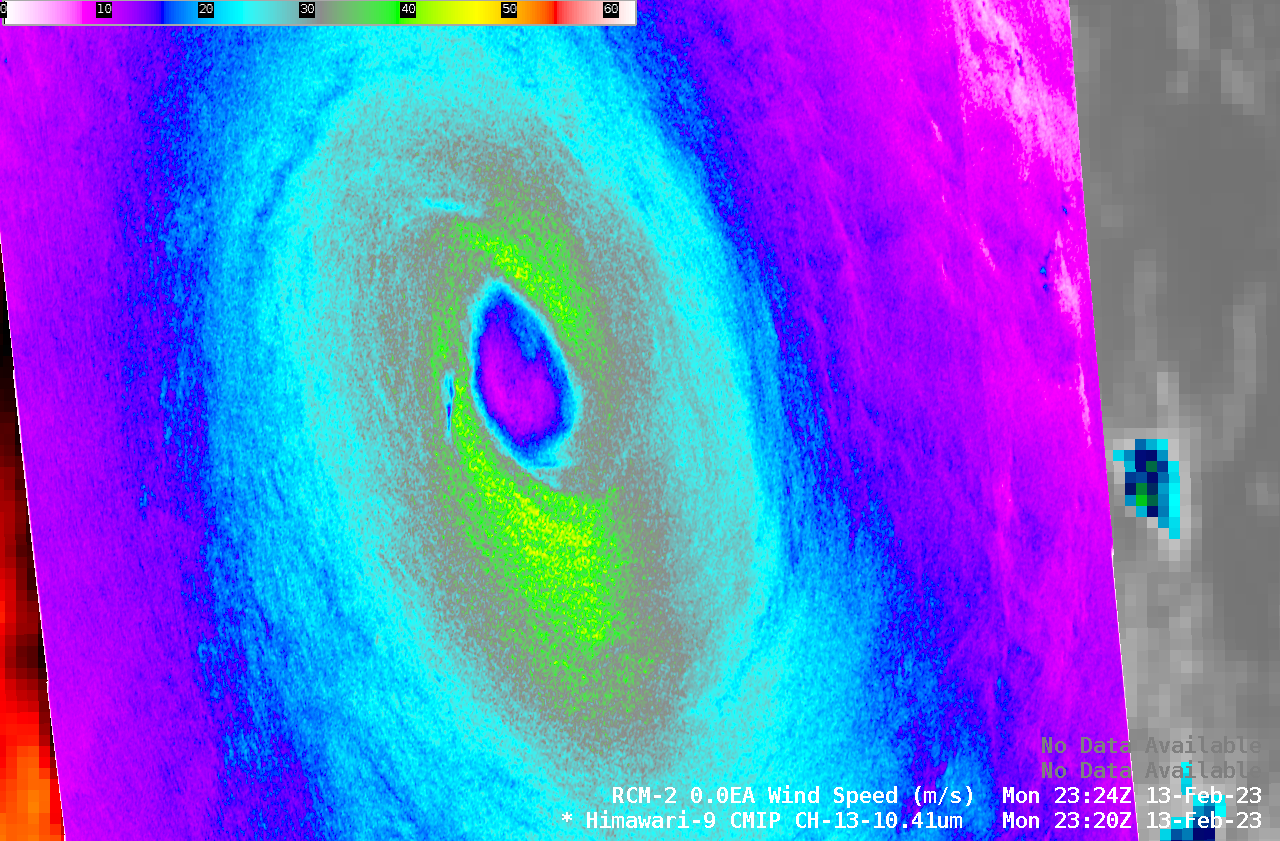
Late on 13 February, RCM2 overflew Freddy and produced the wind scene shown below in a toggle with Himawari-9 Clean window imagery. Note that the limb of the Himawari scene is showing up in this image. Parallax errors in the Himawari-9 imagery (compared to the surface-based SAR imagery) will increase as the storm moves closer to Africa. A zoomed-in view of the SAR winds is available here.
SAR Winds overlain on top of Band 13 Himawari-9 (Clean window, 10.41 µm) imagery, 2320 UTC on 13 February 2023 (Click to enlarge)
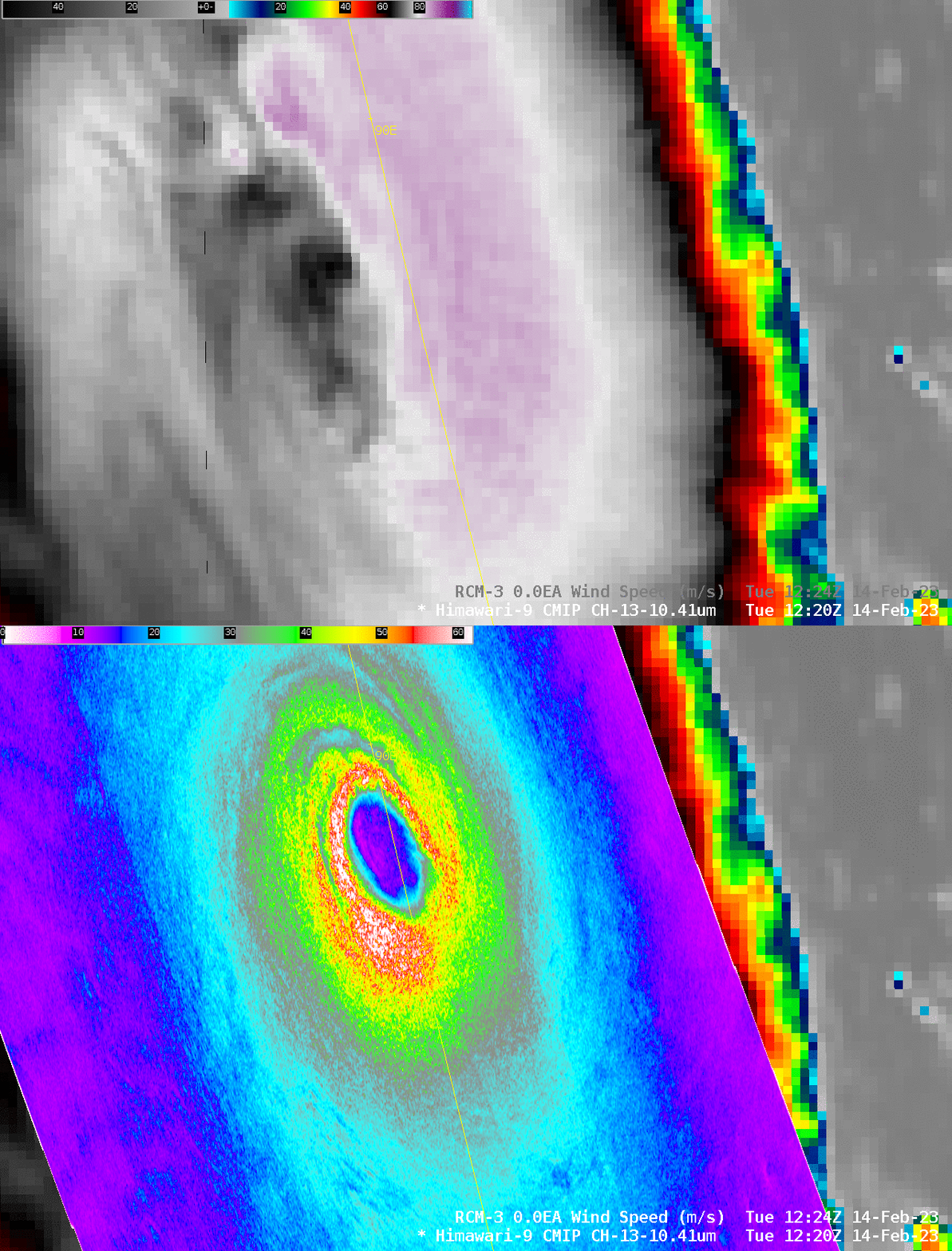
Another overpass occurred at 1224 UTC on 14 February. Two toggles are shown below; the effects of the parallax shift in the Himawari-9 imagery become more and more apparent!
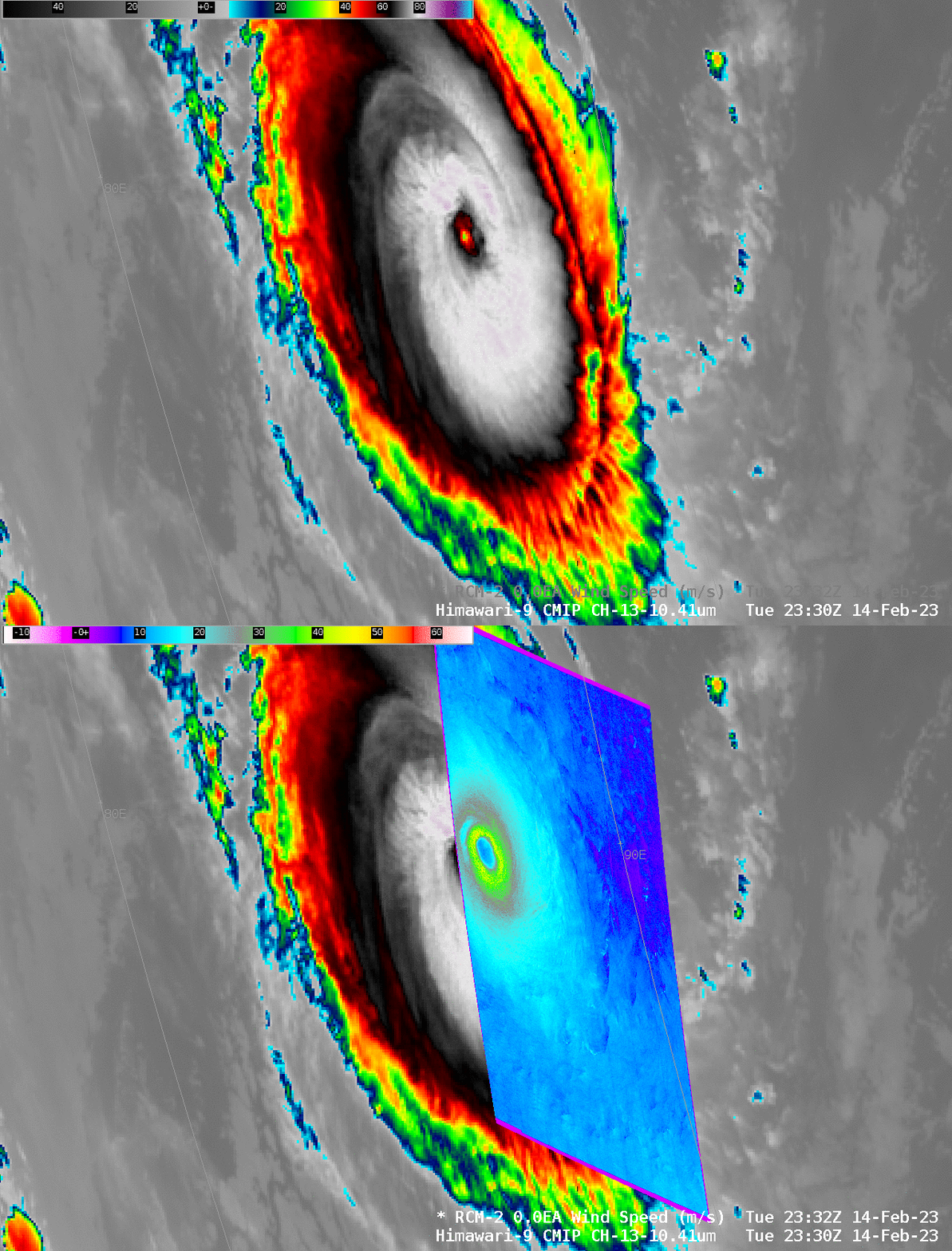
SAR Winds overlain on top of Band 13 Himawari-9 (Clean window, 10.41 µm) imagery, 1224 UTC on 14 February 2023 (Click to enlarge)SAR Winds overlain on top of Band 13 Himawari-9 (Clean window, 10.41 µm) imagery, 1224 UTC on 14 February 2023, zoomed in over the eye (Click to enlarge)
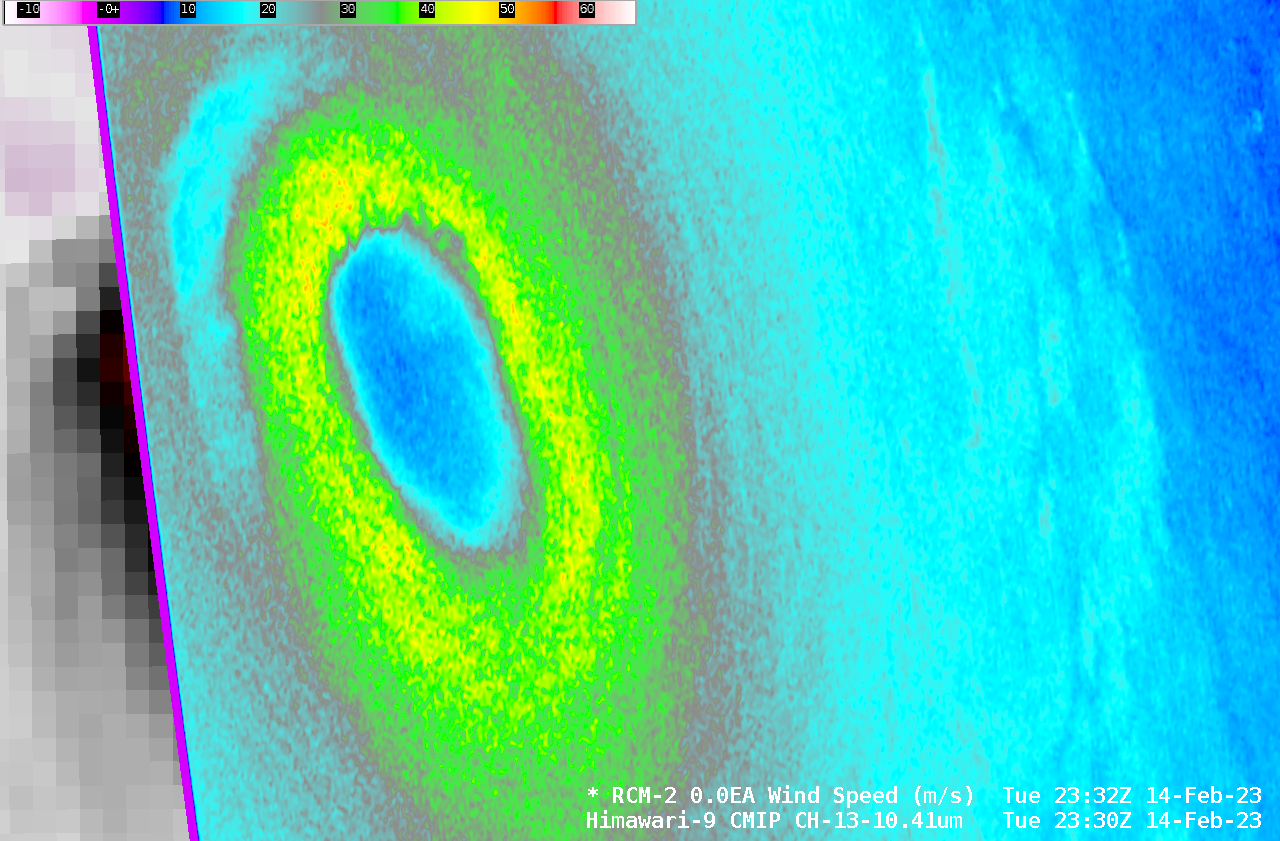
RCM2 SAR winds from 2330 UTC on 14 February are shown below, and the parallax shift is readily apparent. Click here to view a zoomed-in SAR analysis over the eye.
SAR Winds from RCM2 overlain on top of Band 13 Himawari-9 (Clean window, 10.41 µm) imagery, 2330 UTC on 14 February 2023 (Click to enlarge)
1-minute Mesoscale Domain Sector GOES-18 (GOES-West) “Clean” Infrared Window (10.3 µm) images (above) showed the colder cloud tops (shades of green) associated with snow squalls that moved east-southeastward across parts of far southern Wyoming and northern/central Colorado late in the day on 08 February 2023. Plots of 15-minute METAR surface reports indicated how... Read More
GOES-18 “Clean” Infrared Window (10.3 µm) images, with 15-minute METAR surface reports plotted in yellow [click to play animated GIF | MP4]
1-minute Mesoscale Domain Sector GOES-18 (GOES-West) “Clean” Infrared Window (10.3 µm) images (above) showed the colder cloud tops (shades of green) associated with snow squalls that moved east-southeastward across parts of far southern Wyoming and northern/central Colorado late in the day on 08 February 2023. Plots of 15-minute METAR surface reports indicated how quickly the visibility fluctuated at sites where the snow squalls passed overhead.