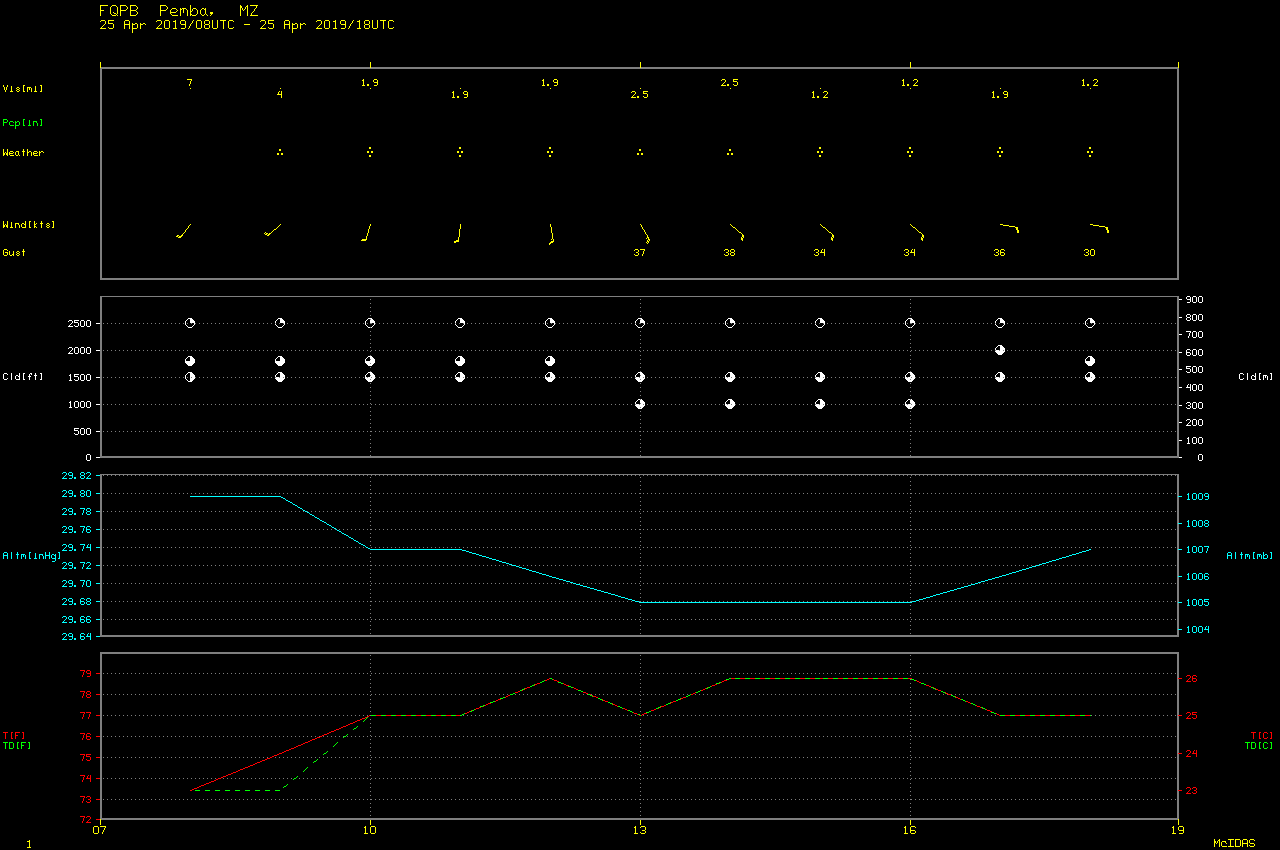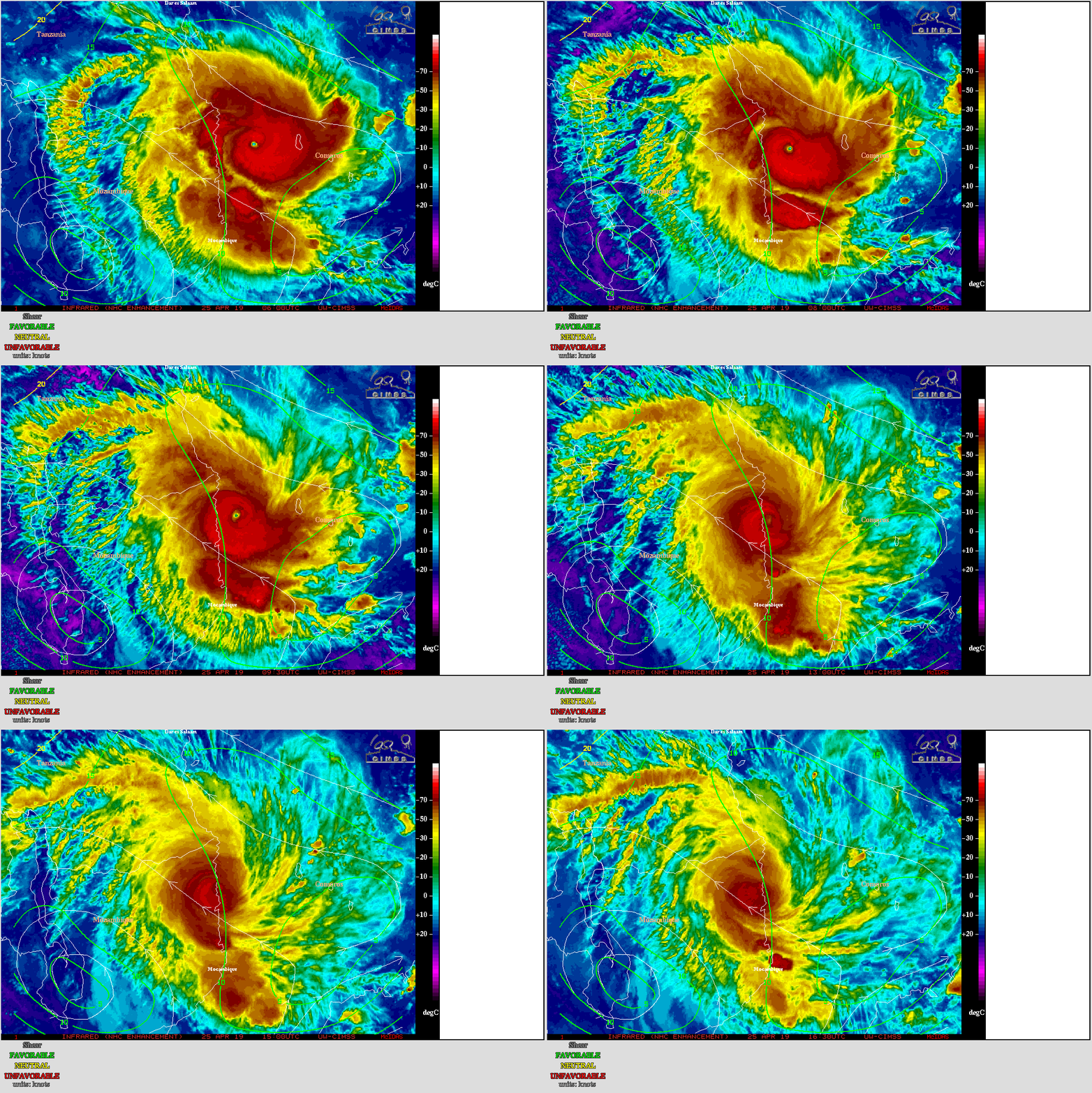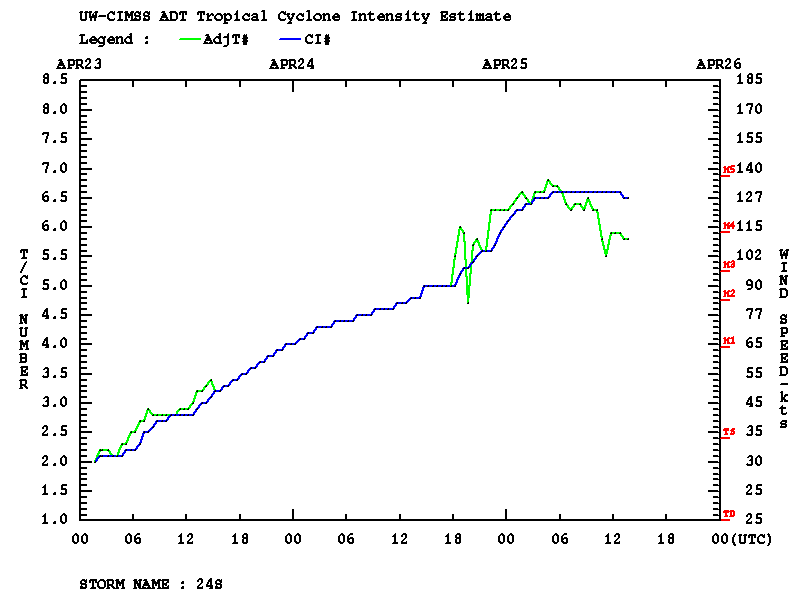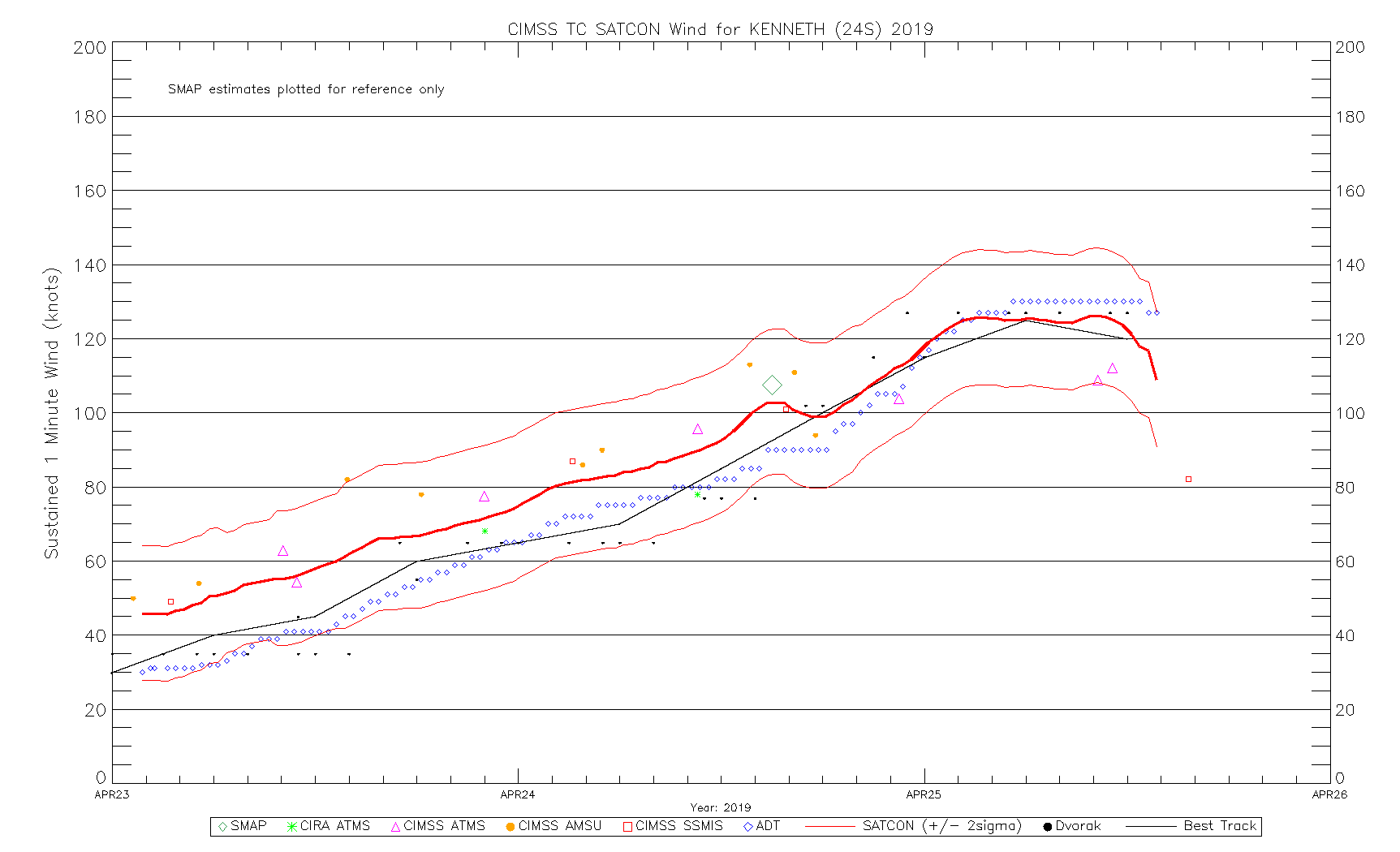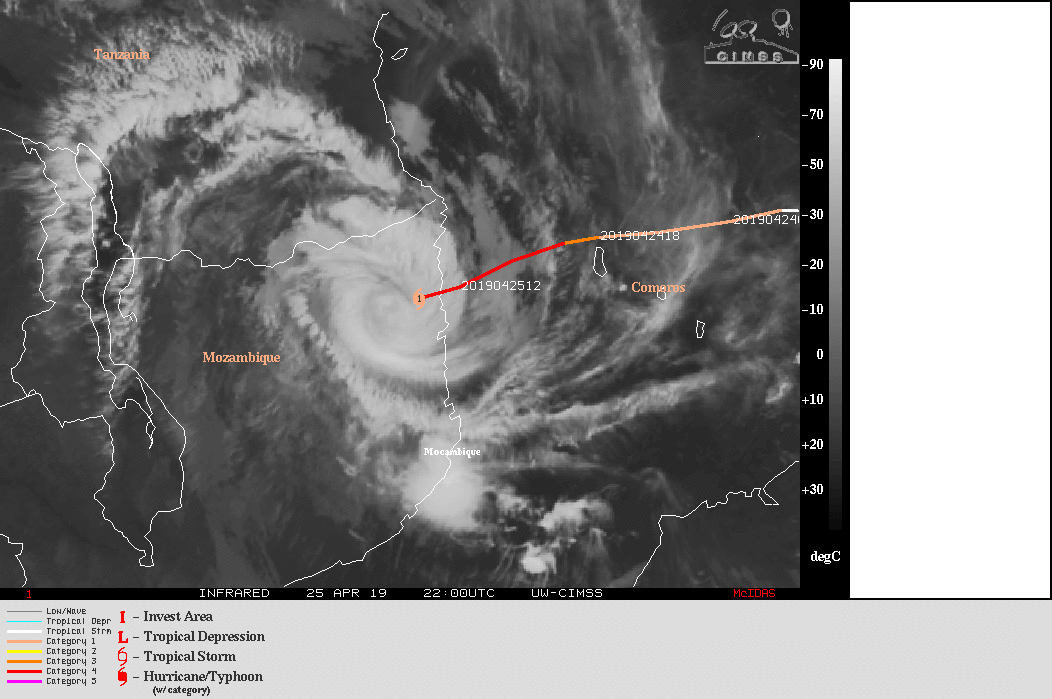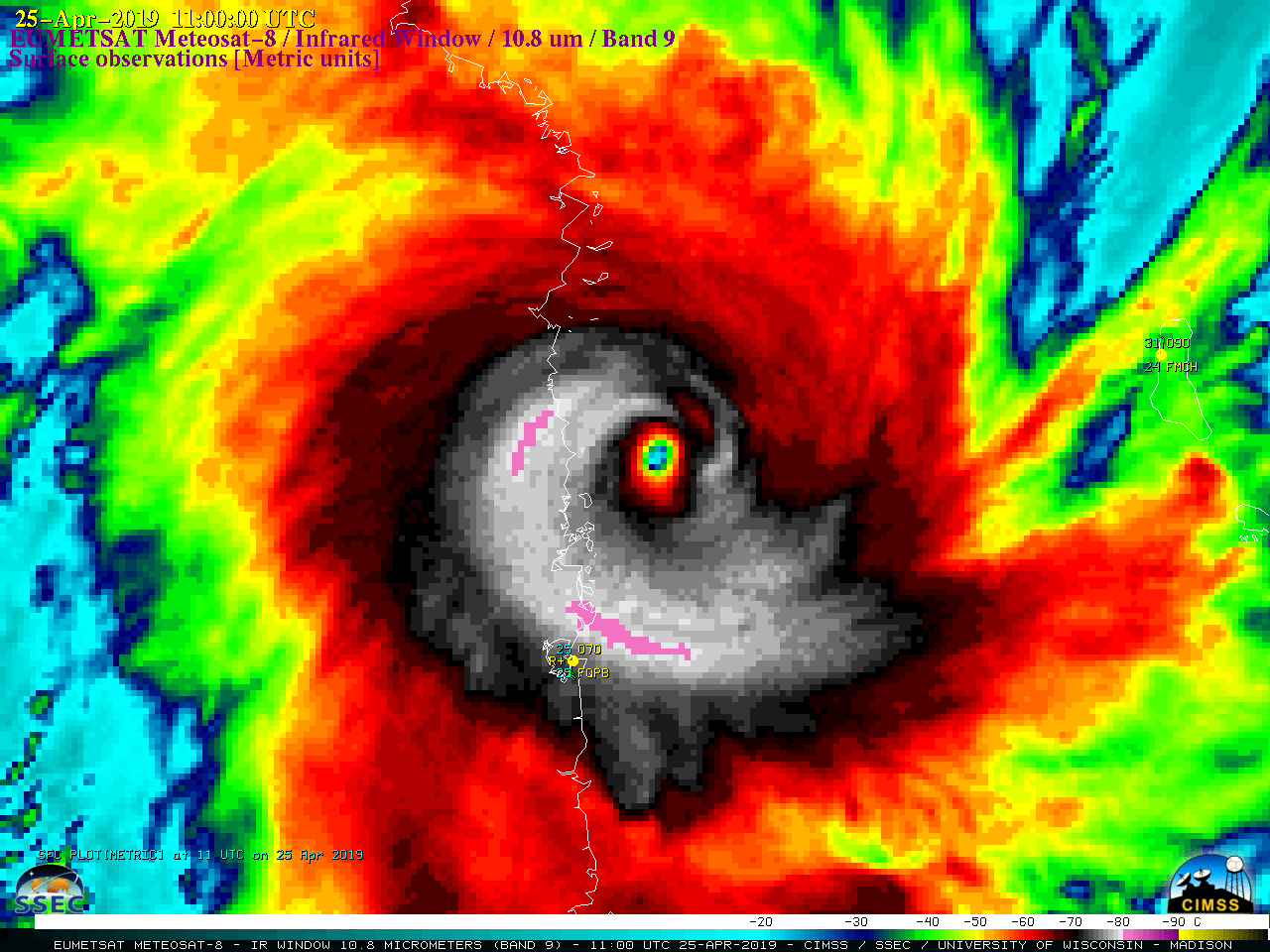
EUMETSAT Meteosat-8 Visible (0.8 µm) images (above) and Infrared Window (10.8 µm) images (below) showed Category 4 Cyclone Kenneth (12 UTC JTWC advisory) making landfall along the northeast coast of Mozambique (north of Pemba FQPB: surface observations) on 25 April 2019. Kenneth had been moving over warm water and through an environment of low deep-layer wind shear,... Read More
![Meteosat-8 Visible (0.8 µm) images [click to play animation | MP4]](https://cimss.ssec.wisc.edu/satellite-blog/wp-content/uploads/sites/5/2019/04/MET08_VIS_KENNETH_25APR2019_2019115_110000_METEOSAT-8_0001PANEL.GIF)
Meteosat-8 Visible (0.8 µm) images [click to play animation | MP4]
Meteosat-8 Visible (0.8 µm) images
(above) and Infrared Window (10.8 µm) images
(below) showed Category 4 Cyclone Kenneth (
12 UTC JTWC advisory) making landfall along the northeast coast of Mozambique (north of Pemba FQPB:
surface observations) on 25 April 2019. Kenneth had been moving over
warm water and through an environment of low
deep-layer wind shear, factors favorable for its rapid intensification (
ADT |
SATCON). After making landfall, Kenneth rapidly weakened to
Category 1 intensity by 18 UTC — but Metop-A
ASCAT winds of 40-49 knots were still sampled along the coast on the rear periphery of the storm. The slow inland movement of the remnants of Kenneth combined with copious amounts of tropical moisture as depicted by
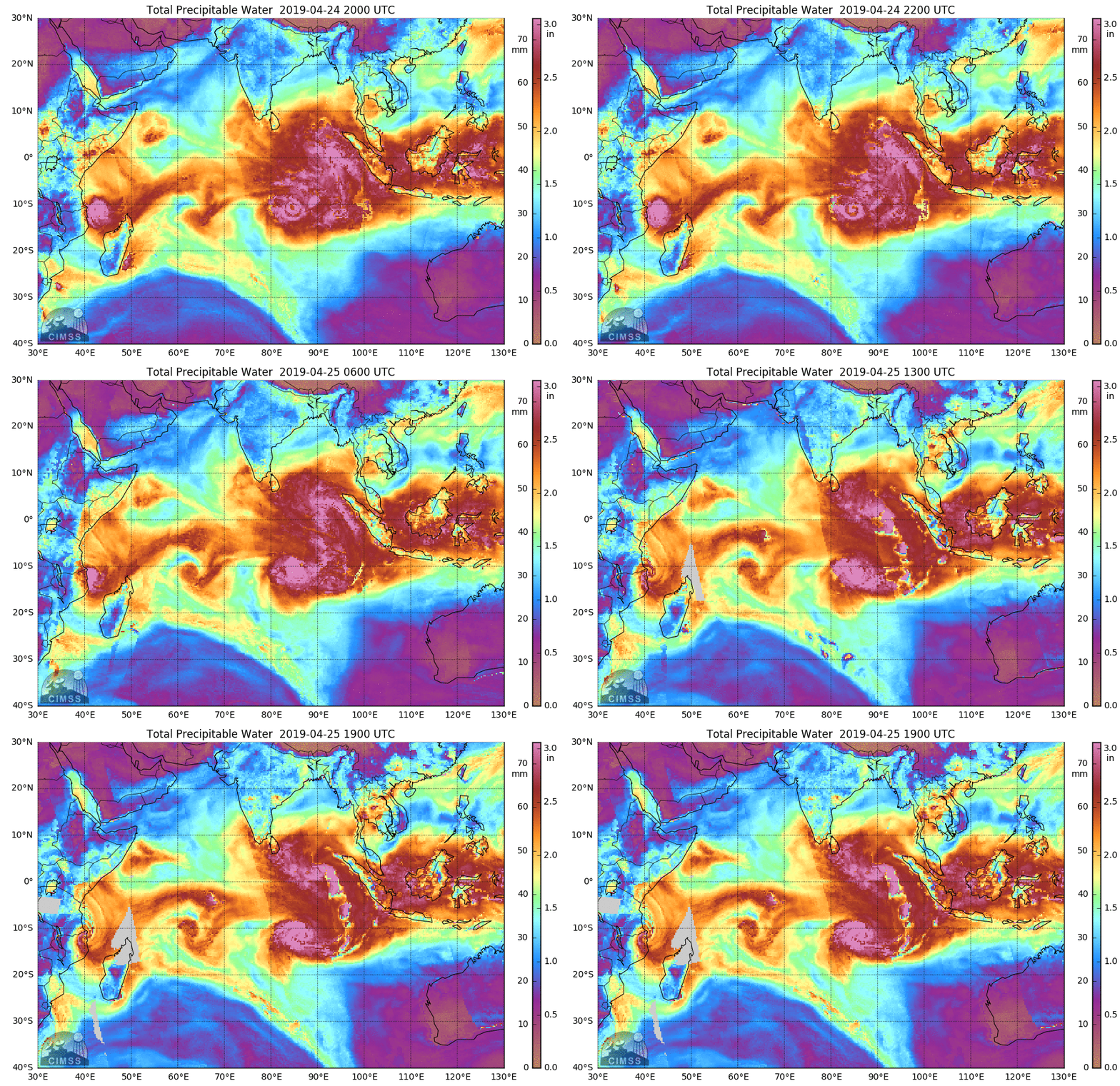
MIMIC TPW posed a concern for potential flooding problems.
![Meteosat-8 Infrared Window (10.8 µm) images [click to play animation | MP4]](https://cimss.ssec.wisc.edu/satellite-blog/wp-content/uploads/sites/5/2019/04/MET08_IR_KENNETH_25APR2019_2019115_110000_METEOSAT-8_0001PANEL.GIF)
Meteosat-8 Infrared Window (10.8 µm) images [click to play animation | MP4]
VIIRS True Color Red-Green-Blue (RGB) and Infrared Window (11.45 µm) images from Suomi NPP and NOAA-20, viewed using
RealEarth (below), provided higher-resolution views of Kenneth a few hours prior to landfall. This was the strongest tropical cyclone landfall on record for the northern portion of Mozambique, as discussed
here.
![VIIRS True Color RGB and Infrared Window (11.45 µm) images from Suomi NPP and NOAA-20 [click to enlarge]](https://cimss.ssec.wisc.edu/satellite-blog/wp-content/uploads/sites/5/2019/04/190425_suomiNPP_noaa20_viirs_truecolor_infrared_Cyclone_Kenneth_2_anim.gif)
VIIRS True Color RGB and Infrared Window (11.45 µm) images from Suomi NPP and NOAA-20 [click to enlarge]
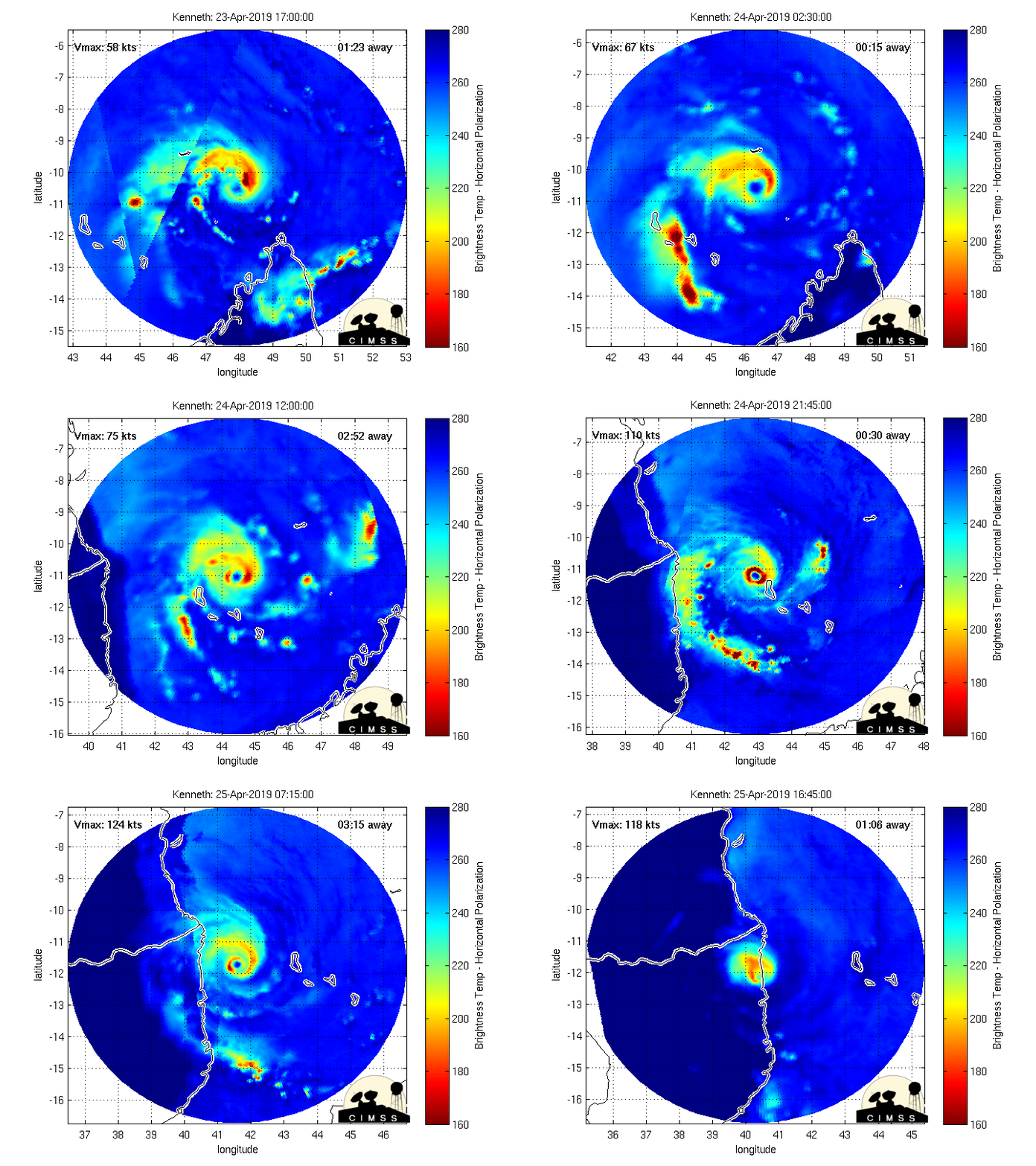
GCOM-W1 AMSR2 Microwave (89 GHz) image
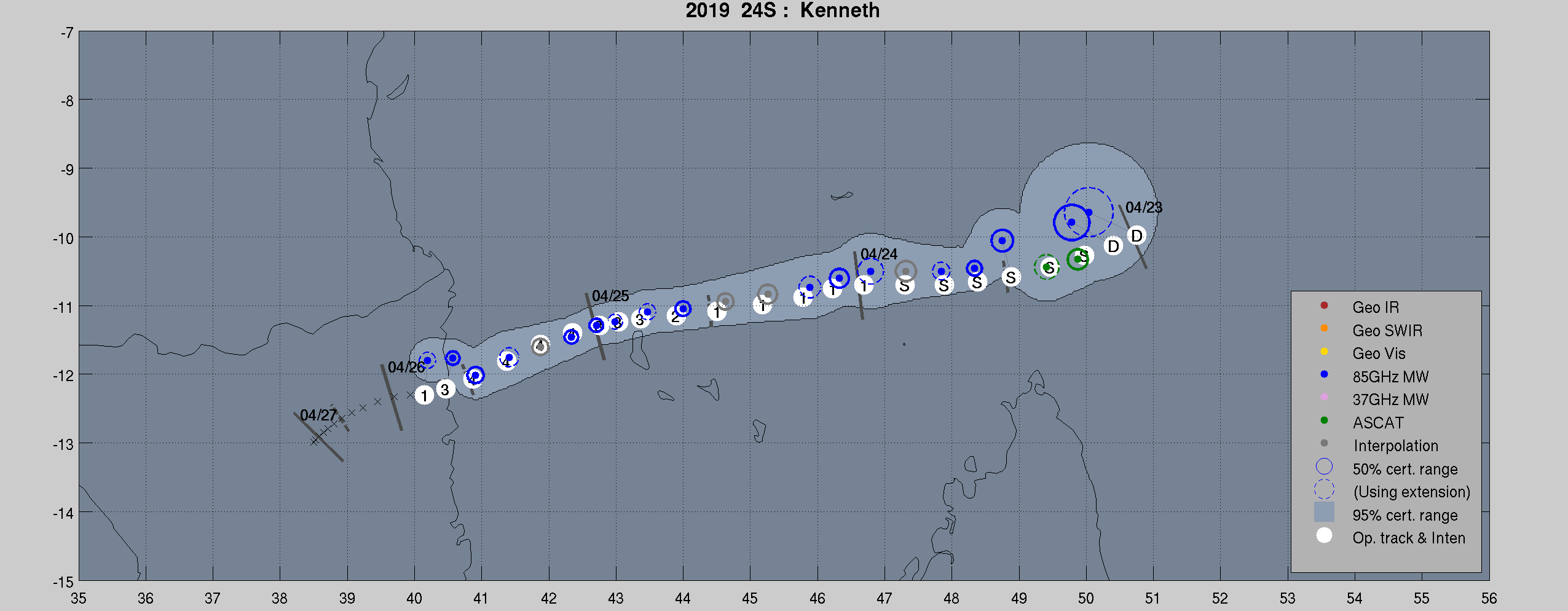
(below, courtesy of William Straka, CIMSS) showed the eye and spiral band structures near the Mozambique coast at 1030 UTC on 25 April. The evolution of the eye since its initial formation on 23 April was evident in the
MIMIC TC product.
![GCOM-W1 AMSR2 Microwave (89 GHz) image [click to enlarge]](https://cimss.ssec.wisc.edu/satellite-blog/wp-content/uploads/sites/5/2019/04/AMSR2_89.0BT_042519_1030_Kenneth_labels.png)
GCOM-W1 AMSR2 Microwave (89 GHz) image [click to enlarge]
A longer animation of Meteosat-8 Infrared images
(below) during the later half of its
storm track showed the formation of an eye as Kenneth began its period of rapid intensification on 24 April. Cloud-top infrared brightness temperatures were -90ºC and colder
(yellow pixels embedded with darker shades of purple) during the 1030-1800 UTC period on 24 April. Note that the center of Kenneth passed just north of the island of
Grande Comore soon after the eye had developed — at Prince Said Ibrahim International Airport
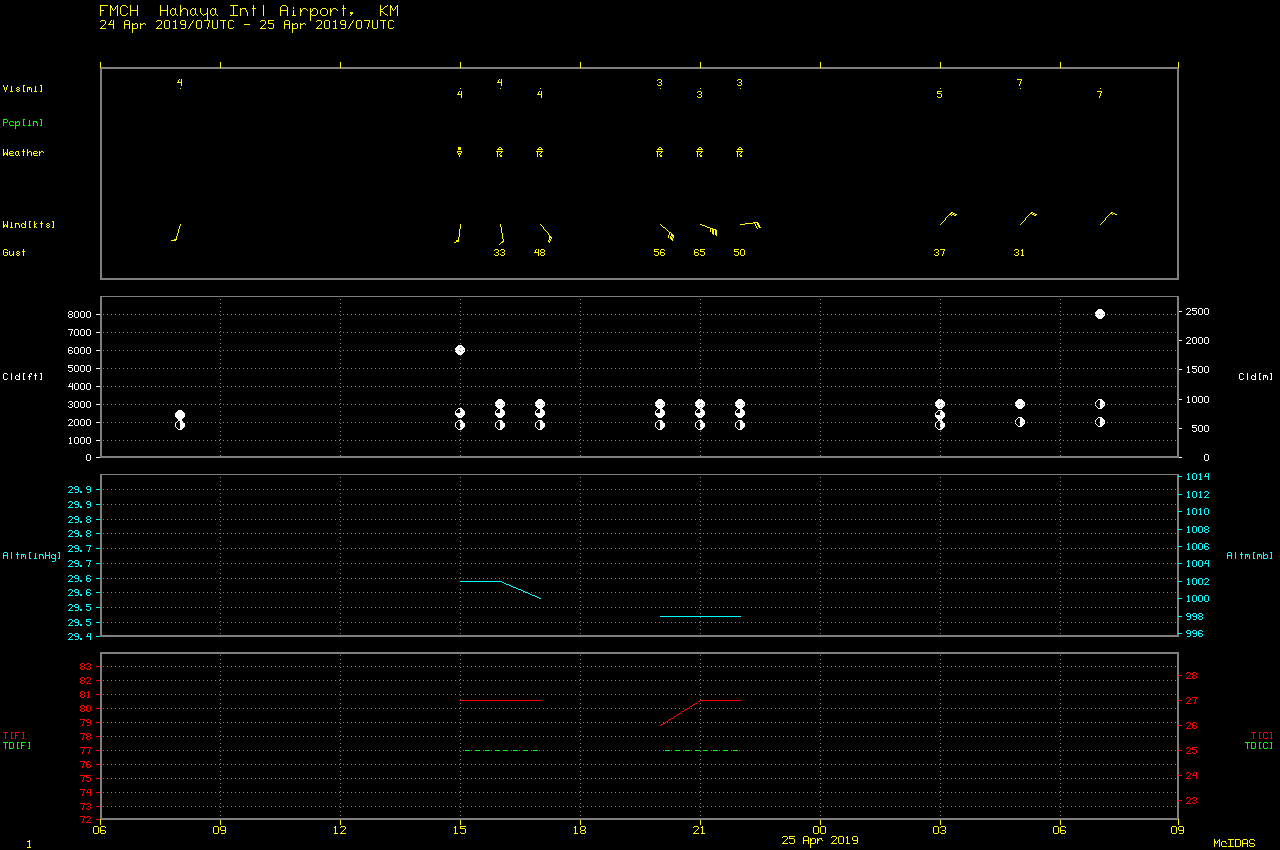
FMCH in Moroni, southeast winds gusted to 65 knots at
21 UTC 0n 24 April as the southern eyewall passed over the island.
![Meteosat-8 Infrared Window (10.8 µm) images [click to play animation | MP4]](https://cimss.ssec.wisc.edu/satellite-blog/wp-content/uploads/sites/5/2019/04/MET08_IR_KENNETH_24_25APR2019_2019114_210000_METEOSAT-8_0001PANEL.GIF)
Meteosat-8 Infrared Window (10.8 µm) images [click to play animation | MP4]
NOAA-20 VIIRS Day/Night Band (0.7 µm) and Infrared Window (11.45 µm) images
(below, courtesy of William Straka, CIMSS) showed Kenneth at 2232 UTC on 24 April, shortly before the tropical cyclone had reached Category 4 intensity. Ample illumination from the Moon — in the Waning Gibbous phase, at 73% of Full — provided an excellent example of the “visible image at night” capability of the VIIRS Day/Night Band.
![NOAA-20 Day/Night Band (0.7 µm) and Infrared Window (11.45 µm) images [click to enlarge]](https://cimss.ssec.wisc.edu/satellite-blog/wp-content/uploads/sites/5/2019/04/190424_2232utc_noaa20_dayNightBand_infraredWindow_Cyclone_Kenneth_anim.gif)
NOAA-20 VIIRS Day/Night Band (0.7 µm) and Infrared Window (11.45 µm) images [click to enlarge]
View only this post
Read Less


![True Color RGB and Infrared Window (11.45 µm) images from Suomi NPP and NOAA-20 [click to play animation]](https://cimss.ssec.wisc.edu/satellite-blog/wp-content/uploads/sites/5/2019/04/190426_noaa20_suomiNPP_viirs_truecolor_infrared_Storm_Hannah_anim.gif)
![Meteosat-11 Water Vapor (6.25 µm) images with plots of surface winds and gusts [click to play animation | MP4]](https://cimss.ssec.wisc.edu/satellite-blog/wp-content/uploads/sites/5/2019/04/190426_meteosat11_waterVapor_windGusts_Storm_Hannah_anim.gif)
![Meteosat-8 Visible (0.8 µm) images [click to play animation | MP4]](https://cimss.ssec.wisc.edu/satellite-blog/wp-content/uploads/sites/5/2019/04/190425_meteosat8_visible_Kenneth_anim.gif)
![Meteosat-8 Infrared Window (10.8 µm) images [click to play animation | MP4]](https://cimss.ssec.wisc.edu/satellite-blog/wp-content/uploads/sites/5/2019/04/190425_meteosat8_infrared_Kenneth_anim.gif)
![Meteosat-8 Infrared Window (10.8 µm) images [click to play animation | MP4]](https://cimss.ssec.wisc.edu/satellite-blog/wp-content/uploads/sites/5/2019/04/190424_190425_meteosat8_infrared_Kenneth_anim.gif)

![GOES-17 "Red" Visible (0.64 µm) and Shortwave Infrared (3.9 µm) images [click to play animation | MP4]](https://cimss.ssec.wisc.edu/satellite-blog/wp-content/uploads/sites/5/2019/04/190424_goes17_visible_shortwaveInfrared_East_Pacific_ship_tracks_anim.gif)

![GOES-17 Low-level (7.3 µm), Mid-level (6.9 µm) and Upper-level (6.2 µm) Water Vapor images, with topography [click to play animation | MP4]](https://cimss.ssec.wisc.edu/satellite-blog/wp-content/uploads/sites/5/2019/04/190422_goes17_waterVapor_Haida_Gwaii_waves_anim.gif)
![GOES-17 Water Vapor weighting functions calculated from 12 UTC rawinsonde data at Annette Island, Alaska [click to enlarge]](https://cimss.ssec.wisc.edu/satellite-blog/wp-content/uploads/sites/5/2019/04/190423_00utc_pant_waterVapor_weightingFunctions.png)
![Suomi NPP VIIRS Visible (0.64 µm) and Infrared Window (11.45 µm) images at 2137 UTC [click to enlarge]](https://cimss.ssec.wisc.edu/satellite-blog/wp-content/uploads/sites/5/2019/04/190422_2137utc_suomiNPP_viirs_visible_infrared_Haida_Gwaii_anim.gif)