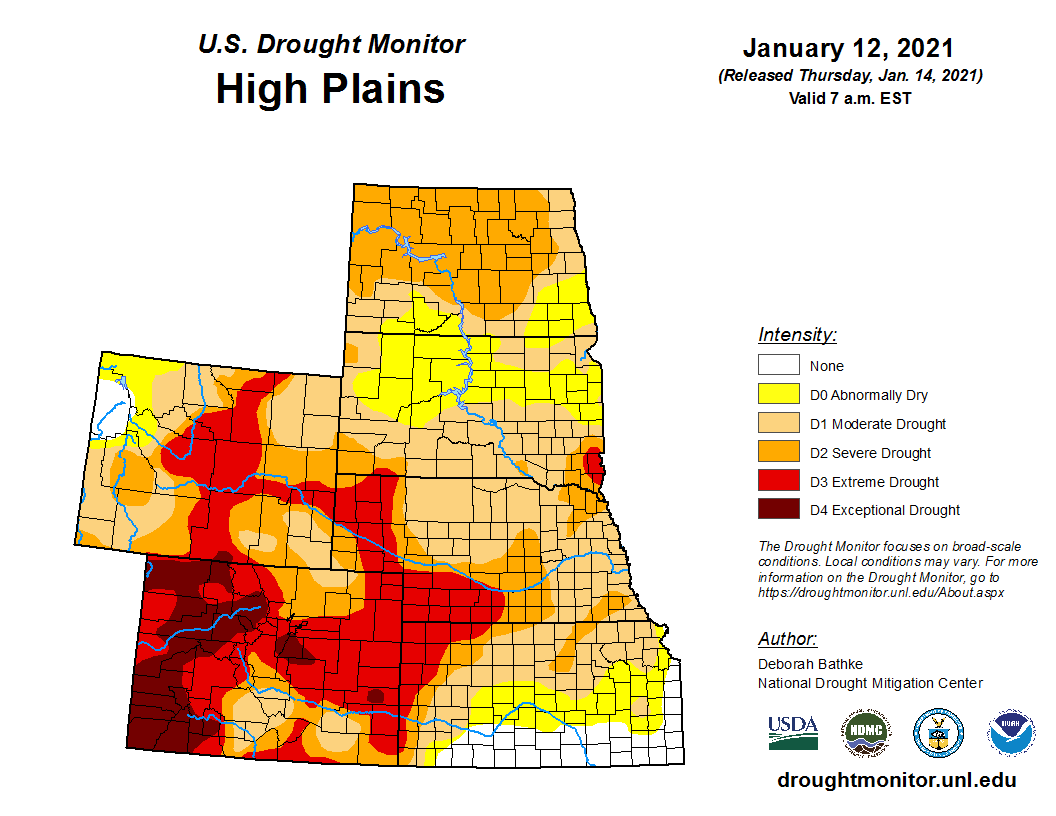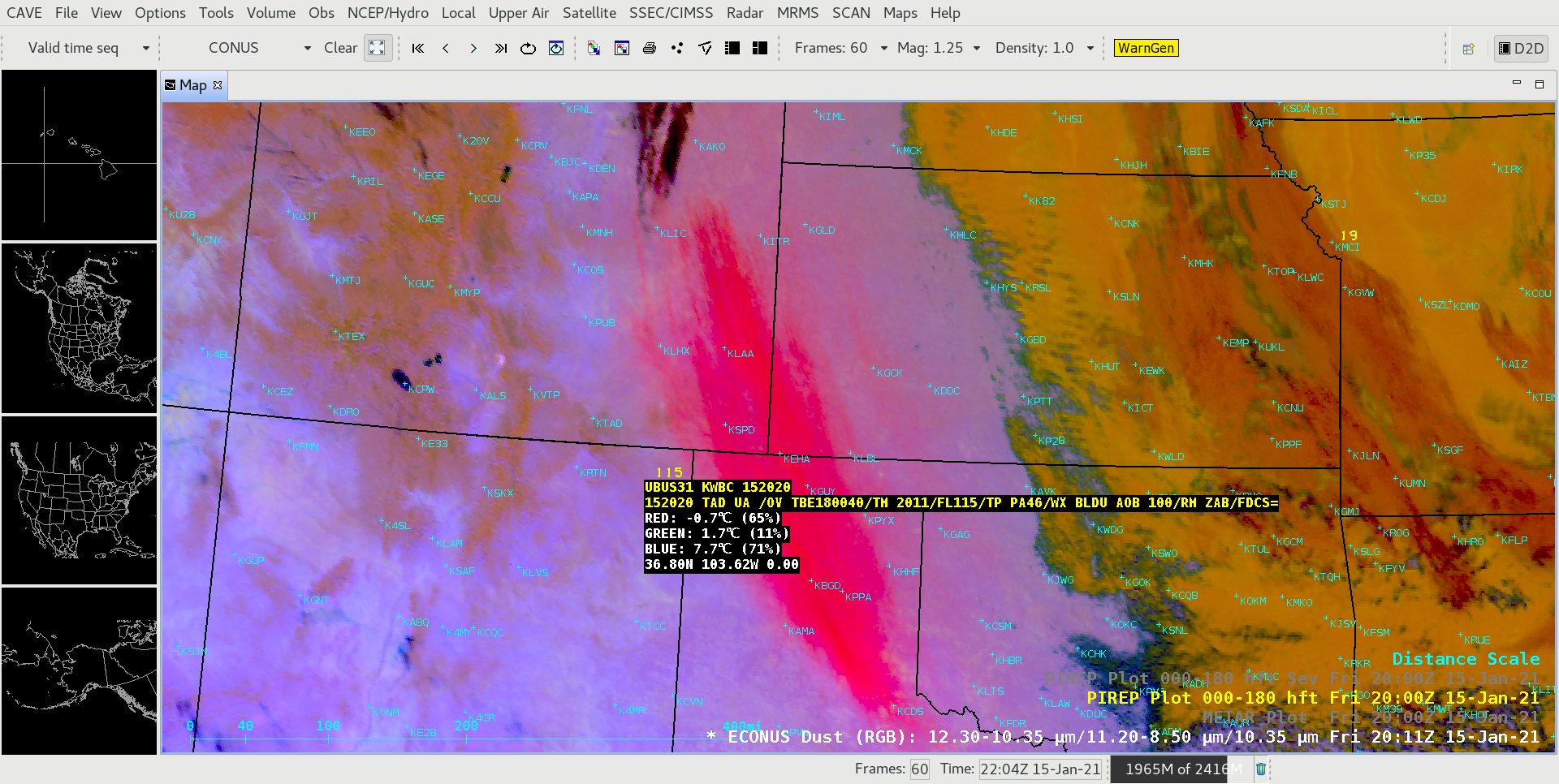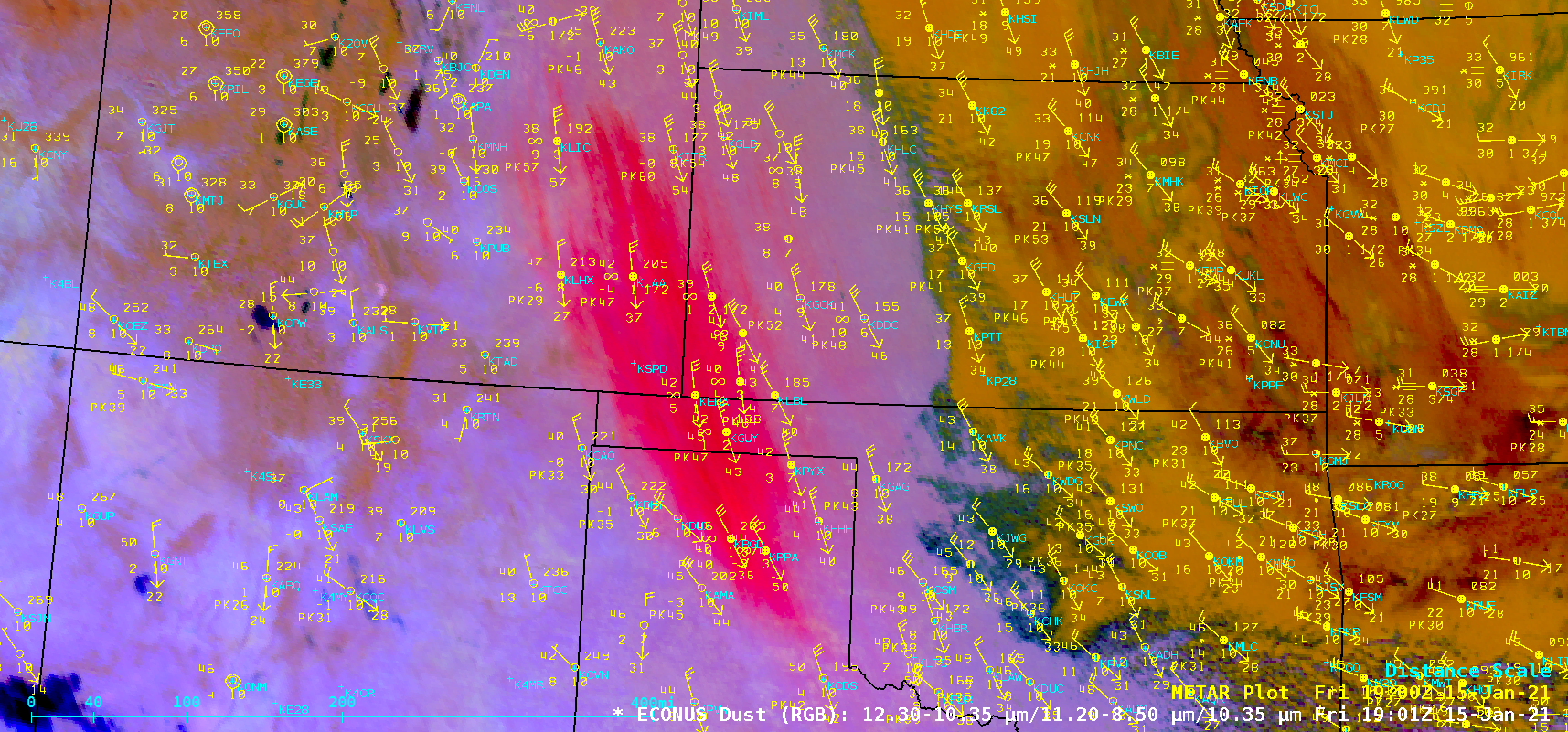
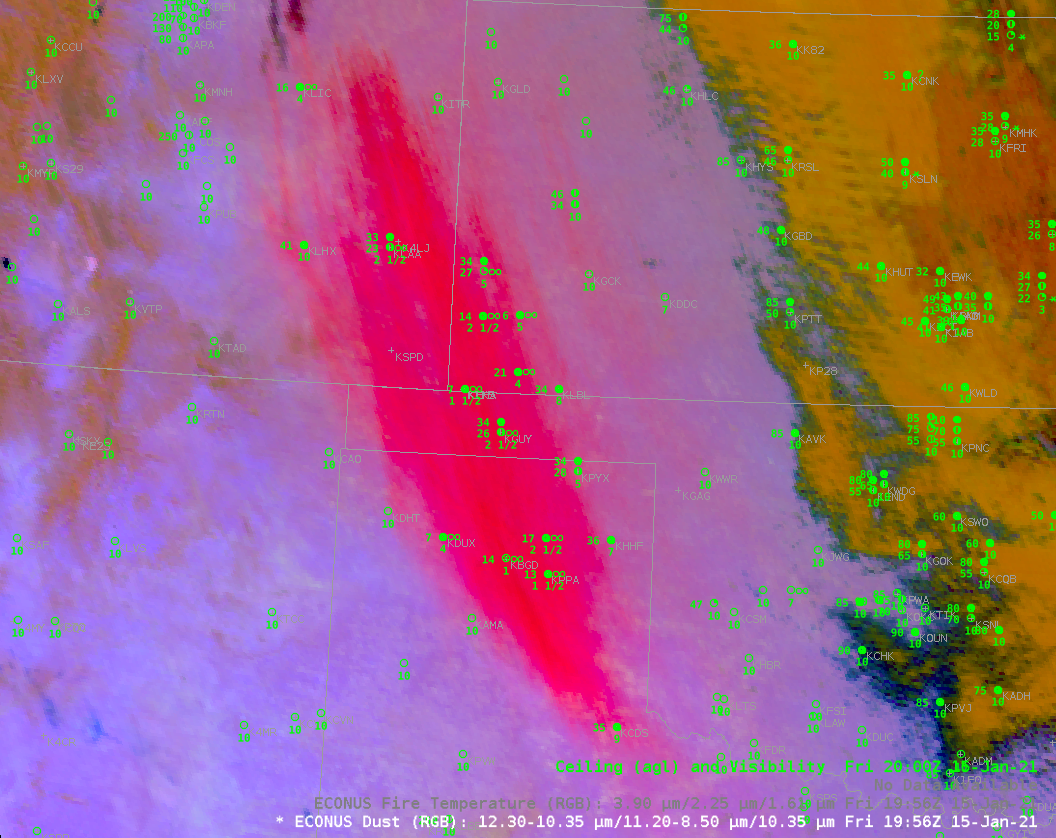
As discussed in this blog post, GOES-16 (GOES-East) Dust RGB images (above) displayed the distinct signature of a large blowing dust plume (brighter shades magenta/pink) that initially developed over drought-stricken areas of eastern Colorado and far western Kansas on 15 January 2021. Surface wind gusts in excess of 60 knots were seen in eastern Colorado... Read More
![GOES-16 Dust RGB images, with and without hourly surface reports [click to play animation | MP4]](https://cimss.ssec.wisc.edu/satellite-blog/images/2021/01/co_rgb_obs-20210115_190116.png)
GOES-16 Dust RGB images, with and without hourly surface reports [click to play animation | MP4]
As discussed in
this blog post, GOES-16
(GOES-East) Dust RGB images
(above) displayed the distinct signature of a large blowing dust plume
(brighter shades magenta/pink) that initially developed over
drought-stricken areas of eastern Colorado and far western Kansas on
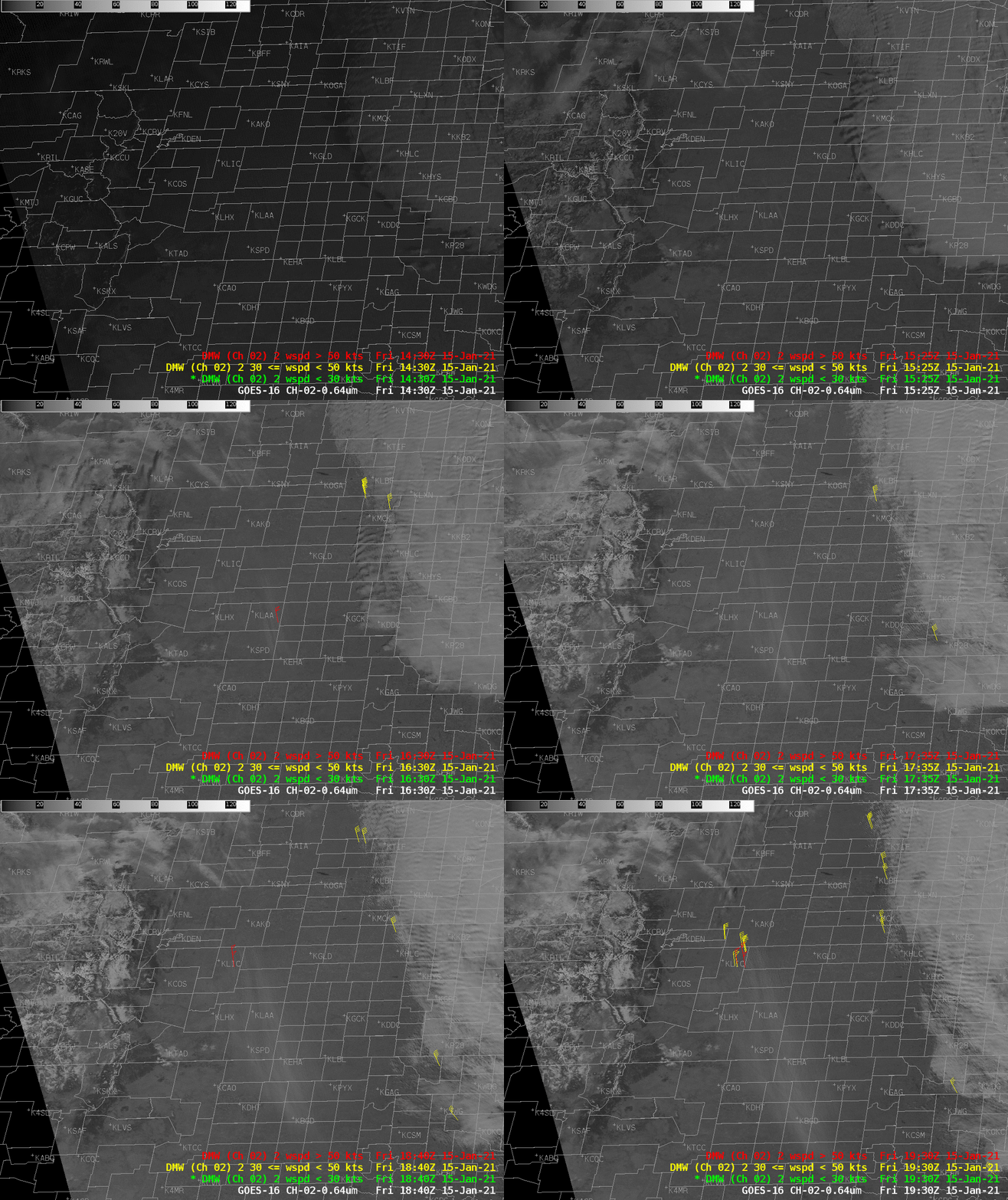
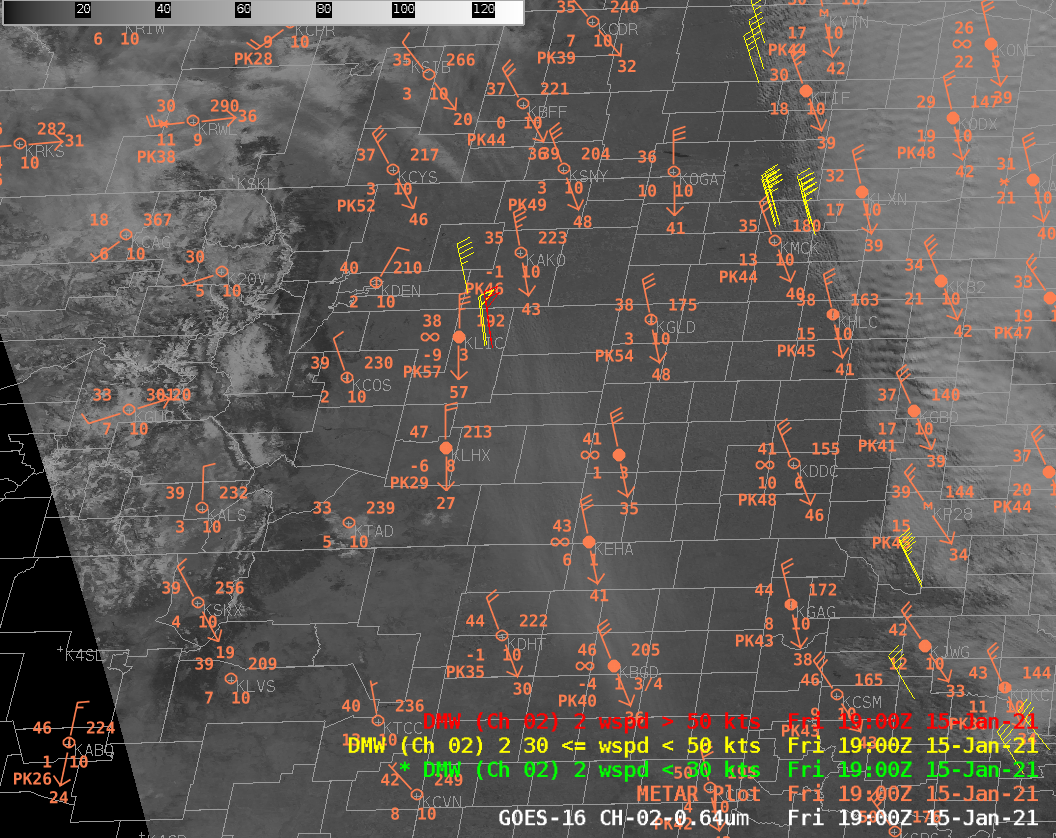
15 January 2021. Surface wind gusts in excess of 60 knots were seen in eastern Colorado near the source of the dust plume, with a peak gust of 63 knots or 72 mph — in fact, the anomalously-strong
925 hPa wind speeds were 5-6 sigma above the climatological mean (
source). Pilot reports near the edges of the plume indicated visibility restrictions due to dust at altitudes of
5,000 feet over southwestern Kansas and
10,000 feet over northeastern New Mexico.
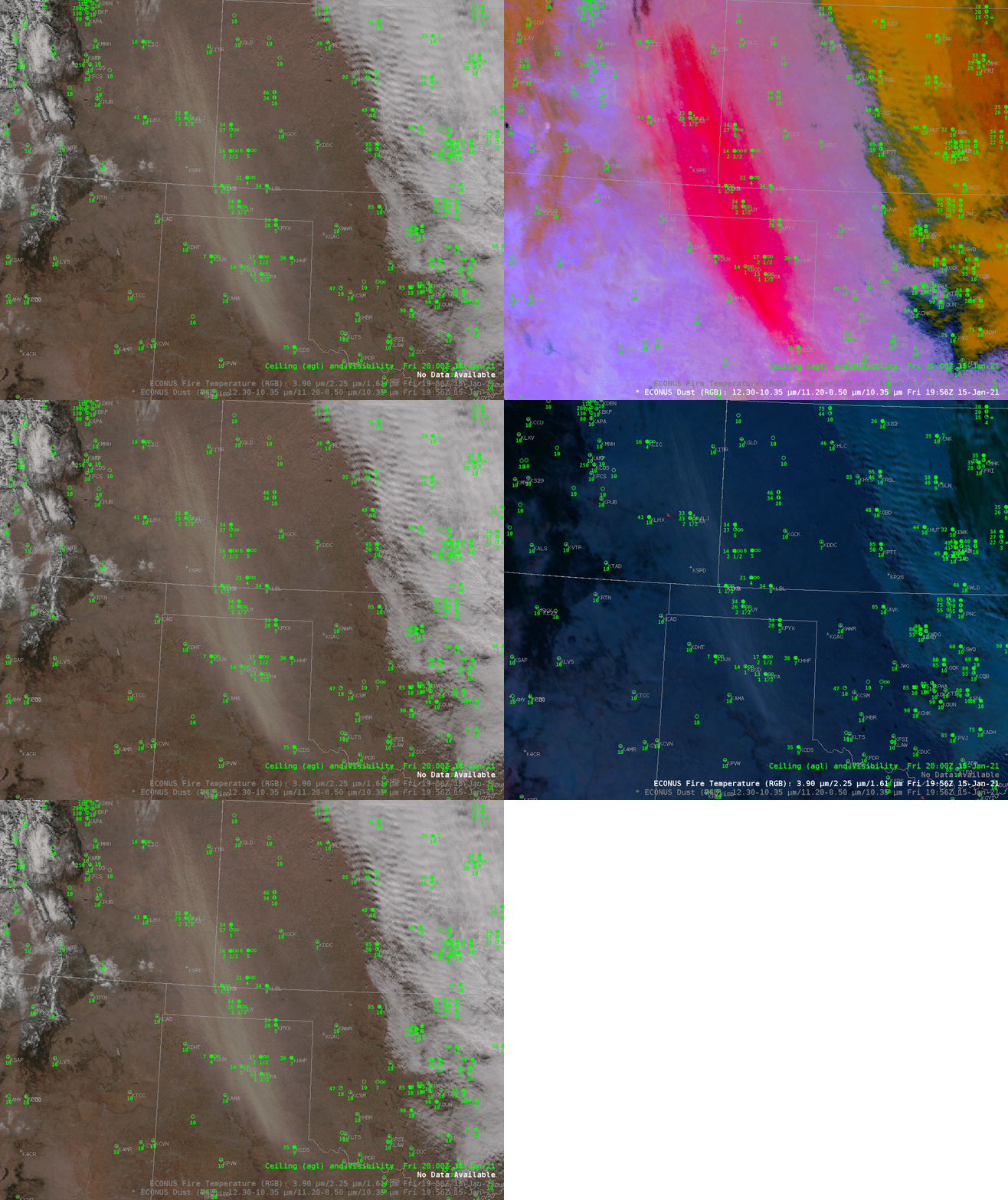
GOES-16 True Color RGB and Dust RGB images (created using Geo2Grid) are shown below.
![GOES-16 Dust RGB and True Color RGB images [click to play animation | MP4]](https://cimss.ssec.wisc.edu/satellite-blog/images/2021/01/GOES-16_ABI_RadC_true_color_2021015_213116Z.png)
GOES-16 True Color RGB and Dust RGB images [click to play animation | MP4]
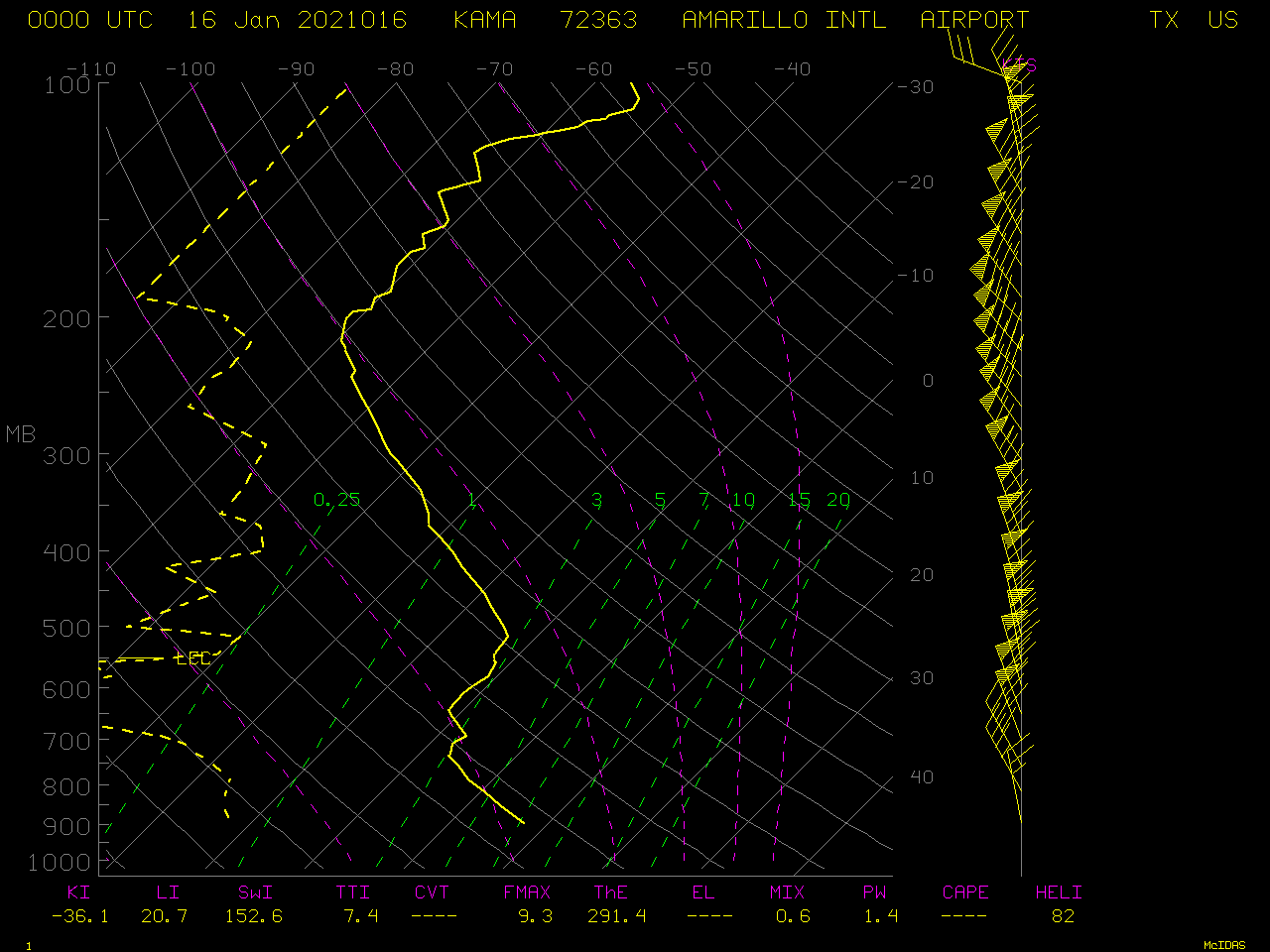
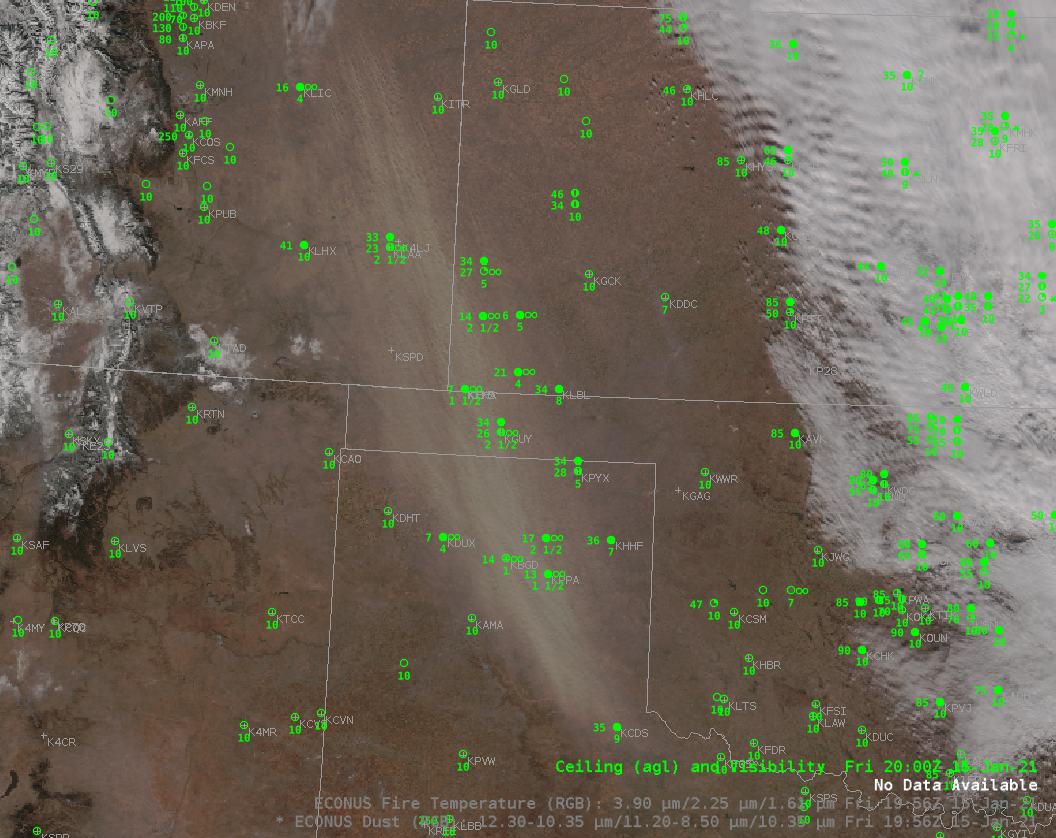
Due to the presence of very dry throughout the lower/middle troposphere (
Amarillo, Texas rawinsonde data), a signature of the dust plume was also evident in GOES-16 Near-Infrared “Cirrus” (
1.37 µm) images
(below).
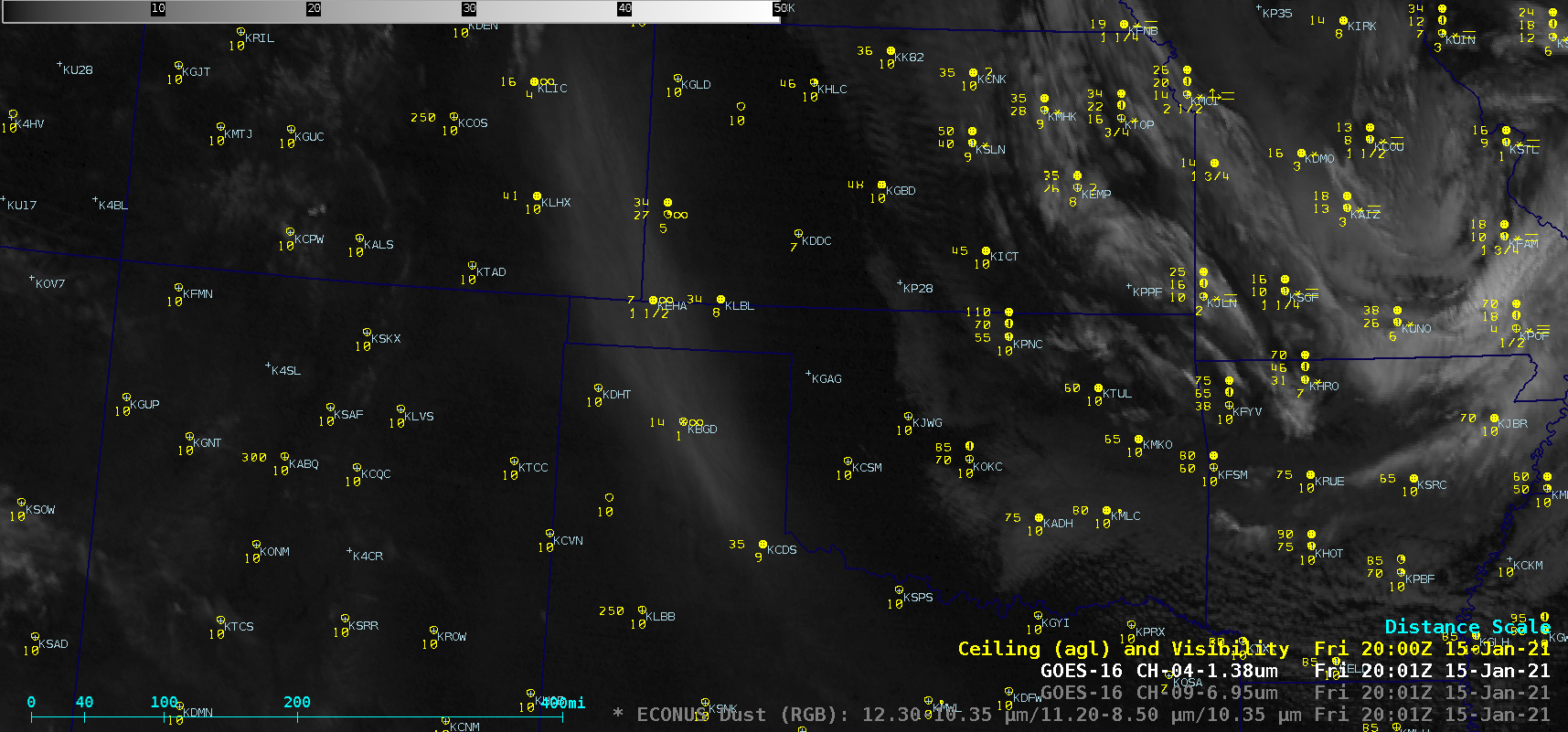
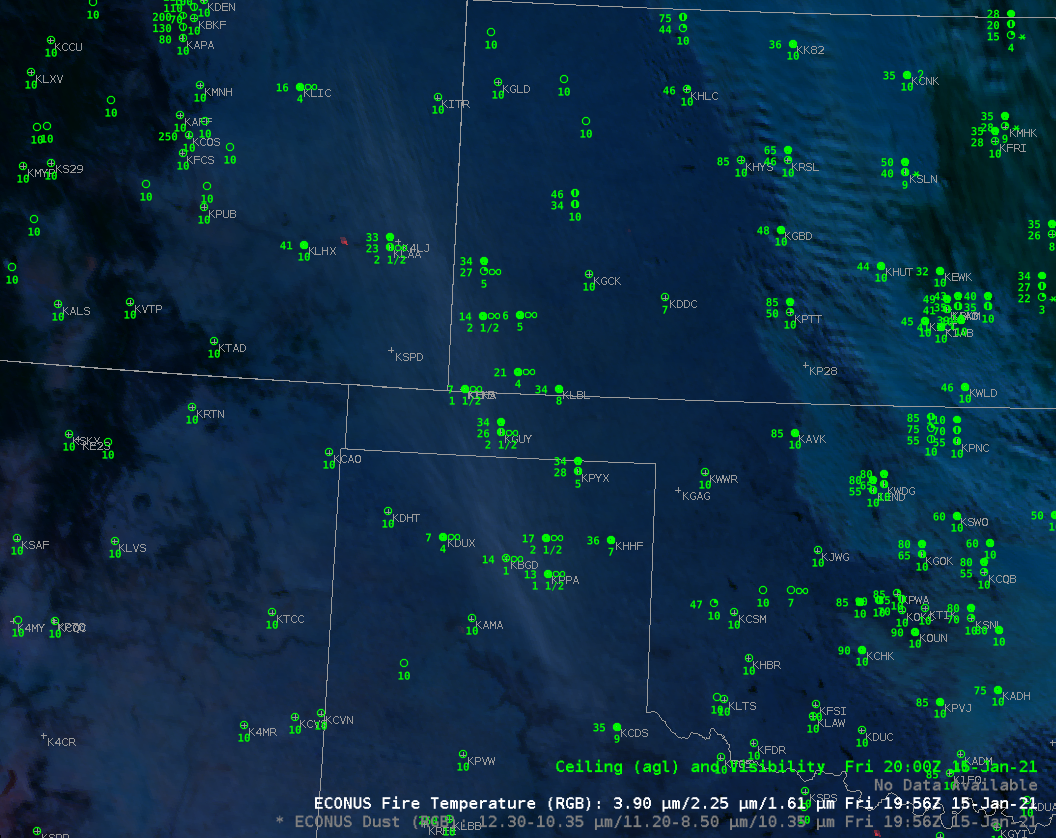
GOES-16 Dust RGB and Near-Infrared “Cirrus” (1.37 µm) images, with plots of Ceiling and Visibility [click to play animation | MP4]
After sunset, the plume signature persisted in GOES-16 Dust RGB images
(below) as the blowing dust continued to move southeastward across Texas.
![GOES-16 Dust RGB images, with and without hourly surface reports [click to play animation | MP4]](https://cimss.ssec.wisc.edu/satellite-blog/images/2021/01/co_rgb3_obs-20210116_040116.png)
GOES-16 Dust RGB images, with and without hourly surface reports [click to play animation | MP4]
===== 16 January Update =====
![GOES-16 Dust RGB and True Color RGB images [click to play animation | MP4]](https://cimss.ssec.wisc.edu/satellite-blog/images/2021/01/GOES-16_ABI_RadC_true_color_2021016_140616Z.png)
GOES-16 Dust RGB and True Color RGB images [click to play animation | MP4]
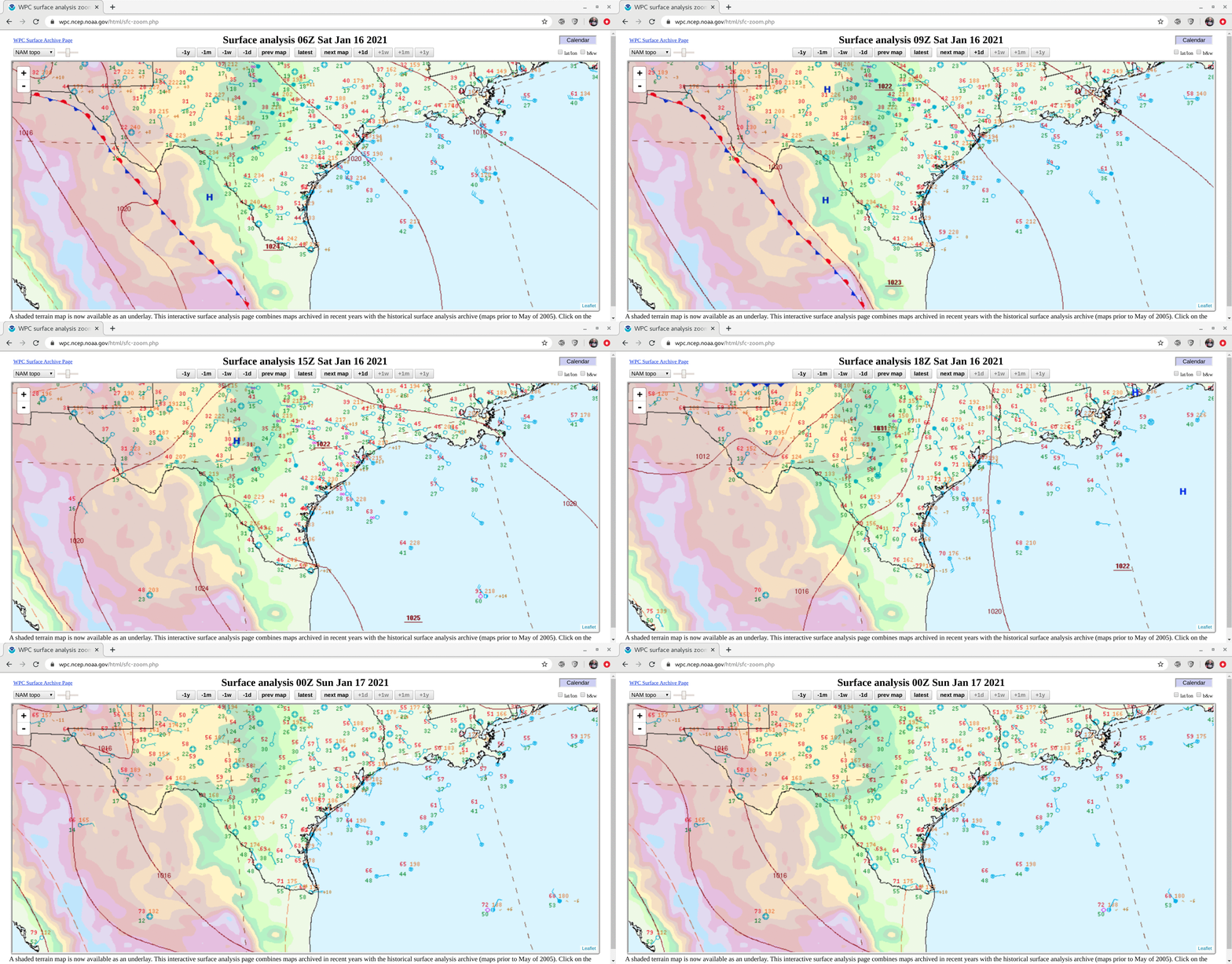
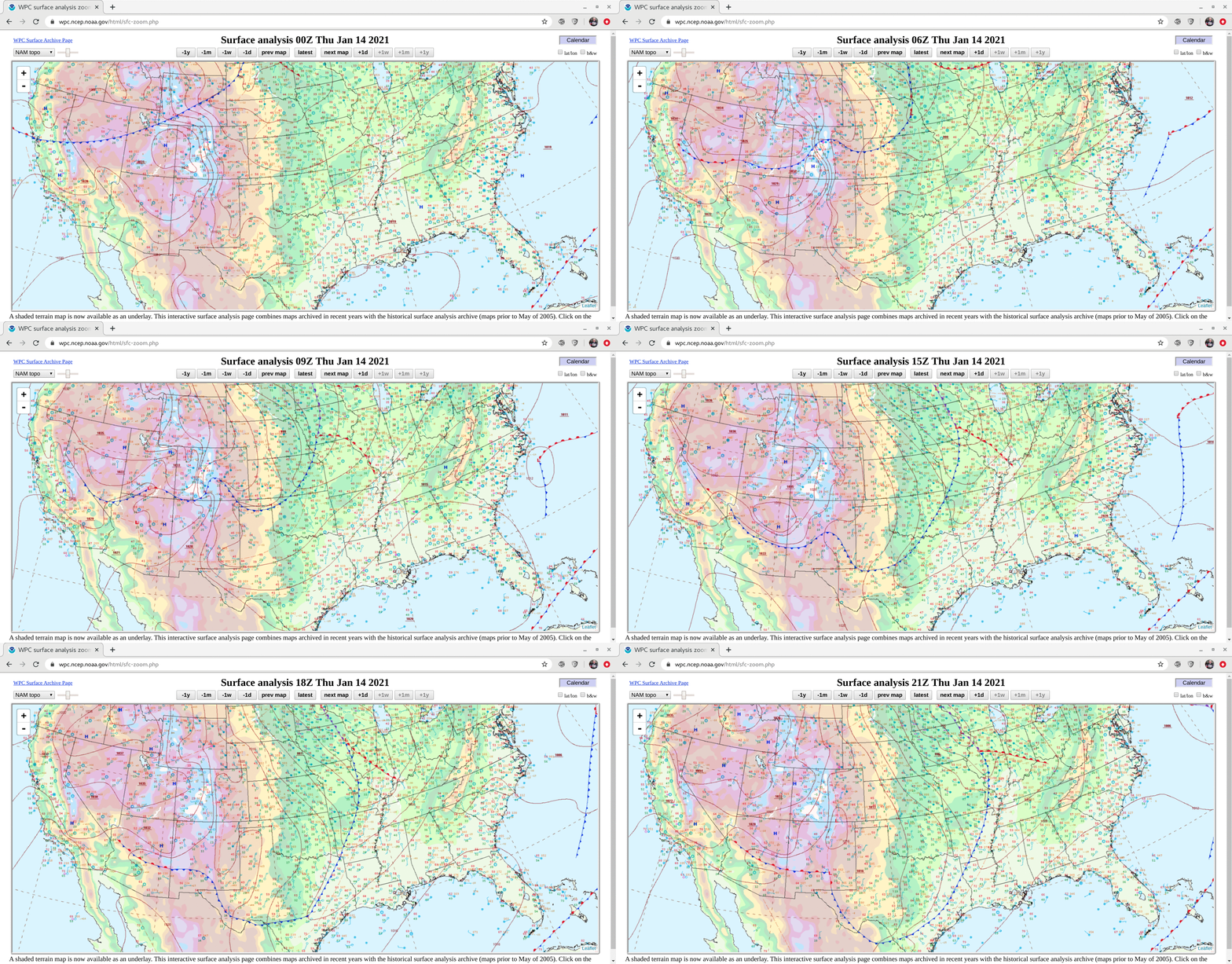
On the following day, the dust plume began to flow off the Texas coast and over the Gulf of Mexico by 06 UTC — and although the plume signature began to diminish in the GOES-16 Dust RGB images after sunrise, it was very apparent in True Color RGB imagery (above). Note that the True Color images revealed some recirculation of dust which began to move inland toward the end of the day, as surface winds near the coast shifted to southeasterly (surface analyses).
GOES-16 Natural Color RGB images with plots of Ceiling and Visibility (below) showed that the dust reduced the visibility to 2.5 miles at a site located just off the Texas coast at 14 UTC, and to 5 miles at a site located about 100 miles offshore at 15 UTC.
![GOES-16 Natural Color RGB images, with plots of Ceiling and Visibility [click to play animation| MP4]](https://cimss.ssec.wisc.edu/satellite-blog/images/2021/01/gom_tc-20210116_140116.png)
GOES-16 Natural Color RGB images, with plots of Ceiling and Visibility [click to play animation| MP4]
In a toggle between VIIRS True Color and False Color RGB images from Suomi NPP
(below), the dust plume was very evident over the Gulf of Mexico (where its lighter appearance stood out against the dark background of the water).
![VIIRS True Color and False Color RGB images from Suomi NPP [click to enlarge]](https://cimss.ssec.wisc.edu/satellite-blog/images/2021/01/210116_1911utc_suomiNPP_viirs_trueColorRGB_falseColorGB_TX_Gulf_of_Mexico_blowing_dust_anim.gif)
VIIRS True Color and False Color RGB images from Suomi NPP [click to enlarge]
View only this post
Read Less


![GOES-16 Dust RGB images, with and without hourly surface reports [click to play animation | MP4]](https://cimss.ssec.wisc.edu/satellite-blog/images/2021/01/210115_goes16_dustRGB_CO_KS_OK_TX_anim.gif)
![GOES-16 Dust RGB and True Color RGB images [click to play animation | MP4]](https://cimss.ssec.wisc.edu/satellite-blog/images/2021/01/210115_goes16_trueColorRGB_dustRGB_Plains_blowing_dust_anim.gif)

![GOES-16 Dust RGB images, with and without hourly surface reports [click to play animation | MP4]](https://cimss.ssec.wisc.edu/satellite-blog/images/2021/01/210115_goes16_dustRGB_3_CO_KS_OK_TX_anim.gif)
![GOES-16 Dust RGB and True Color RGB images [click to play animation | MP4]](https://cimss.ssec.wisc.edu/satellite-blog/images/2021/01/210116_goes16_dustRGB_trueColorRGB_TX_Gulf_of_Mexico_dust_plume_anim.gif)
![GOES-16 Natural Color RGB images, with plots of Ceiling and Visibility [click to play animation| MP4]](https://cimss.ssec.wisc.edu/satellite-blog/images/2021/01/210116_goes16_cimssNaturalColorGB_TX_Gulf_of_Mexico_dust_plume_anim.gif)

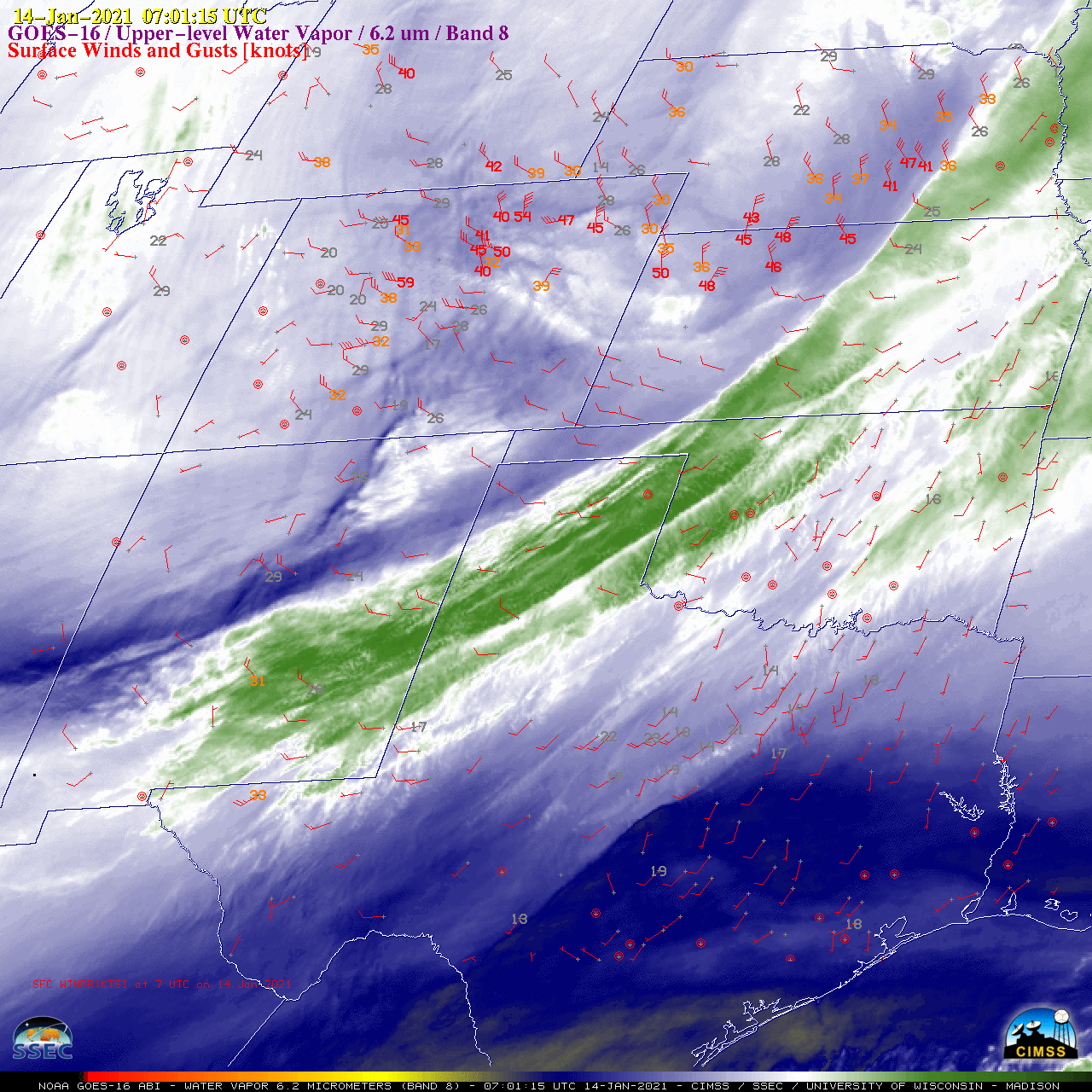
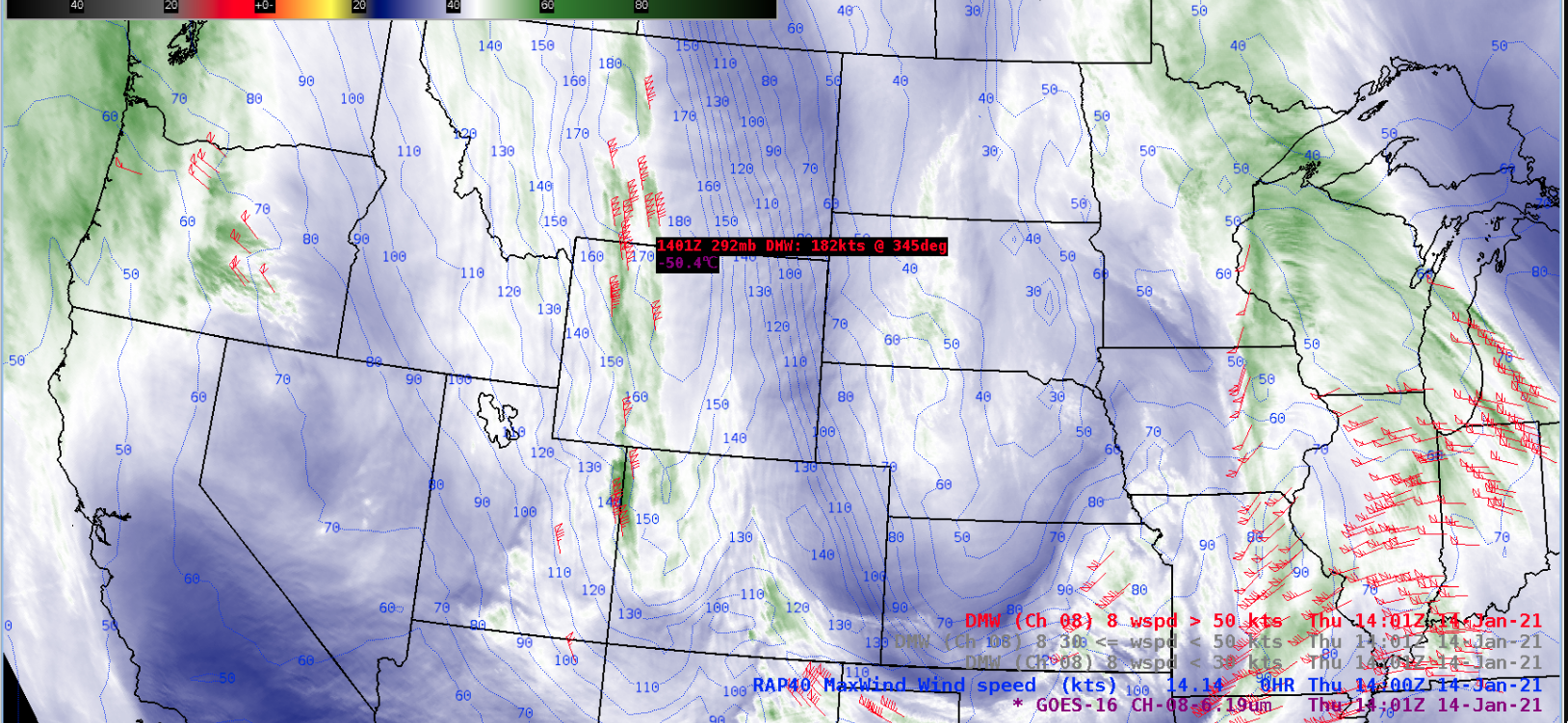
![GOES-16 Upper-level Water Vapor (6.2 µm) images, with plots of hourly surface wind barbs and gusts [click to play animation | MP4]](https://cimss.ssec.wisc.edu/satellite-blog/images/2021/01/210114_goes16_waterVapor8_surfaceWinds_Plains_anim.gif)
![GOES-16 Upper-level Water Vapor (6.2 µm) images, with plots of 6.2 µm Derived Motion Winds and contours of RAP40 model maximum wind speeds [click to play animation | MP4]](https://cimss.ssec.wisc.edu/satellite-blog/images/2021/01/210114_goes16_waterVapor_derivedMotionWinds_Rockies_jet_anim.gif)