
This website works best with a newer web browser such as Chrome, Firefox, Safari or Microsoft Edge. Internet Explorer is not supported by this website.

Category: Fire detection

Multiple pyrocumulonimbus clouds produced by the East Troublesome Fire in Colorado
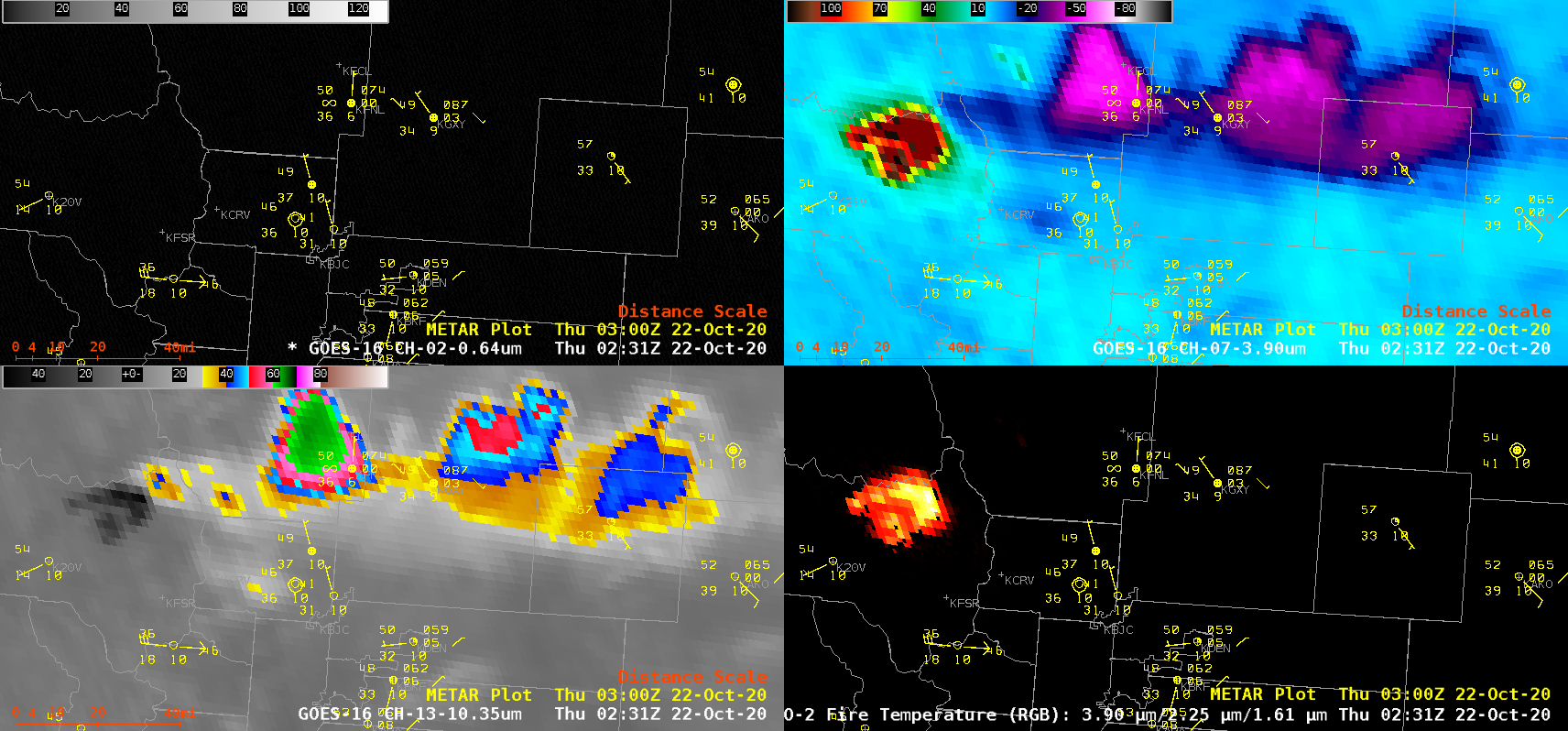
1-minute Mesoscale Domain Sector GOES-16 (GOES-East) “Red” Visible (0.64 µm), Shortwave Infrared (3.9 µm), “Clean” Infrared Window (10.35 µm) and Fire Temperature Red-Green-Blue (RGB) images (above) showed a period of extreme behavior of the East Troublesome Fire in Colorado around and just after sunset on 21 October 2020. This rapidly-growing wildfire produced a series of pyrocumulonimbus (pyroCb) clouds — the coldest pyroCb cloud-top 10.35 µm infrared brightness temperatures... Read More

NUCAPS Sounding profiles surrounding Colorado’s East Troublesome Fire

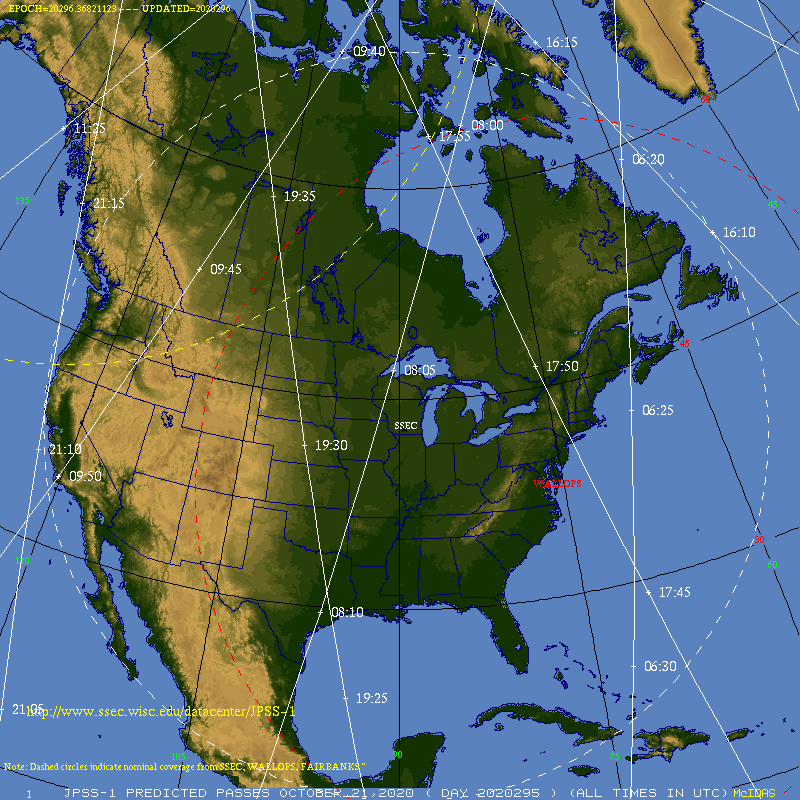
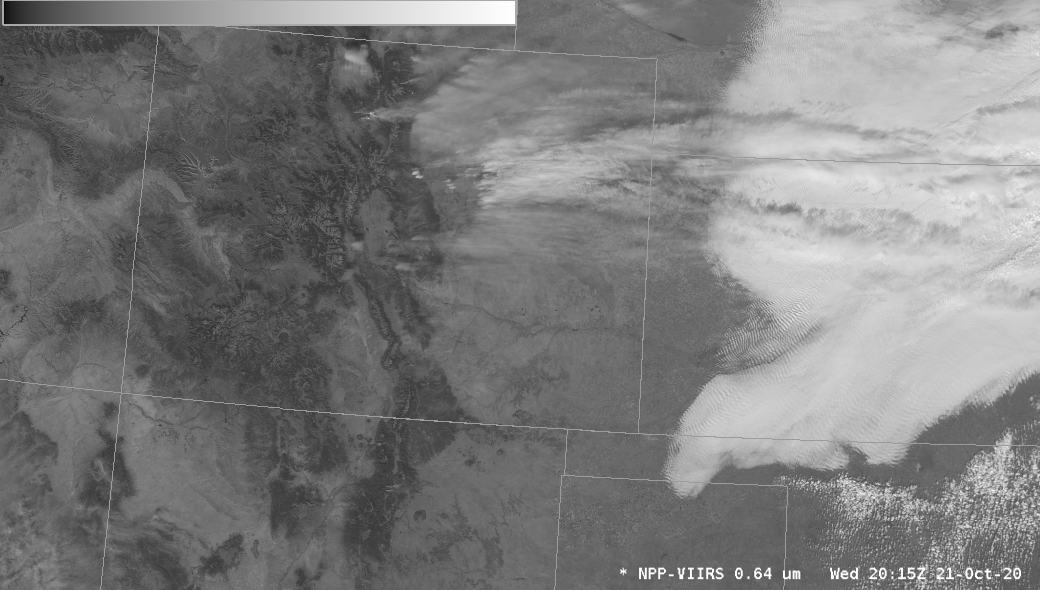
The East Troublesome Fire in Colorado expanded greatly on 21 October (click here for more information), and produced pyrocumulus clouds.  NOAA-20 overflew the fire at around 1930 UTC (linked-to overpass map from this site) on 21 October, and NUCAPS profiles, shown above, diagnosed the stability of the mid- and upper-troposphere.  The toggle below between the NOAA-20 VIIRS Visible (0.64 µm) and Infrared (11.45 µm) imagery and NUCAPS Sounding availability... Read More

Cameron Peak Fire becomes the largest on record for Colorado

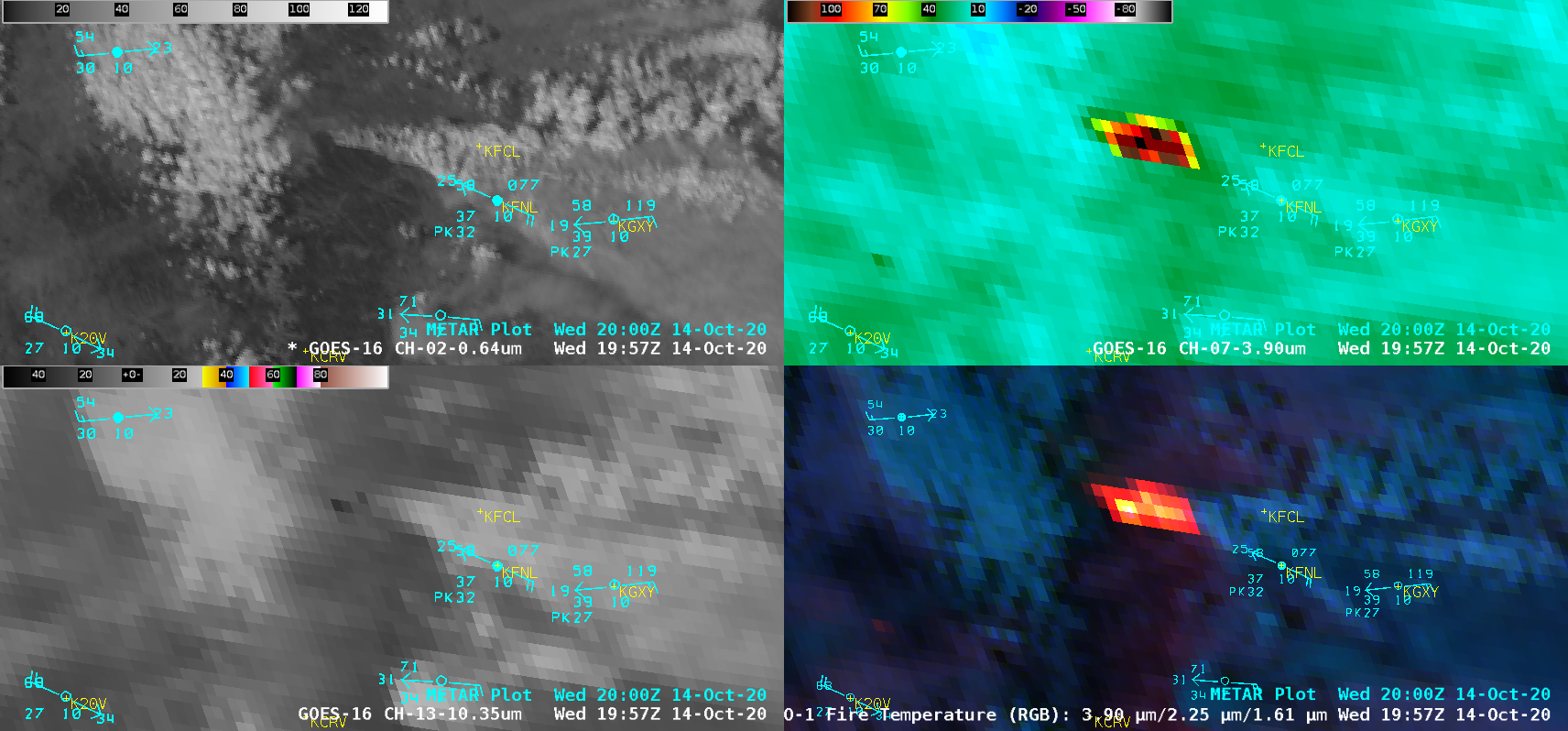
1-minute Mesoscale Domain Sector GOES-16 (GOES-East) “Red” Visible (0.64 µm), Shortwave Infrared (3.9 µm), “Clean” Infrared Window (10.35 µm) and Fire Temperature Red-Green-Blue (RGB) images (above) showed diurnal changes in the Cameron Peak Fire in northern Colorado on 14 October 2020. Aided by strong westerly winds at the surface (with peak gusts in the 50-70 mph range), the fire’s thermal signature initially began... Read More