Education, Outreach, and Training

The Cooperative Institute for Meteorological Satellite Studies (CIMSS) is involved in a variety of formal and informal education projects, ranging from classes and workshops at the University of Wisconsin to presentations at conferences, museums and schools. CIMSS has been on the forefront of educational software design for over two decades. CIMSS satellite imagery and software products are used by professional meteorologists, teachers and students worldwide.

Workshops Sponsored by CIMSS

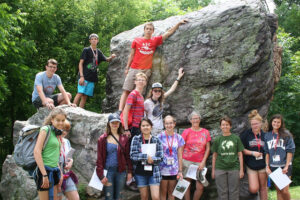
Atmospheric, Earth, and Space Sciences Workshop for High School Students

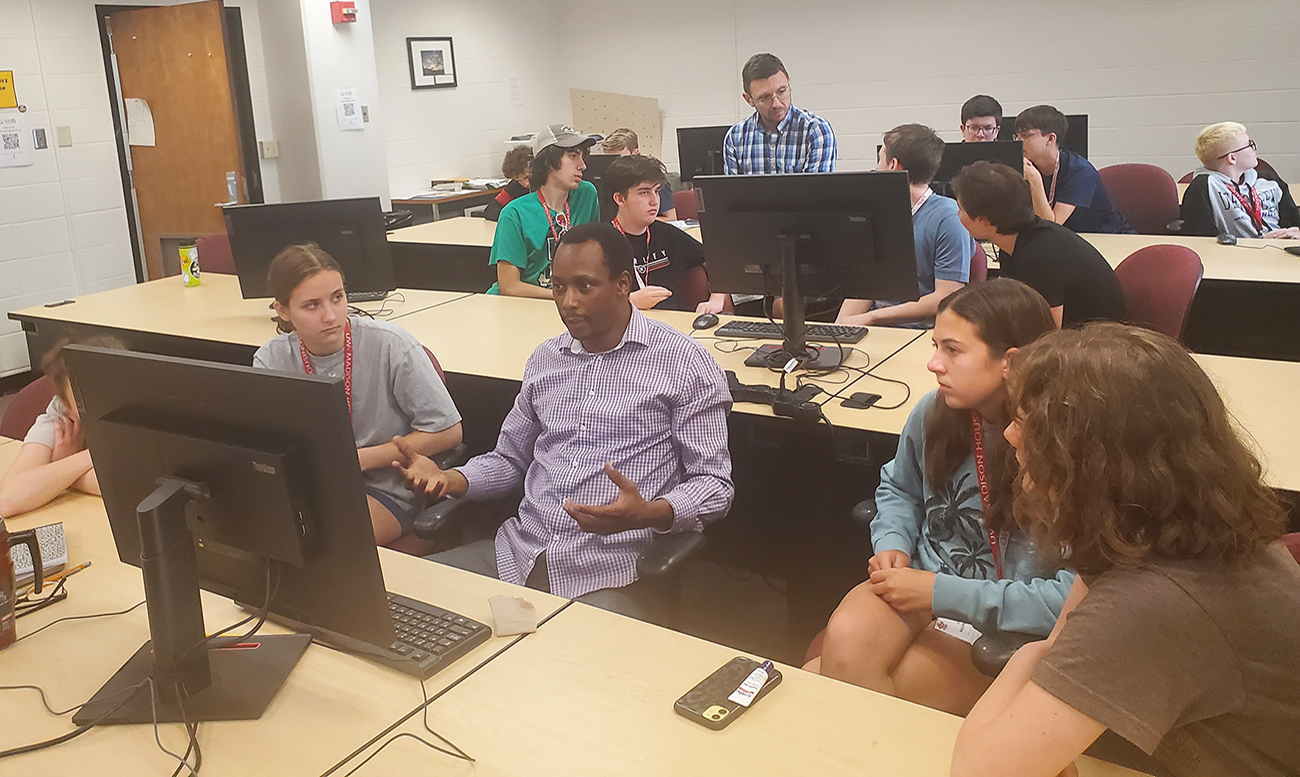
Five days of meteorology, astronomy, land remote sensing and geology with an emphasis on satellite remote sensing and weather forecasting. Students stay on campus to preview college life while pursuing science.

Teacher Workshop in Remote Sensing Topics

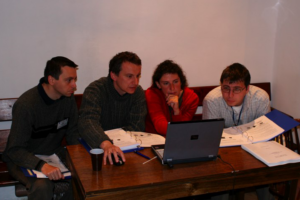
Two-day workshops for science teachers to refresh their remote sensing and satellite interpretation skills through informative lectures and hands-on computer sessions. College credit is available.

Scholarship Opportunity

Verner E. Suomi Scholarship Award

For graduating high school seniors who will attend a UW System undergraduate program in the physical sciences.

Web based Educational Resources

Educational Applets

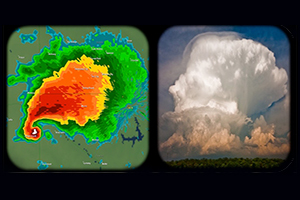
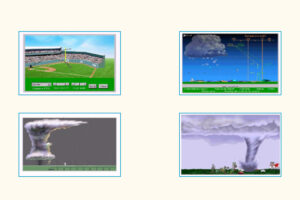
Tornado applet screenshotHighly interactive teaching and training activities that allow users to explore physical processes such as tornadoes, air density effects on baseballs, thunderstorms, rainbows, snowflake crystals (and more!) all on a computer screen.

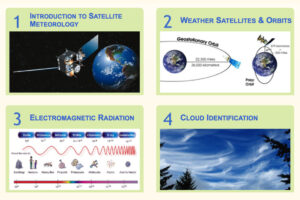
Satellite Meteorology for Grades 7-12

Developed for middle and high school science classes, it is an excellent resource for educators and anyone interested in learning more about satellite meteorology.

Satellite Observations in Science Education

Satellite Observations in Science EducationCombining learning activities with creative e-learning tools called reusable content objects (RCOs) to assist educators teaching remote sensing and satellite technology to high school and college level students.

Global and Regional Climate Change

Clarifying concepts, processes and graphs presented in the summary of the Physical Science Basis of the 2007 IPCC report on Climate Change.

Satellite Applications in Geoscience Education

Facilitating the use of satellite observations in K-12 Earth Science Education.

Wisconsin Weather Stories

K-12 curriculum, including lesson plans for teachers, that explores the science and stories of Wisconsin Weather.

Suomi Virtual Museum

Verner E. Suomi A cooperative venture between the National Science Foundation, the Space Science and Engineering Center, and the Cooperative Institute for Meteorological Satellite Studies, the museum explores areas of research that Professor Suomi was involved in during his career.

Storm Tracker

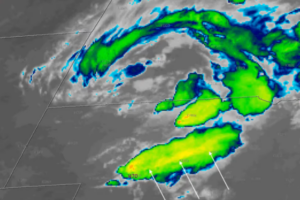
An interactive tool for tracking convective clusters from satellite and radar data

Training/Professional Development

ITWG

ITWG logo The International TOVS Working Group (ITWG) is dedicated to sharing information and data from the NOAA series of polar orbiting satellites and other atmospheric sounders in order to study the atmosphere and learn more about the impact of the data in numerical weather prediction and climate studies. The group also provides recommendations to guide the directions of future research and to influence relevant programs of WMO and other agencies (NASA, NESDIS, EUMETSAT).

Remote Sensing Seminars

CIMSS scientists travel to other research centers and universities around the world in order to teach young researchers and graduate students the theoretical and operational aspects of satellite remote sensing.

VISIT and VISITview

The primary mission of Virtual Institute for Satellite Integration Training (VISIT) is to accelerate the transfer of remote sensing research into NWS operations using a distance learning tool called VISITview. Traditionally used to train National Weather Service (NWS) forecasters, VISITview is also used by CIMSS in teacher training.

Courses in the UW Atmospheric & Oceanic Sciences Department (AOS)

AOS 152: Weather for Pilots (1-2 credits)

Web-based applied meteorology course designed for pilots and student pilots to study advanced aviation-weather topics.

AOS 100: Weather & Climate (3 credits)

Introduction to basic weather and climate topics: nature and variability of wind, temperature, cloud and precipitation, storm system, fronts, thunderstorms, tornadoes and their prediction, air composition and pollution, global winds, seasonal changes, climate and climatic change.

AOS 340: Atmospheric and Oceanic Physics II (2 credits)

Introduction to the physics of radiative transfer and remote sensing with an emphasis on application. Concepts include radiative transport (scattering, absorption, and emission of radiation), radiation energy budgets and remote sensing of the atmosphere using observations from different satellites.