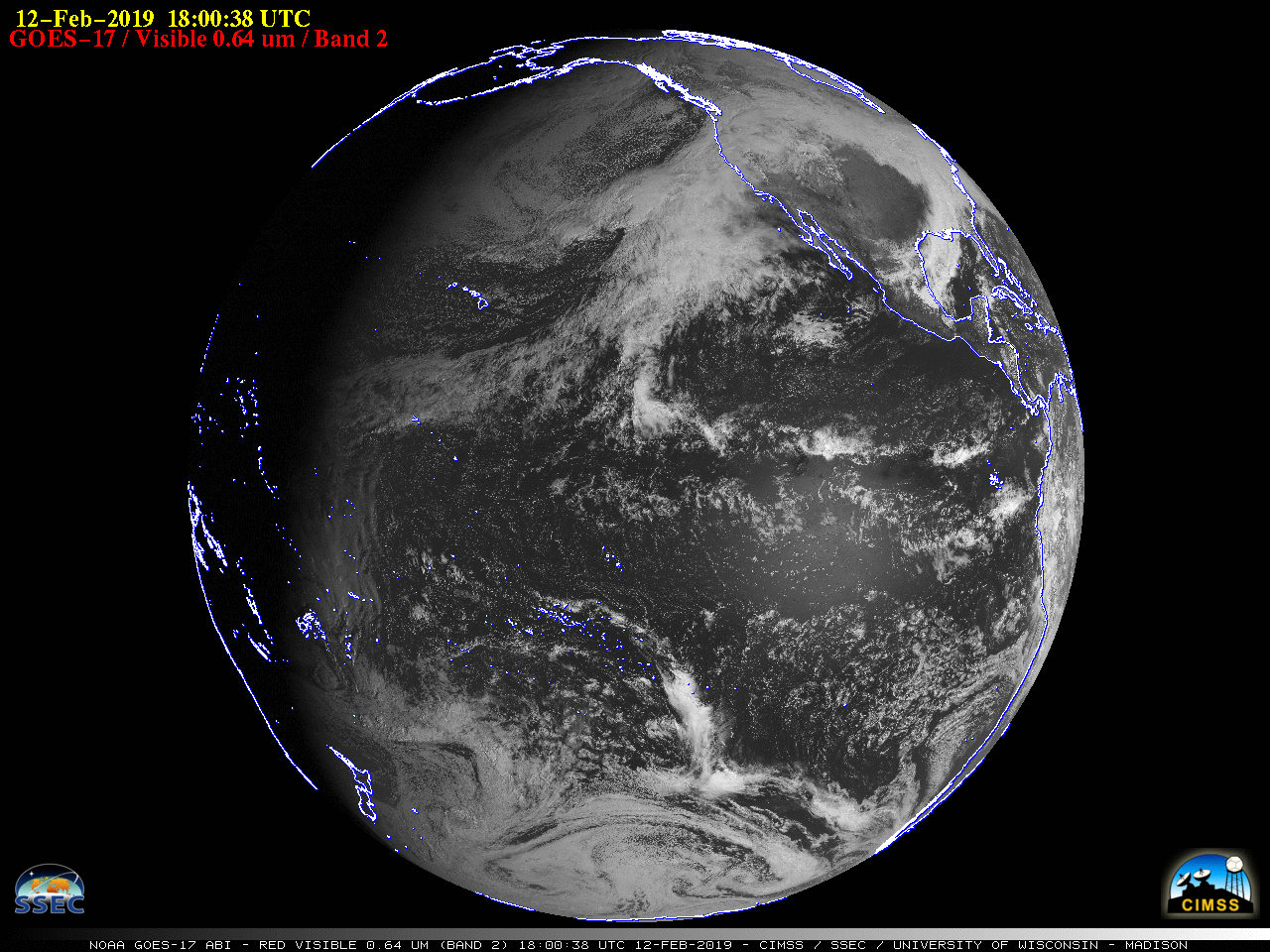
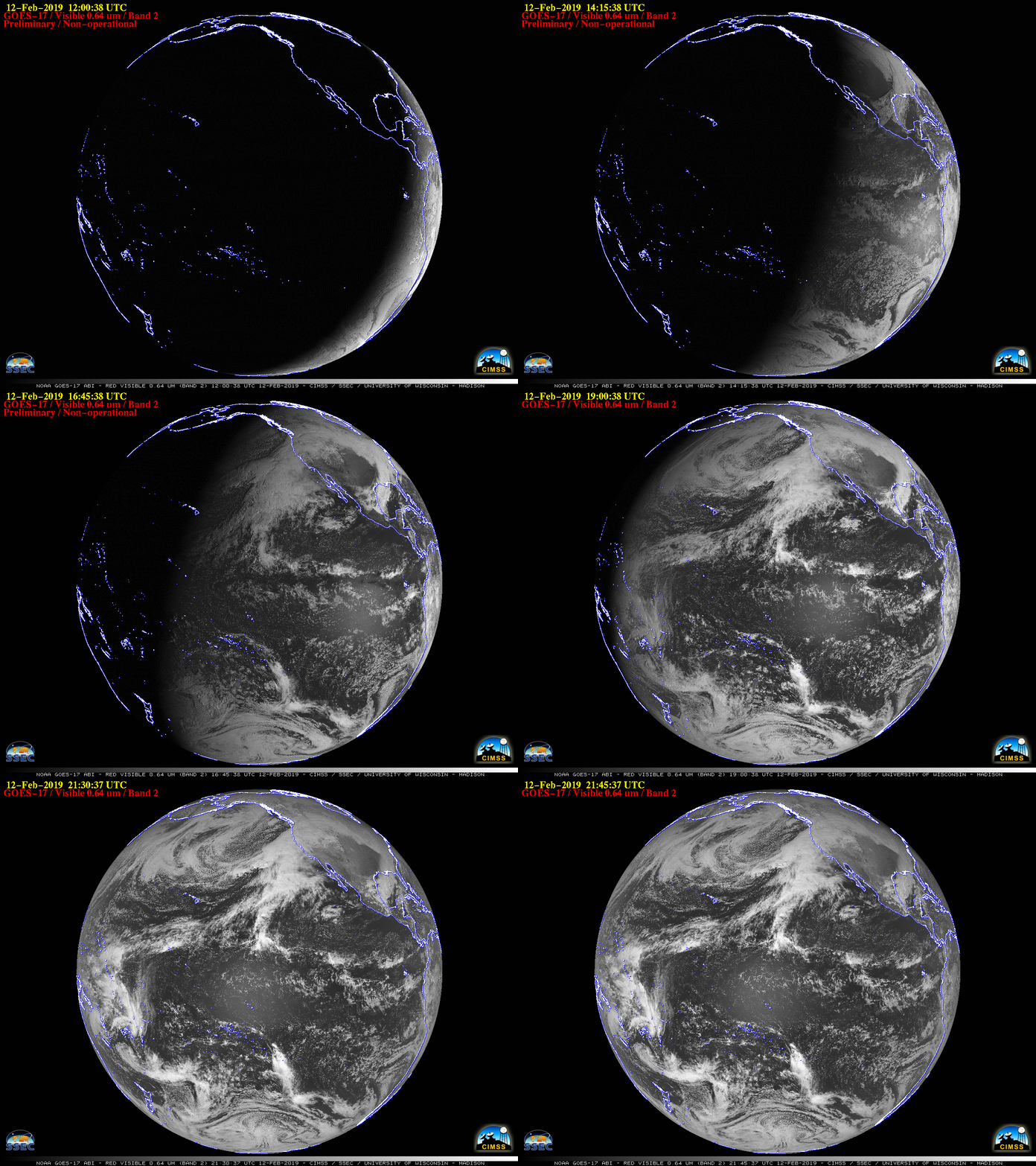
GOES-S (named GOES-17 once it reached geostationary orbit) was launched on 01 March 2018. Beginning at 1800 UTC on 12 February 2019, it became the operational GOES-West satellite (replacing GOES-15, which was launched in March 2010). The period of transition to operational status is shown on Full Disk images of “Red”... Read More
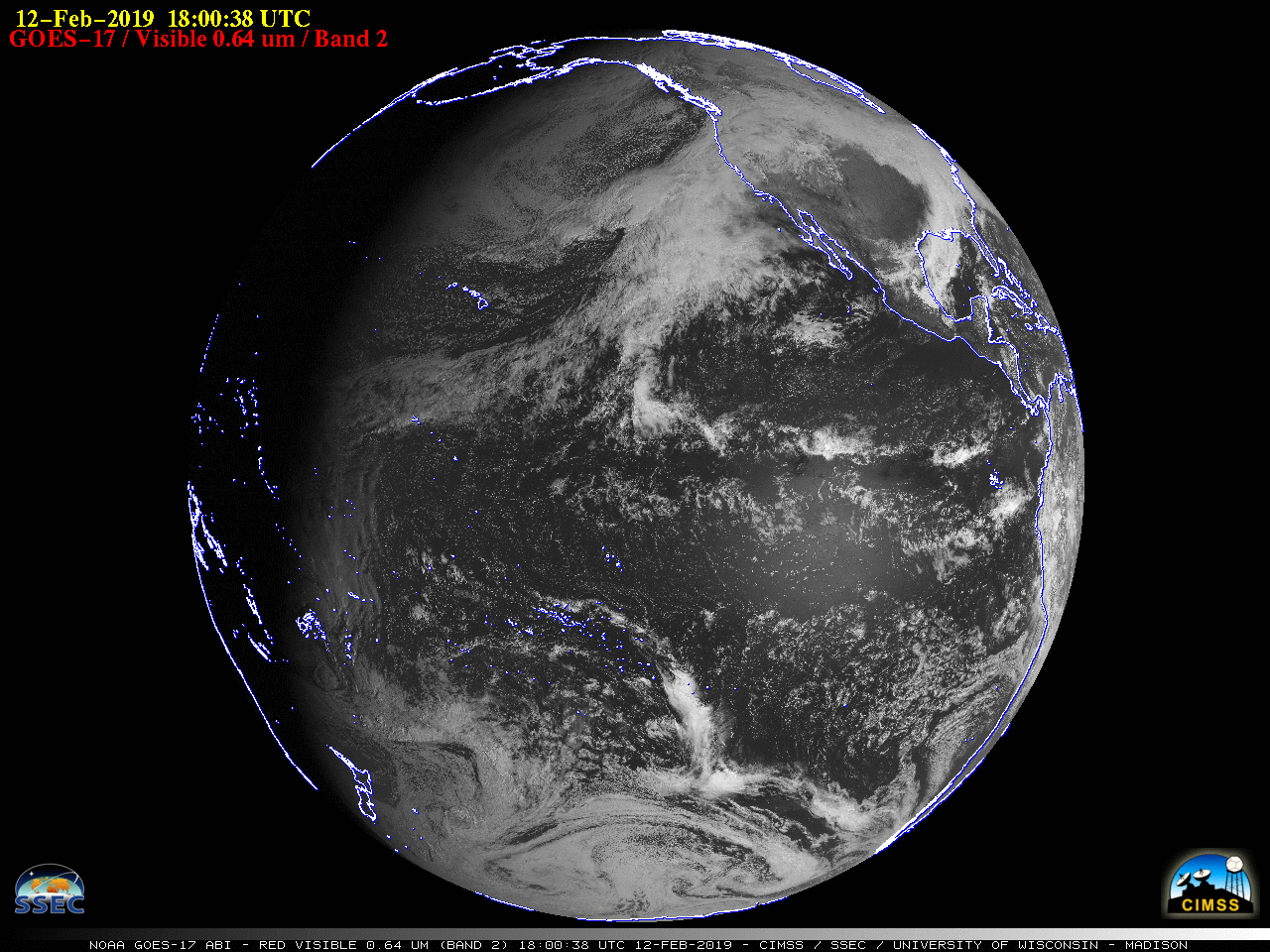
GOES-17 Full Disk “Red” Visible (0.64 µm) images [click to play animation | MP4]
![GOES-17 Mid-level Water Vapor (6.9 µm) images [click to play animation | MP4]](https://cimss.ssec.wisc.edu/satellite-blog/wp-content/uploads/sites/5/2019/02/G17_FD_WV_B9_OPER_12FEB2019_2019043_180038_GOES-17_0001PANEL.GIF)
GOES-17 Mid-level Water Vapor (6.9 µm) images [click to play animation | MP4]
GOES-S (named GOES-17 once it reached geostationary orbit) was launched on 01 March 2018. Beginning at 1800 UTC on 12 February 2019, it became the
operational GOES-West satellite (replacing GOES-15, which was launched in March 2010). The period of transition to operational status is shown on Full Disk images of “Red” Visible (
0.64 µm) and Mid-level Water Vapor (
6.9 µm) images
(above).
In an animation of GOES-17 images from the 16 ABI spectral bands, centered on the Big Island of Hawai’i (below), an increase in cumulus clouds was evident in the Visible and Near-Infrared bands (1-6) along with a warming signature of the island summits (Mauna Kea and Mauna Loa) in the Infrared bands (7-16) as daytime heating increased during the morning hours. Weighting functions for all of the Infrared bands which are not strongly affected by water vapor absorption (7, and 11-16) have peaks at/near the surface — and the presence of dry air within the middle troposphere shifted the three Water Vapor band (8-10) weighting functions downward to allow some of the island summit thermal signature to be sensed. This dry air aloft (and a lack of cirrus clouds over the island) also enabled the summits to be sensed by the 1.37 µm Near-Infrared “Cirrus” band (4).
![GOES-17 images from the 16 ABI spectral bands, centered on the Big Island of Hawai'i [click to play animation | MP4]](https://cimss.ssec.wisc.edu/satellite-blog/wp-content/uploads/sites/5/2019/02/hi_16panel-20190212_205718.png)
GOES-17 images from the 16 ABI spectral bands, centered on the Big Island of Hawai’i [click to play animation | MP4]
A comparison of all 16 ABI bands from GOES-17 covering most of Alaska and the adjacent Bering Sea is shown below.
![Image loop that cycles through all 16 ABI Bands from GOES-17, covering most of Alaska [click to play MP4 animation]](https://cimss.ssec.wisc.edu/satellite-blog/wp-content/uploads/sites/5/2019/02/ak_band02-20190212_221537.png)
Image loop that cycles through all 16 ABI Bands from GOES-17, covering most of Alaska [click to play MP4 animation]
In the animation below (
source), GOES-17 and GOES-16
(GOES-East) Longwave Infrared (
11.2 µm) images have been combined and displayed in a Mollweide projection. This shows the broad area of coverage provided by the current GOES constellation, which reaches from far eastern Australia to far western Europe and Africa.
![GOES-17 + GOES-16 Infrared (11.2 µm) images [click to play animation | MP4]](https://cimss.ssec.wisc.edu/satellite-blog/wp-content/uploads/sites/5/2019/02/190212_18z_mw_ir.png)
GOES-17 + GOES-16 Longwave Infrared (11.2 µm) images [click to play animation | MP4]
Although the GOES-17 ABI instrument experiences a nocturnal
Loop Heat Pipe (LHP) cooling problem (also discussed
here) — which increases around the time of the Spring and Autumn equinox — the issue only affects the emitted Longwave Infrared spectral bands (bands 08-16), and only for periods lasting as long as a few hours (peaking daily around 1300-1330 UTC). Trends of the Focal Plane Module (FPM) temperature of the ABI instrument can be monitored at
this site — and examples of Band 09 (6.9 µm Water Vapor) imagery from 11 February are shown below. Note how the images return to normal after the peak FPM temperatures cool from around 97 K to around 80 K. More information on the daily variation of FPM temperatures throughout the year is available
here,
here and
here.
![Sequence of GOES-17 Band 09 (6.9 µm Water Vapor) images during a spike in the Focal Plane Module temperature on 11 February 2019 [click to enlarge]](https://cimss.ssec.wisc.edu/satellite-blog/wp-content/uploads/sites/5/2019/02/190211_goes17_band9_fpm_anim.gif)
Sequence of GOES-17 Full Disk Band 09 (6.9 µm Water Vapor) images during a spike in the Focal Plane Module temperature on 11 February 2019 [click to enlarge]
![Sequence of GOES-17 CONUS sector Band 09 (6.9 µm Water Vapor) images during a spike in the Focal Plane Module temperature on 11 February 2019 [click to enlarge]](https://cimss.ssec.wisc.edu/satellite-blog/wp-content/uploads/sites/5/2019/02/190211_goes17_band9_fpm_conus_anim.gif)
Sequence of GOES-17 CONUS sector Band 9 (6.9 µm Water µm) images during a spike in the Focal Plane Module temperature on 11 February 2019 [click to enlarge]
The LHP cooling issue affects various ABI spectral bands to differing degrees, with the Band 14 (11.2 µm Longwave Infrared) imagery being the least impacted — this can be seen in a Full Disk animation covering the same time period
(below).
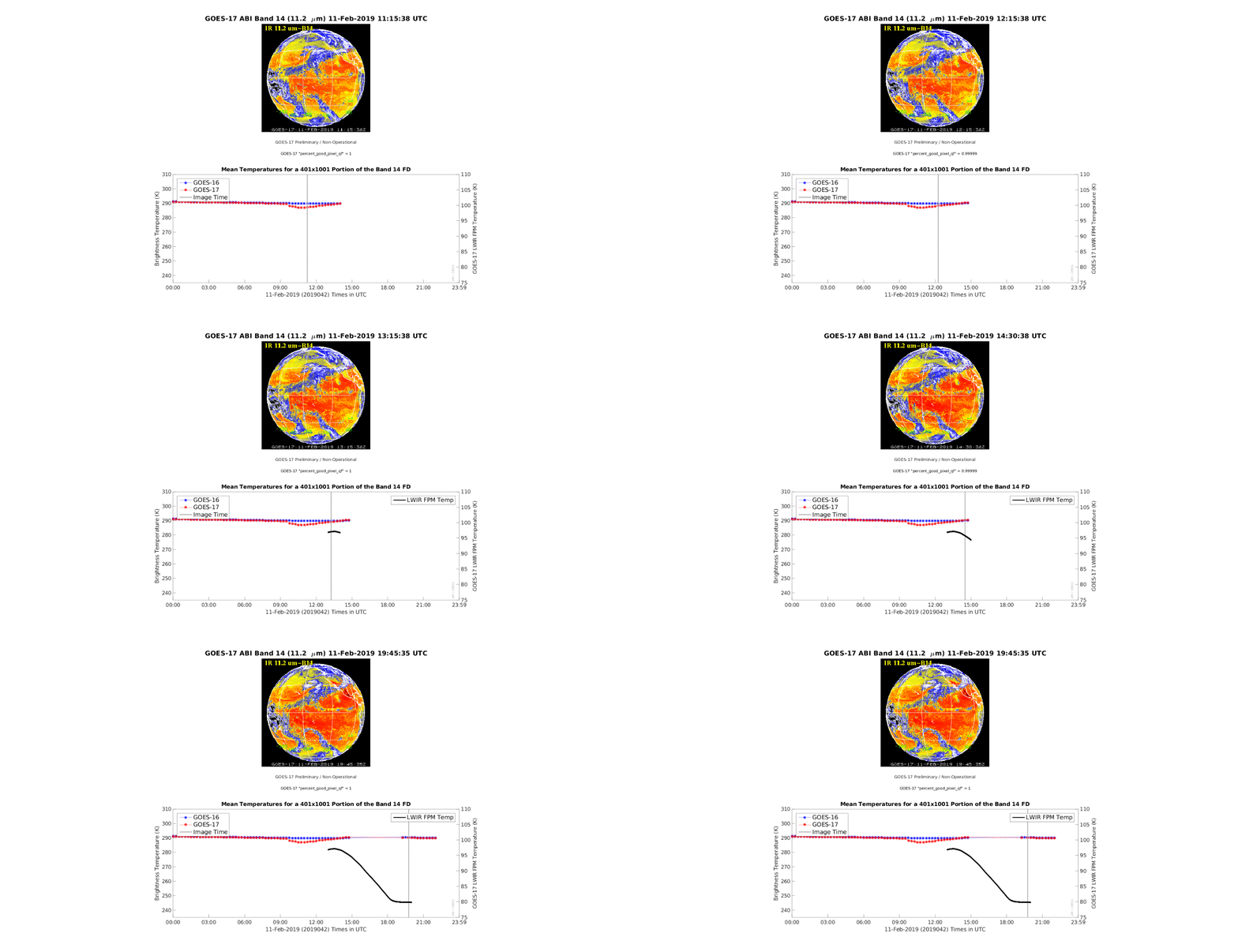
Sequence of GOES-17 Full Disk Band 14 (11.2 µm Longwave Infrared) images during a spike in the Focal Plane Module temperature on 11 February 2019 [click to enlarge]
GOES-17 and GOES-15 will operate in tandem from their respective locations of 137.2º West and 128º West longitude through early July 2019 — so GOES-15 imagery can be used during times when GOES-17 is adversely affected by the LHP cooling issue.
View only this post
Read Less


![GOES-17 Mid-level Water Vapor (6.9 µm) images [click to play animation | MP4]](https://cimss.ssec.wisc.edu/satellite-blog/wp-content/uploads/sites/5/2019/02/190212_goes17_full_disk_waterVapor_anim.gif)
![GOES-17 images from the 16 ABI spectral bands, centered on the Big Island of Hawai'i [click to play animation | MP4]](https://cimss.ssec.wisc.edu/satellite-blog/wp-content/uploads/sites/5/2019/02/190212_goes17_16spectralBands_HI_anim.gif)
![GOES-17 + GOES-16 Infrared (11.2 µm) images [click to play animation | MP4]](https://cimss.ssec.wisc.edu/satellite-blog/wp-content/uploads/sites/5/2019/02/190212_goes17_goes16_infrared_anim.gif)
![GOES-17 Low-level (7.3 µm), Mid-level (6.9 µm) and Upper-level (6.2 µm) images [click to play animation | MP4]](https://cimss.ssec.wisc.edu/satellite-blog/wp-content/uploads/sites/5/2019/02/190210_goes17_waterVapor_Hawaii_anim.gif)
![Derived Motion Winds calculated using GOES-15 Water Vapor (6.5 µm) imagery [click to enlarge]](https://cimss.ssec.wisc.edu/satellite-blog/wp-content/uploads/sites/5/2019/02/190210_goes15_waterVapor_winds_anim.gif)
![GOES-17 Air Mass RGB images [click to play MP4 animation]](https://cimss.ssec.wisc.edu/satellite-blog/wp-content/uploads/sites/5/2019/02/20190210060038_namer.jpg)
![Suomi NPP VIIRS True Color and Infrared Window (11.45 µm) images at 23 UTC [click to enlarge]](https://cimss.ssec.wisc.edu/satellite-blog/wp-content/uploads/sites/5/2019/02/190210_23utc_suomiNPP_viirs_truecolor_infrared_HI_anim.gif)
![VIIRS Infrared Window (11.45 µm) images from Suomi NPP (at 0753 and 0937 UTC) and NOAA-20 (at 0844 UTC) [click to enlarge]](https://cimss.ssec.wisc.edu/satellite-blog/wp-content/uploads/sites/5/2019/02/190208_suomiNPP_noaa20_viirs_infrared_MT_ND_anim.gif)
![GOES-17 Low-level (7.3 µm), Mid-level (6.9 µm) and Upper-level (6.2 µm) Water Vapor images [click to play MP4 animation]](https://cimss.ssec.wisc.edu/satellite-blog/wp-content/uploads/sites/5/2019/02/hi_wv8-20190206_222218.png)
![Plots of rawinsonde data from Lihue, Hawai'i [click to enlarge]](https://cimss.ssec.wisc.edu/satellite-blog/wp-content/uploads/sites/5/2019/02/190206_PHLI_RAOBS.GIF)
![GOES-17 Upper-level Water Vapor (6.2 µm) images within 30 minutes of the 2304 UTC pilot report of turbulence [click to enlarge]](https://cimss.ssec.wisc.edu/satellite-blog/wp-content/uploads/sites/5/2019/02/190206_goes17_waterVapor_pirep_Hawaii_anim.gif)
![GOES-17 Upper-level Water Vapor (6.2 µm) image, with plots of aviation Significant Weather advisories [click to enlarge]](https://cimss.ssec.wisc.edu/satellite-blog/wp-content/uploads/sites/5/2019/02/190206_2302utc_goes17_waterVapor_pirep_sigWX_HI.png)
![VIIRS Infrared Window (11.45 µm) images from NOAA-20 (at 2230 and 0030 UTC) and Suomi NPP (at 2320 UTC) [click to enlarge]](https://cimss.ssec.wisc.edu/satellite-blog/wp-content/uploads/sites/5/2019/02/190206_suomiNPP_noaa20_viirs_infrared_HI_anim.gif)