
AWIPS test using GOES-15 data

November 29th, 2011
Using GOES-11 vs GOES-15 as the source for GOES-West water vapor channel images

Using GOES-11 vs GOES-15 as the source for GOES-West water vapor channel images

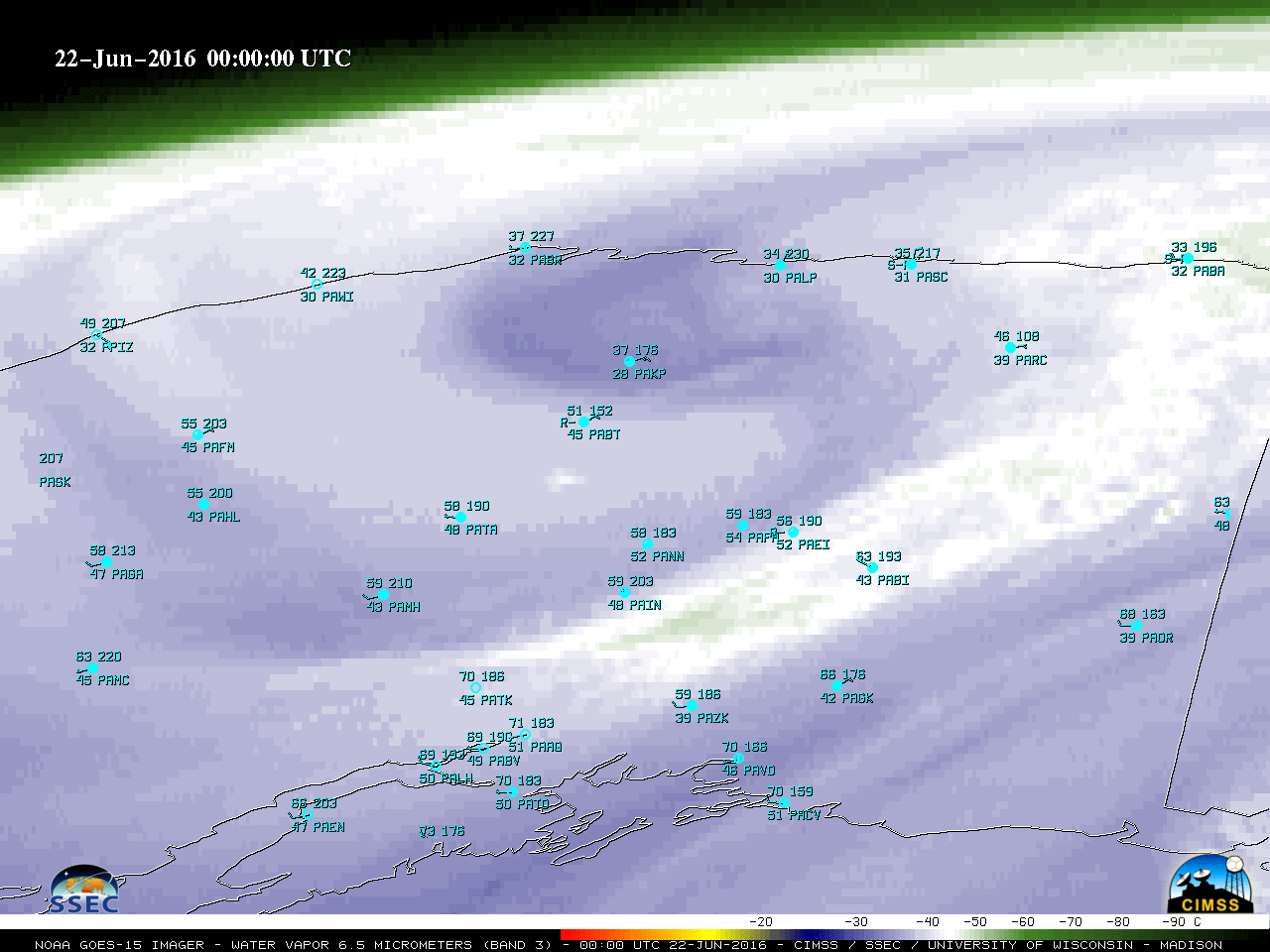
GOES-15 is scheduled to replace GOES-11 as the operational GOES-West satellite on 06 December 2011. On 29 November 2011, a test was conducted by NOAA/NESDIS which briefly substituted GOES-15 data for GOES-11 data as the source of GOES-West satellite imagery in AWIPS. In the sequence of AWIPS images shown above, the first 3 images are using GOES-11, while the final set of 3 images are using GOES-15 as the source for GOES-West Imager water vapor channel data. The changes to the GOES-15 Imager water vapor channel are quite obvious — GOES-15 uses a 4-km resolution channel centered at 6.5 µm that has a wider spectral response, compared to the 8-km resolution 6.7 µm channel with a more narrow spectral response on GOES-11. Even at high latitudes (where the large satellite viewing angle shifts the GOES water vapor weighting function to higher altitudes) the improved GOES-15 water vapor channel imagery will do a better job of depicting the moisture gradients and structure associated with mid-tropospheric dynamical features (Gulf of Alaska example | Nunavut, Canada example).

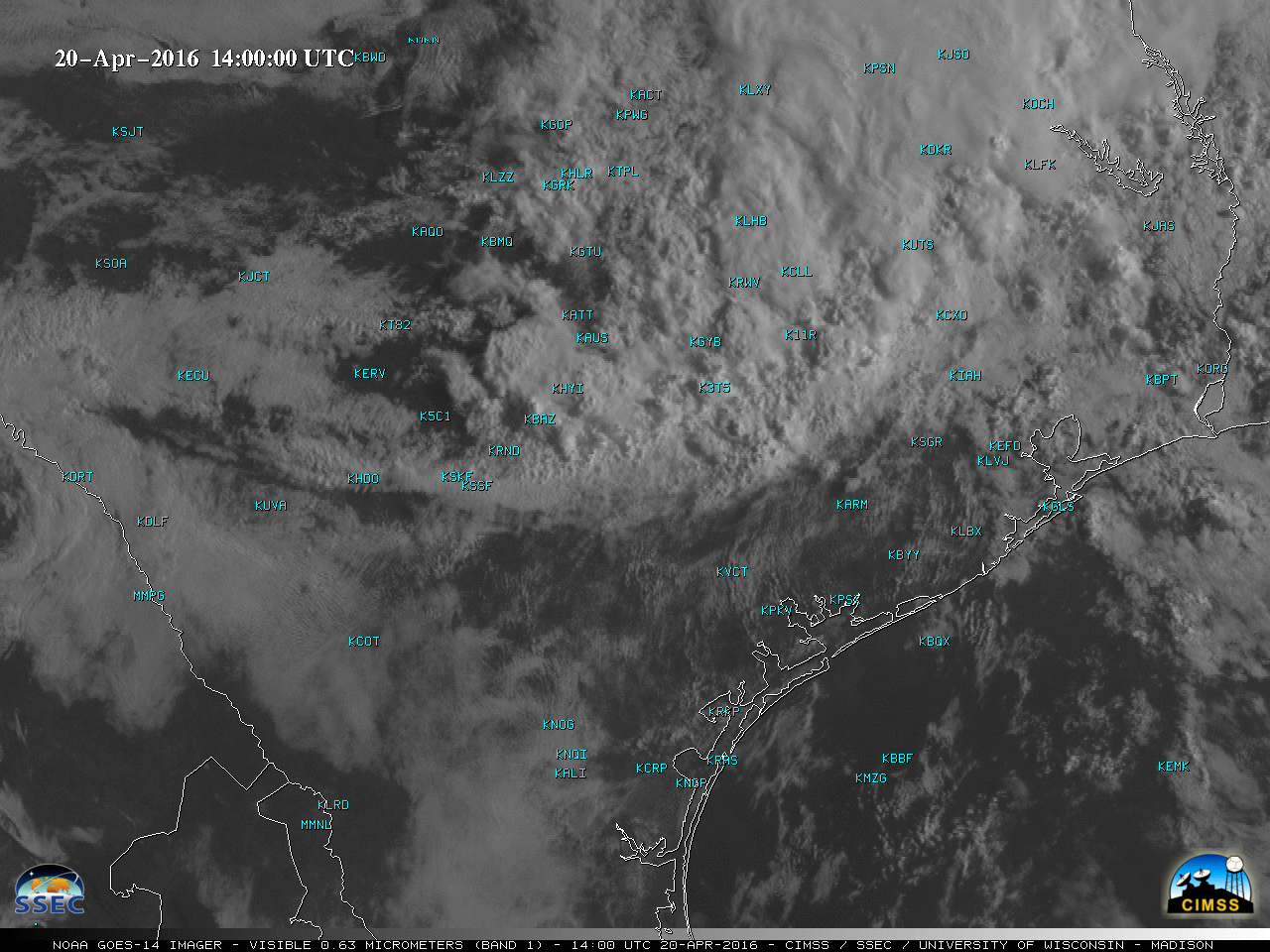
A similar comparison using GOES-11 (the first 3 images) vs GOES-15 (the final set of 3 images) Imager visible channel data is seen below. Immediately obvious is the fact that the GOES-15 visible channel imagery appears “brighter” than the GOES-11 visible channel imagery — this is due to the fact that the performance of the GOES visible detectors degrades over time (GOES-11 was launched in 2000, and became the operational GOES-West satellite in 2006). The 0.63 µm visible channel on GOES-15 is also slightly different than the 0.65 µm visible channel on GOES-11, as is discussed in the “GOES-13 is now the operational GOES-East satellite” blog post. GOES-15 is similar to GOES-13, since it is part of the GOES-N/O/P series of spacecraft.

Using GOES-11 vs GOES-15 as the source for GOES-West visible channel images

Using GOES-11 vs GOES-15 as the source for GOES-West visible channel images

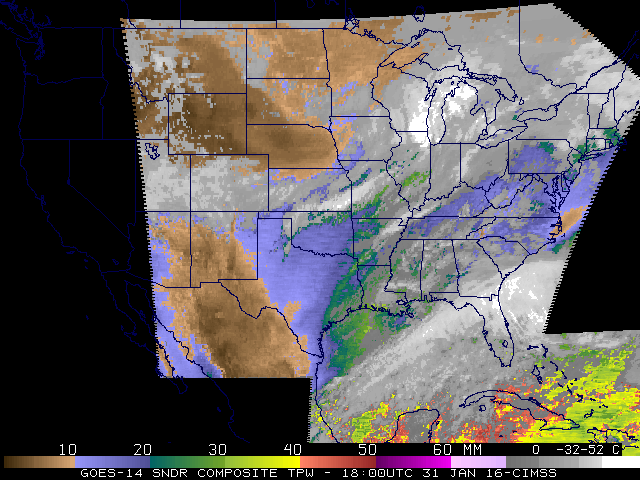
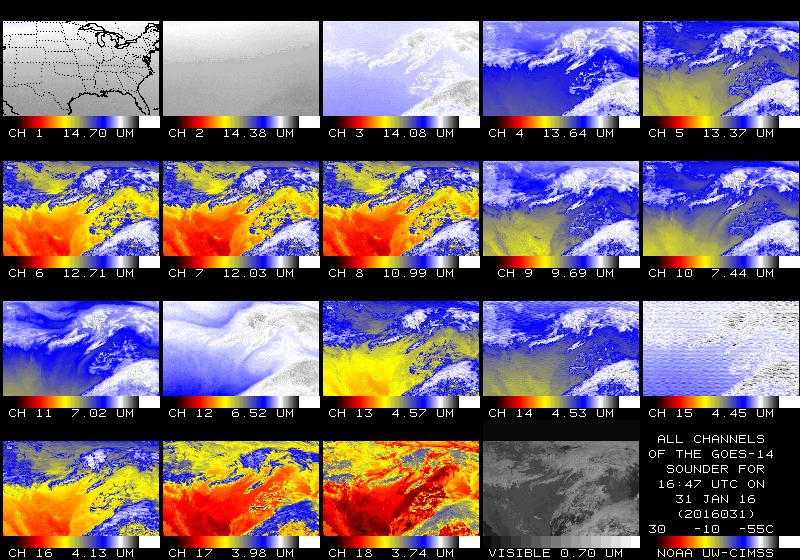
Finally, below is a comparison of GOES Sounder data, using GOES-11 as the source of GOES-West 6.5 µm Sounder water vapor channel data (the first 2 images) vs GOES-15 (the final set of 2 images). Note that the GOES-15 Sounder water vapor channel imagery has less noise than that from GOES-11.

Using GOES-11 vs GOES-15 as the source for GOES-West Sounder water vapor channel images

Using GOES-11 vs GOES-15 as the source for GOES-West Sounder water vapor channel images

Persistent cut-off low over the north-central US

September 27th, 2011
GOES-15 6.5 µm water vapor images (click image to play animation)

GOES-15 6.5 µm water vapor images (click image to play animation)

McIDAS images of GOES-15 6.5 µm water vapor channel data (above; click image to play animation) showed the changing signature of a persistent upper level cut-off low lingering over the north-central US during the 23 September27 September 2011 period. As the system lingered over the region, it produced widespread wind gusts in the 30-40 mph range (with a peak wind gust of 46 mph at Green Bay, Wisconsin), and rainfall totals of 4-5 inches at some locations in northern Illinois.

AWIPS images of the hourly GOES sounder Total Column Ozone product on 25 September - 26 September (below; click image to play animation) revealed a distinct elevated ozone signature (300-400 Dobson Units, green to red color enhancement), which indicated that the height of the tropopause was lower in the vicinity of the cut-off low.


GOES sounder Total Column Ozone product (click image to play animation)

GOES sounder Total Column Ozone product (click image to play animation)

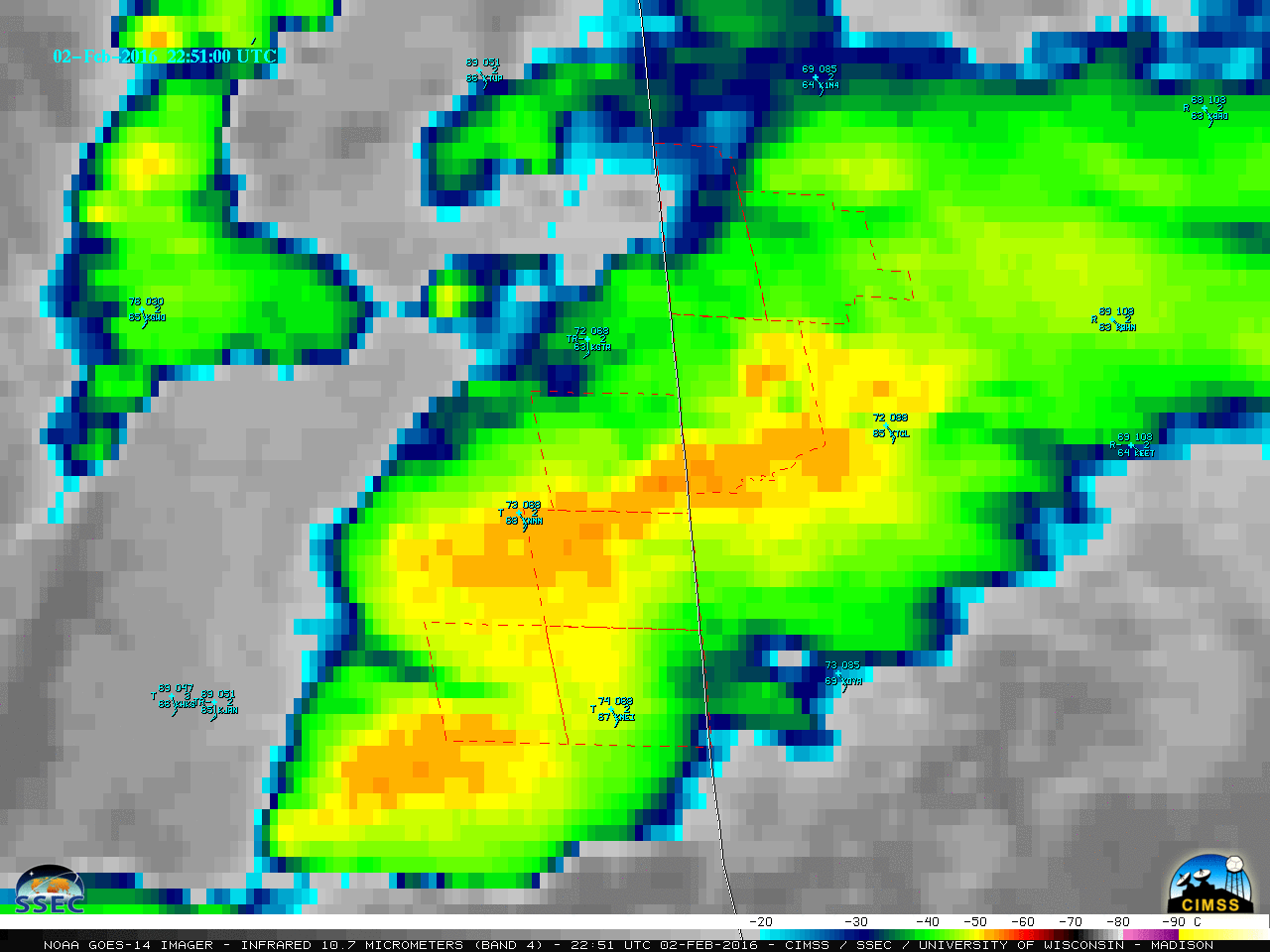
One notable impact associated with this cut-off low included thunderstorms along the Lake Michigan shoreline that produced a number of waterspouts that were seen from Milwaukee to Chicago. A comparison of MODIS 0.65 µm visible channel and 11.0 µm IR window channel image at 17:28 UTC (12:28 pm local time) on 24 September (below) showed one of the storms that exhibited cloud top IR brightness temperatures colder than -40ºC (blue color enhancement), along with a number of cloud to ground lightning strikes as it moved inland.

MODIS 0.65 µm visible channel and 11.0 µm IR window channel images

MODIS 0.65 µm visible channel and 11.0 µm IR window channel images

Another impact of this cut-off low included a number of pilot reports of light to moderate turbulence over the central and southern Great Plains region. A well-defined bloom of cirrus clouds developed within a zone of high 400-200 hPa layer wind shear, as seen on 4-km resolution GOES-13 6.5 µm water vapor channel images with overlays of CRAS model fields (below; click image to play animation).

GOES-13 6.5 µm water vapor images + turbulence reports + CRAS layer winds and shear (click image to play animation)

GOES-13 6.5 µm water vapor images + turbulence reports + CRAS layer winds and shear (click image to play animation)

Better detail of the banded structure of the cirrus cloud features within the high-shear deformation zone can be seen on a 1-km resolution MODIS 6.7 µm water vapor image (below). Note the pilot report of light to moderate turbulence during the entire flight from Denver (DEN) to Kansas City (MCI).

MODIS 6.7 µm water vapor image + pilot reports of turbulence

MODIS 6.7 µm water vapor image + pilot reports of turbulence

A sequence of 1-km resolution MODIS 6.7 µm water vapor channel images on 26 September (below) showed some very intricate dry air and moisture structures within the cut-off low during that particular day.

MODIS 6.7 µm water vapor channel images

MODIS 6.7 µm water vapor channel images

In a comparison of MODIS 0.65 µm visible channel and MODIS 6.7 µm water vapor channel images (below), note how much more structure is seen in the water vapor image — even in areas that are cloud-free in the visible image. This allows a number of water vapor features and gradients to be tracked using 3 consecutive GOES water vapor images, to produce MADIS high-altitude atmospheric motion vectors (AMVs) that can provide important wind direction and wind speed data. An AMV with a wind speed of 130 knots (at 300 hPa) was seen in the dry slot over southern Missouri.

MODIS 0.65 µm visible image + MODIS 6.7 µm water vapor image + MADIS satellite winds

MODIS 0.65 µm visible image + MODIS 6.7 µm water vapor image + MADIS satellite winds

GOES-15: improved spatial resolution water vapor channel

September 14th, 2011


GOES-11 6.7 µm (left) and GOES-15 6.5 µm (right) water vapor channel images (click image to play animation)

GOES-11 6.7 µm (left) and GOES-15 6.5 µm (right) water vapor channel images (click image to play animation)

McIDAS images of 8-km resolution GOES-11 6.7 µm and 4-km resolution GOES-15 6.5 µm water vapor channel data (above) demonstrated the advantage of improved spatial resolution for the detection of features and gradients in the water vapor imagery associated with a weak upper level low moving eastward across the southwestern US on 14 September 2010. GOES-15 is scheduled to replace GOES-11 as the operational GOES-West satellite in December 2011.

AWIPS images of the GOES-11 sounder Convective Available Potential Energy (CAPE) product (below) showed that the atmosphere was destabilizing in advance of the upper low, with CAPE values in the 1000-2000 J/kg range.

GOES-11 sounder Convective Available Potential Entegy (CAPE)

GOES-11 sounder Convective Available Potential Entegy (CAPE)

With the increasing instability and large scale lift ahead of the upper low, areas of thunderstorms developed over parts of Nevada, Arizona, and Utah, as seen on a MODIS 11.0 µm IR image with an overlay of cloud-to-ground lightning strikes (below). About an hour after the time of the MODIS image, one of these storms produced 1.0-inch diameter hail that covered the ground near Munds in northern Arizona (SPC storm reports).

MODIS 11.0 µm IR image + cloud-to-ground lightning strikes

MODIS 11.0 µm IR image + cloud-to-ground lightning strikes

CIMSS participation in GOES-R Proving Ground activities includes making a variety of MODIS and additional GOES Sounder images and products available for National Weather Service offices to add to their local AWIPS workstations. Currently there are 49 NWS offices receiving MODIS imagery and products from CIMSS.