
Oil slick off the Louisiana coast

April 29th, 2010
MODIS true color and false color RGB images (29 April 2010)

MODIS true color and false color RGB images (29 April 2010)

250-meter resolution MODIS true color and false color Red/Green/Blue (RGB) images from the SSEC MODIS Today site (above) showed that the oil slick resulting from the offshore oil rig fire and collapse (following an explosion on the night of 20 April 2010) continued to get closer to the coast of Louisiana on 29 April 2010. Along the far western edge of the oil slick, a small smoke plume can be seen drifting northeastward, due to a small controlled burn (the winds were from the southwest at altitudes of about 1 km and higher).

A comparison of MODIS true color images on 21, 22, 25, 29 April, and 01 May (below) show the original smoke plume from the burning oil rig, followed by the dramatic growth and change in shape of the oil slick during that period.

MODIS true color RGB images (21, 22, 25, 29 April and 01 May 2010)

MODIS true color RGB images (21, 22, 25, 29 April, and 01 May 2010)

An AWIPS image of the MODIS visible channel data with an overlay of buoy, ship, and ASCAT scatterometer winds (below) showed that southeasterly winds at the surface across the northern Gulf of Mexico were helping to move the oil slick closer to the Mississippi River Delta region of Louisiana.

MODIS visible image + surface buoy/ship data + ASCAT scatterometer winds

MODIS visible image + surface buoy/ship data + ASCAT scatterometer winds

The POES AVHRR Sea Surface Temperature (SST) product (below) revealed that the oil slick feature continued to exhibit SST values that were several degrees F cooler (upper 60s F, green colors) than the surrounding waters (lower 70s F, yellow to orange colors) — see a previous loop of AVHRR and MODIS SST images from 25-26 April. The very warm SST values (upper 70s to low 80s F, darker red colors) associated with the Gulf of Mexico Loop Current can be seen in the lower right corner of the image.

POES AVHRR Sea Surface Temperature (SST) product

POES AVHRR Sea Surface Temperature (SST) product

Plume of blowing dust/sand originating from White Sands, New Mexico

April 29th, 2010
GOES-13 0.65 µm visible channel images

GOES-13 0.65 µm visible channel images

McIDAS images of the GOES-13 0.65 µm visible channel data (above) showed the development of a well-defined plume of blowing dust/sand that appeared to originate from the White Sands, New Mexico area on 29 April 2010 — this plume of airborne aerosols very quickly reached the Texas/New Mexico border by about 21 UTC. Very strong winds (gusting to 50-70 mph) across the region were responsible for the widespread areas of blowing dust, which restricted surface visibilities to below 3 miles at a number of sites across New Mexico.

First GOES-15 Full Disk IR Images

April 26th, 2010
First official GOES-15 10.7 µm longwave IR image (click image to enlarge)

First official GOES-15 10.7 µm longwave IR image (click image to enlarge)

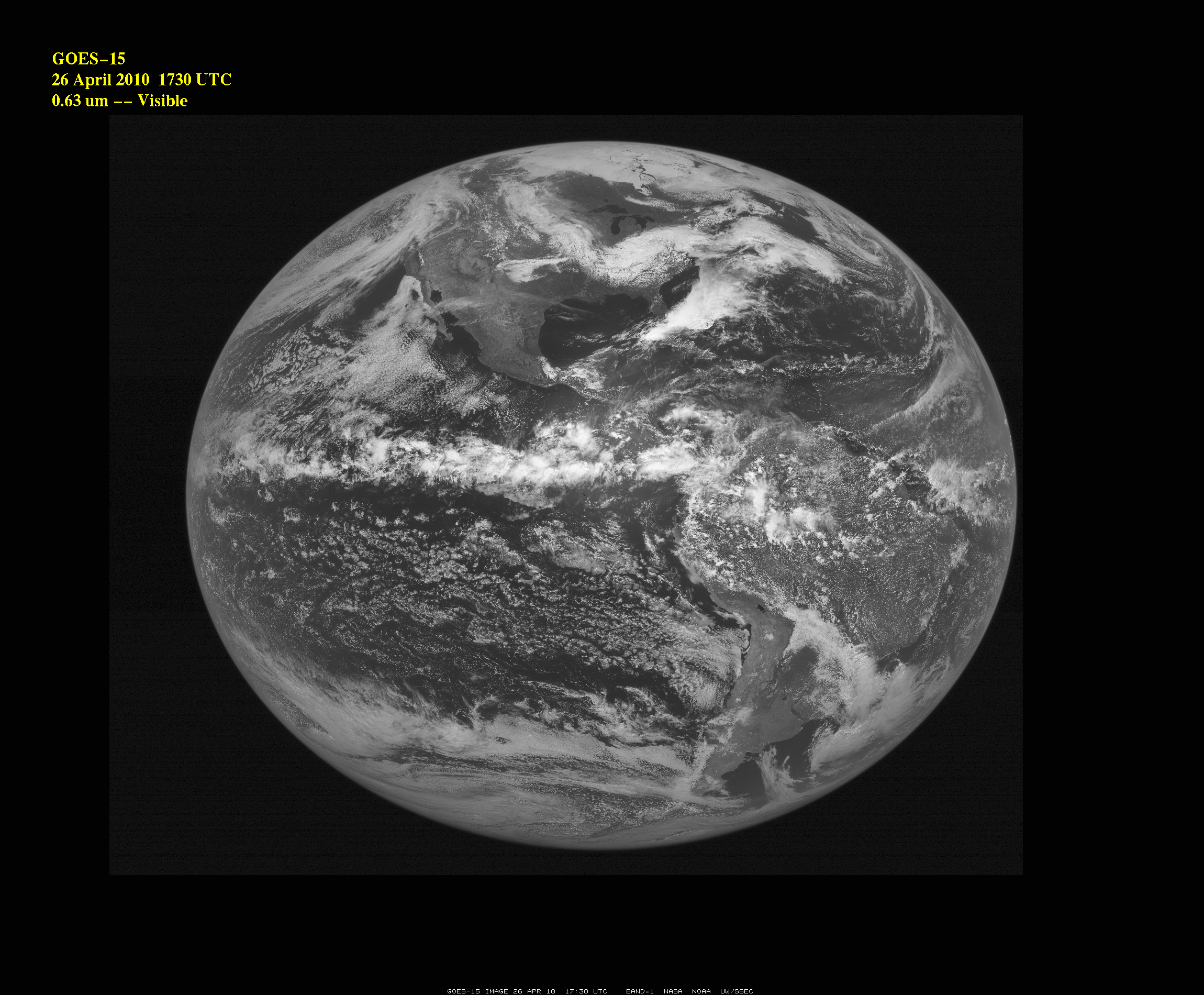
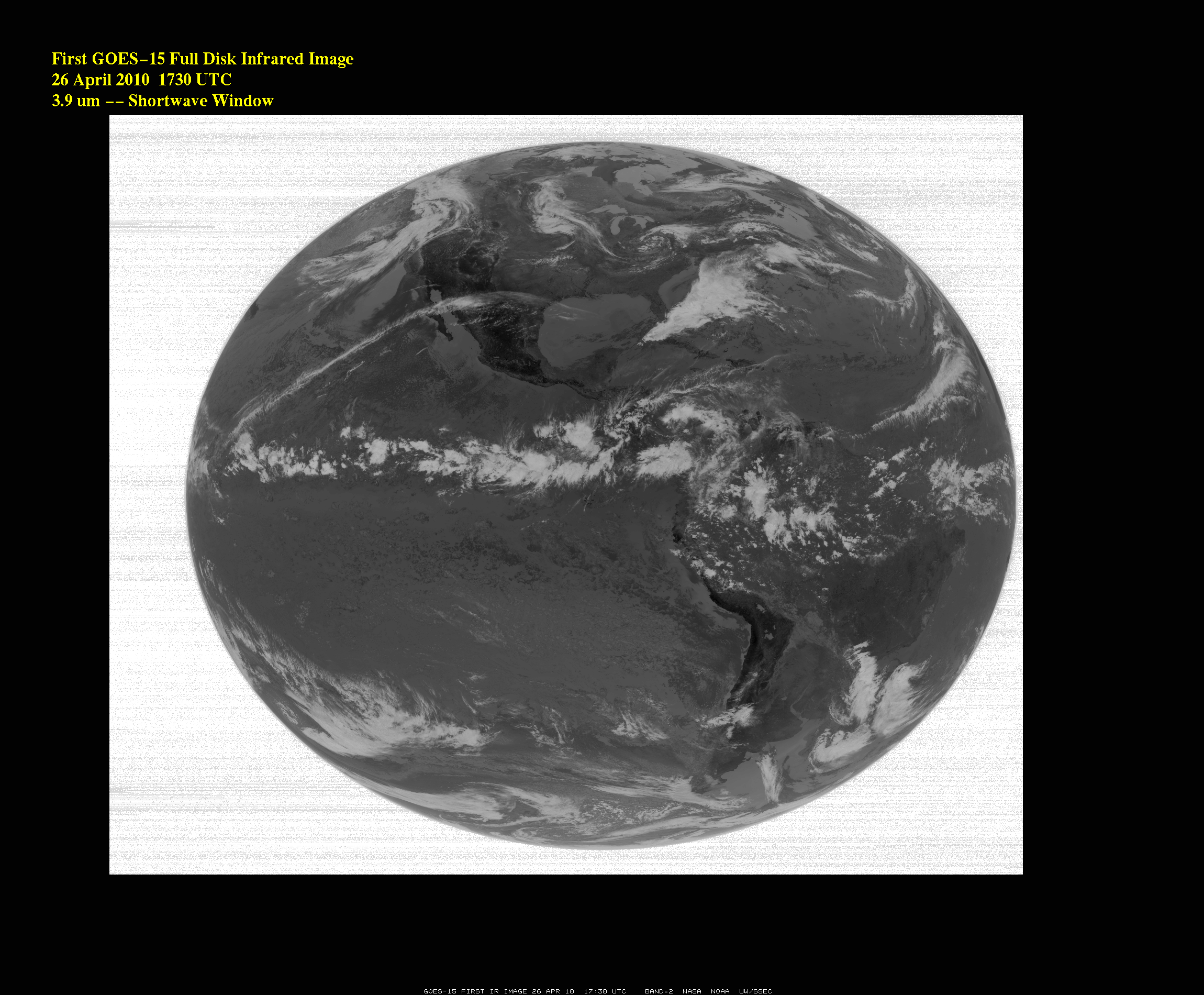
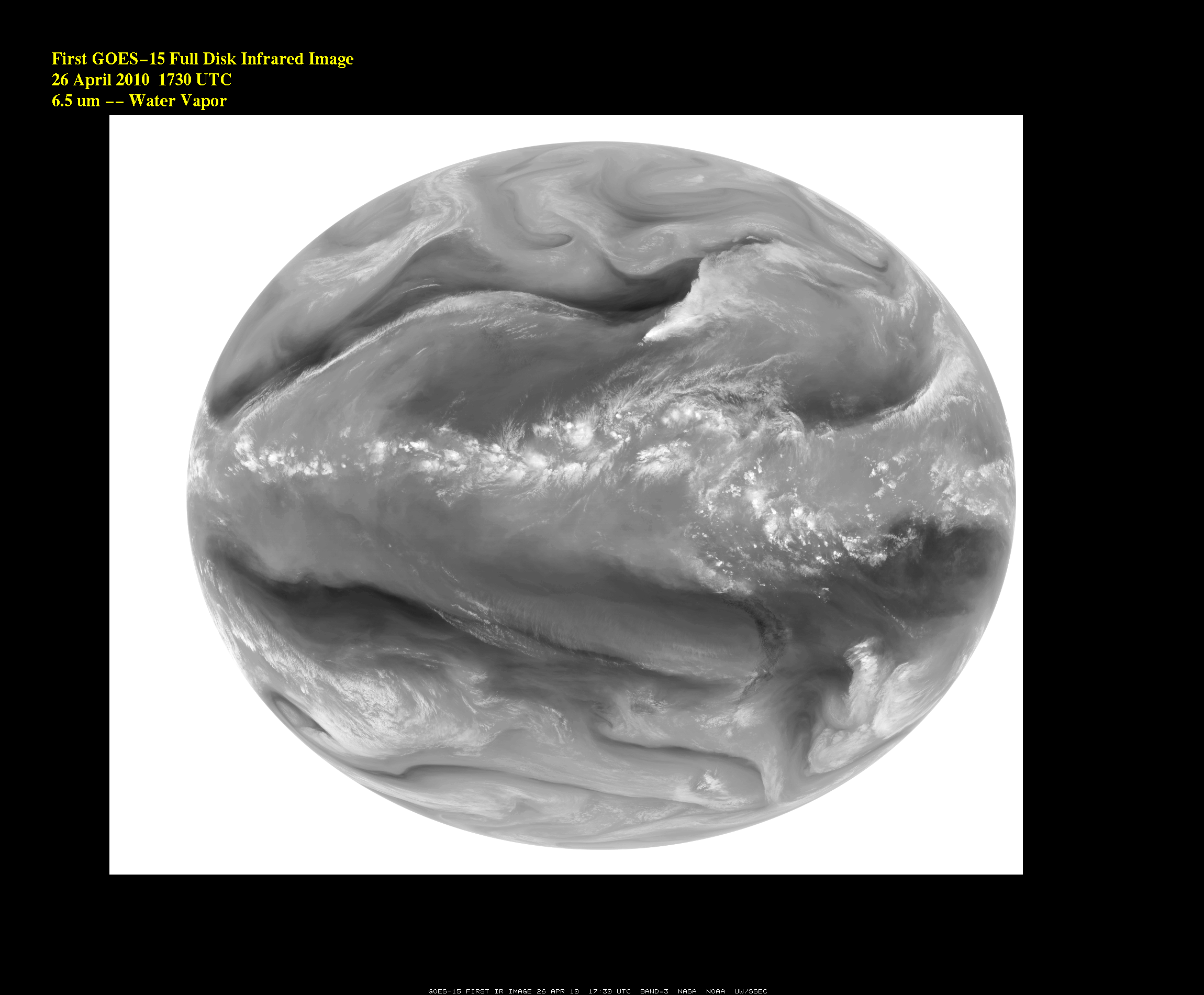
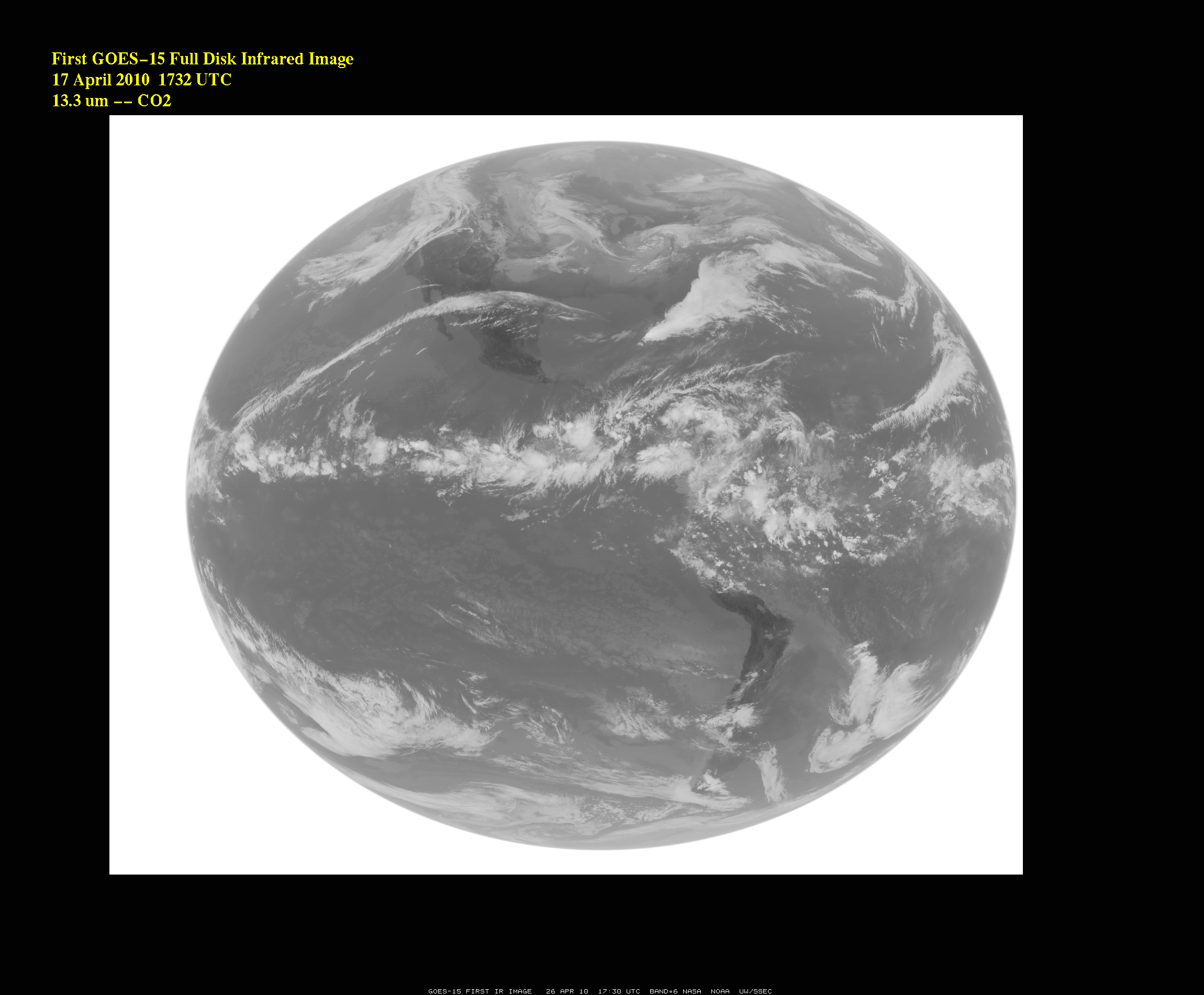
The first official GOES-15 full disk InfraRed (IR) images became available at 17:30 UTC on 26 April 2010. The GOES-15 Imager 10.7 µm longwave IR image is shown above – similar images are available for the 0.65 µm visible channel, the 3.9 µm shortwave IR, the 6.5 µm water vapor channel, and the 13.3 µm CO2 channel.

GOES-15 was launched on 04 March 2010, with the first visible images from the Imager instrument available on 06 April and from the first visible images from the Sounder instrument on 08 April. GOES-15 will have a Post Launch Test beginning in August 2010.

Color-enhanced GOES-15 IR images

GOES-15 multi-panel display of the Imager visible and IR channels

A multi-panel display showing all 5 of the  GOES-15 Imager channels is shown above. For comparison purposes, a similar multi-panel display  of all five of the GOES-13 Imager channels is shown below.

GOES-13 multi-panel display of the Imager visible and IR channels

GOES-13 multi-panel display of the Imager visible and IR channels

===================================================

GOES-13 and GOES-15 10.7 µm IR images

GOES-13 and GOES-15 10.7 µm longwave IR images

Some close-up comparisons of GOES-13 and GOES-15 IR images show similar results from the two satellites. The image above uses GOES-13 and GOES-15 10.7 µm longwave IR channel data to display a cluster of strong convection over the far eastern Gulf of Mexico, between Florida and Cuba — the coldest 10.7 µm IR brightness temperatures seen were 196.2 K (-77.0º C) on GOES-13, vs 194.9 K (-78.3º C) on GOES-15.

The image below is a comparison of the 13.3 µm CO2 channels. Note that the Field of View (FOV) of the 13.3 µm CO2 channel has improved from 8 km on GOES-13 to 4 km on GOES-15 — as a result, the edges of cloud features now appear much smoother on the GOES-15 13.3 µm image.

GOES-13 and GOES-15 13.3 µm CO2 channel images

GOES-13 and GOES-15 13.3 µm CO2 channel images

Looking farther to the west, the image below shows the Gulf of Mexico Loop Current, using the 3.9 µm shortwave IR channel data from GOES-13 and GOES-15. AWIPS images of the Sea Surface Temperature (SST) products from MODIS and AVHRR indicated that the SST values were as warm as 80º F within the Loop Current, surrounded by waters with SST values in the 70-75º F range.

GOES-13 and GOES-15 3.9 µm shortwave IR images

GOES-13 and GOES-15 3.9 µm shortwave IR images

===================================================

GOES-13 and GOES-15 6.5 µm water vapor images

GOES-13 and GOES-15 6.5 µm water vapor images

A comparison of the GOES-13 and GOES-15 6.5 µm water vapor channels (above) showed a pocket of very dry air (yellow to orange color enhancement) to the north of the aforementioned strong convection located between Florida and Cuba. This dry air was a signature of a well-defined  “jet stream break”, as verified by GFS model 250 hPa wind speed isotachs (below).

GOES-13 water vapor image + GFS 250 hPa wind speed isotachs

GOES-13 water vapor image + GFS 250 hPa wind speed isotachs