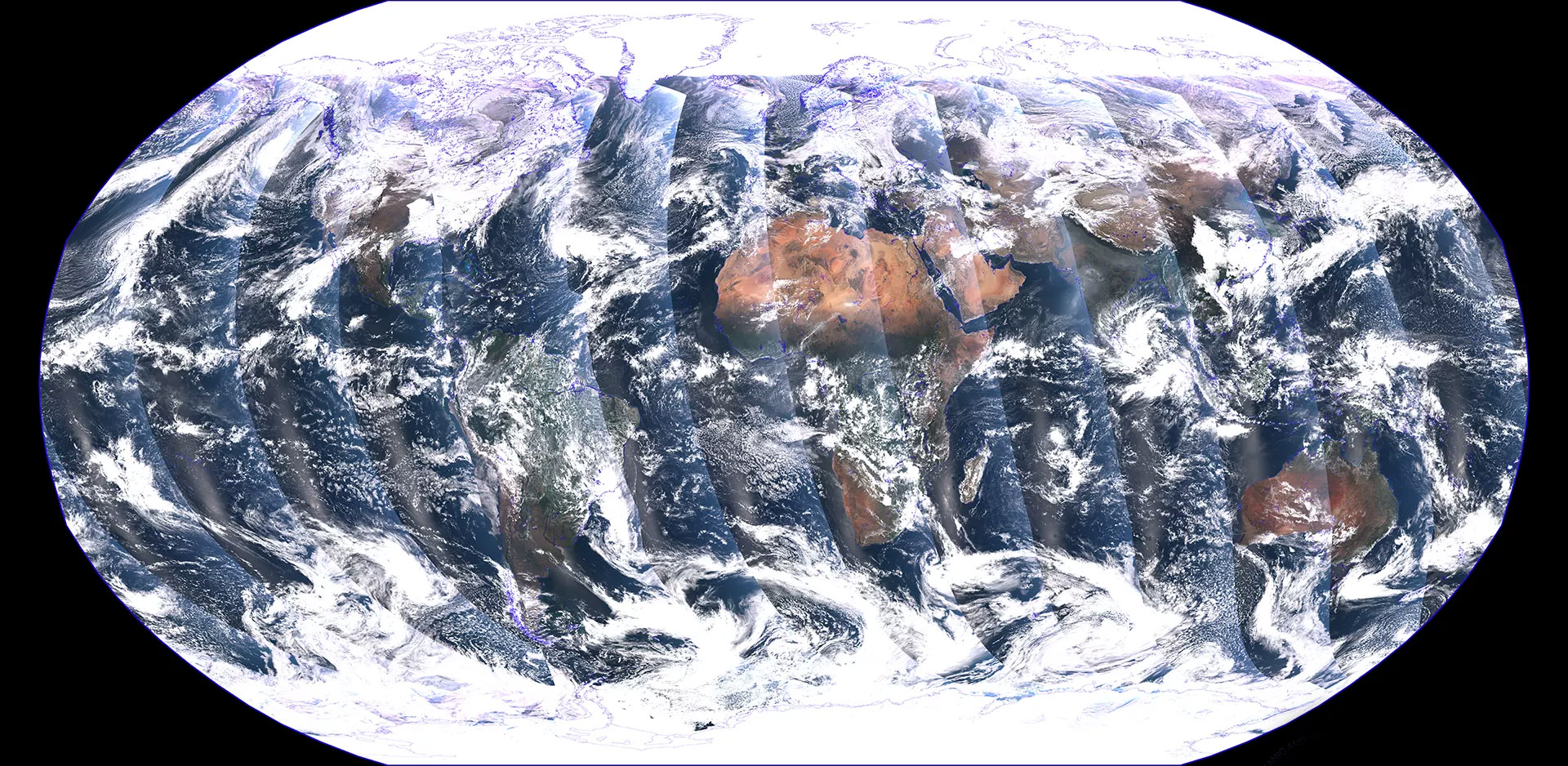
ITWG ATOVS monitoring page

Monitoring websites

The following links can be used to visit and compare monitoring of the fit of ATOVS, SSM/I and AIRS radiances against short range (six hour) forecasts from NWP

The following links can be used to visit and compare monitoring of the fit of ATOVS, SSM/I and AIRS data coverage in NWP data assimilation systems.

The following link can be used to check the consistency of global and EARS ATOVS data.

The following link can be used to compare observational sensitivities in an operational NRL NWP system.

The NWP SAF ATOVS monitoring webpagealso gives monitoring for a wide range of satellite data including data from other instruments which are relevant to ITWG but not directly covered by ITWG activities.

The NOAA POES status webpage gives channel by channel status for ATOVS instruments.  The NWP WG of ITWG maintains a list of channel by channel usage for ATOVS and assumed observation errors. This is described in the NWP WG website section on Observation errors.

Discussion of satellite radiance monitoring at NWP centre

At the ATOVS workshop at ECMWF in 1999 agreement was reached on what should be monitored on external websites for ATOVS.

Mean and standard deviation of Observed - Background and Bias corrected observed - background for the regions 90N-70N, 70N-20N, 20N-20S, 20S-70S, 70S-90S. Ideally monitoring would also be presented separately for sea, land and sea ice. Some centres might choose to monitor all data and data following quality control but some only monitor data after quality control. In the latter case it may depend very much what the quality control does as to what the monitoring looks like. For example some recent data problems have not been visible in every centre's monitoring because in some centre's monitoring the bad data is already excluded whereas in another centre's monitoring it is still included. Therefore centres were urged to make it very clear what quality control and data selection they used in producing their monitoring reports. The length of time shown in monitoring plots varies from one month to two years. Again some centres offer a choice of a short and long time period plot. A minority of websites also included scan dependent bias plots. Some websites average data over 24 hours, others 6 hours and again some offer a choice.

The format of plots varies but the main problem in comparing them is taking account of the variations in paragraph 1. Broadly speaking though it should be possible to achieve an "observation-forecast" standard deviation of difference for a tropospheric sounding channels after bias correction and appropriate quality control to under 0.15 K with negligible bias. Near surface and upper tropospheric and stratospheric sounding channels will fit much less well. Near surface channels fit will depend very much on choice of surface emissivity scheme and cloud detection and quality control, but will probably be of order 1 K standard deviation. Stratospheric channels will have a rising standard deviation of fit with increasing altitude, reaching several kelvin for channels peaking above 10 hPa. If any centres results are very far from these values it may be a cause for concern.

There are few sources of literature for ATOVS monitoring...suggestions for additions would be very welcome!