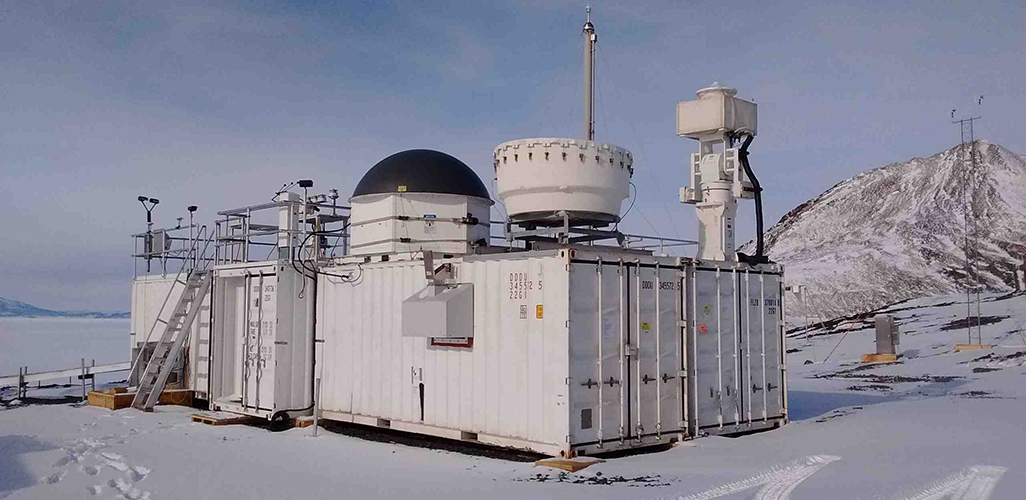
AERI Temperature and Water Vapor Research


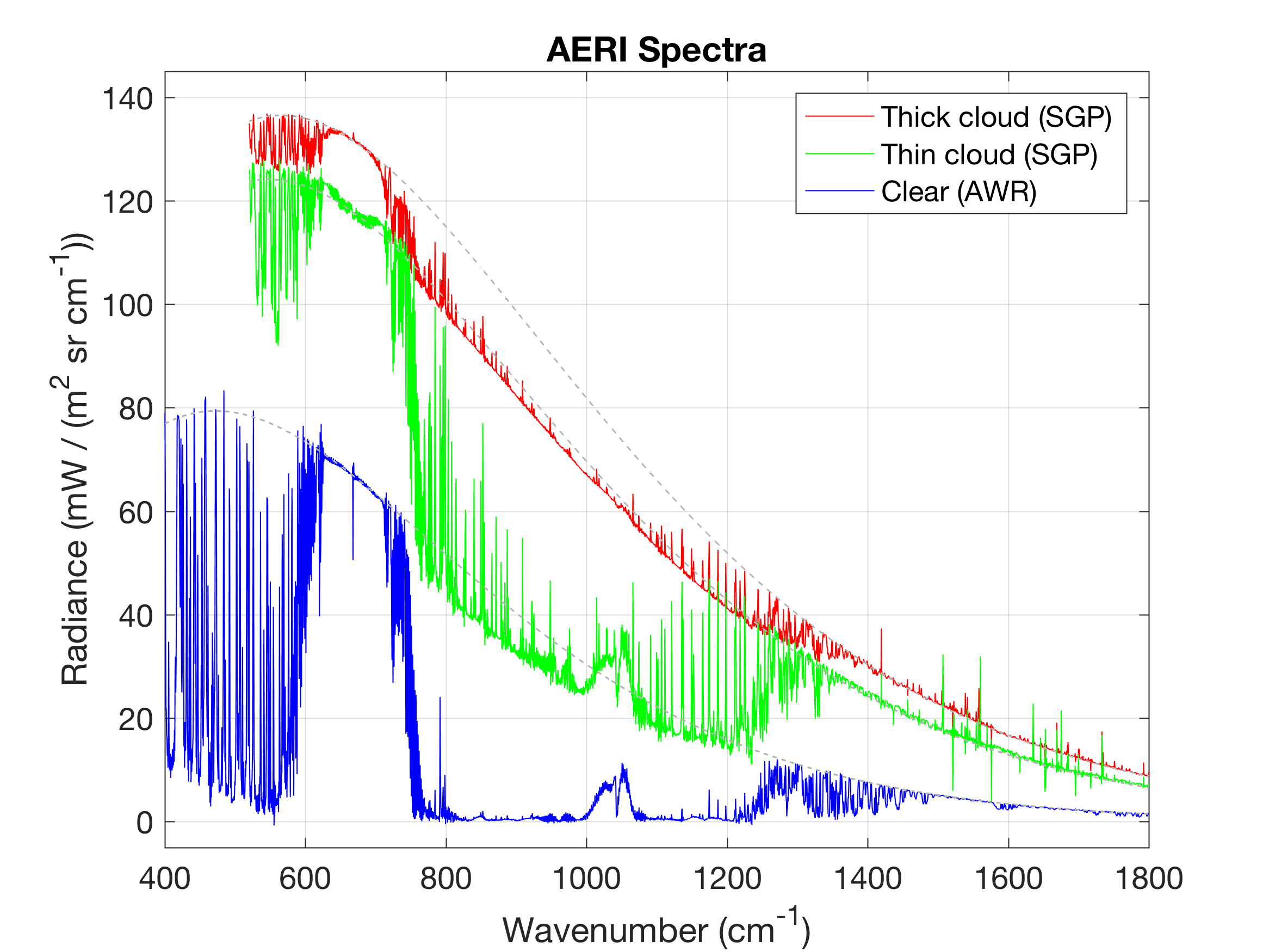
AERI Channel 1 Spectrum

Figure 1: Observation of radiance vs wavenumber showing both marine and continental climates.

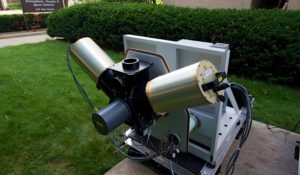
The Atmospheric Emitted Radiance Interferometer (AERI) is used to produce temperature and water vapor profiles every ten minutes in the Planetary Boundary Layer (PBL), the lowest 3 km of the earth's atmosphere. AERI measures infrared (IR) radiation (3 to 18 um) passively, yielding High Resolution Radiance Spectra (less than 1 cm-1) (Figure 1). The spectra are transformed to vertical temperature and water vapor profiles by inverting the IR Radiative Transfer Equation (RTE). Several field experiments have confirmed AERI's high temperature and water vapor retrieval skill in the PBL.


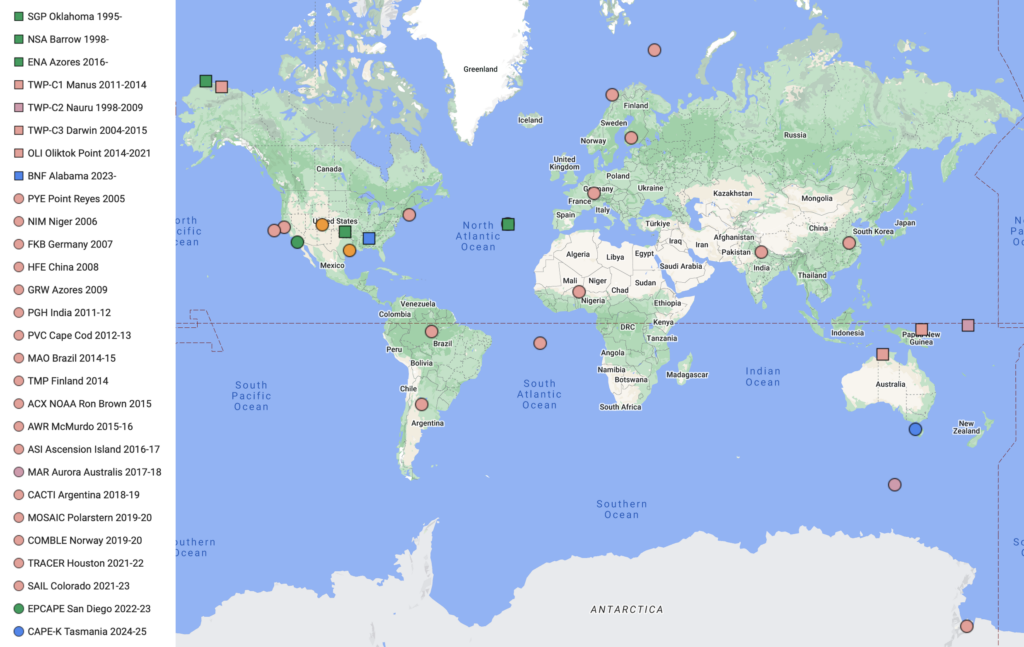
In addition to the wealth of data provided by past field campaigns, AERI is currently operating continously at the DOE Atmospheric Radiation Measurement Program's Southern Great Plains Cloud and Radiation Testbed (ARM SGPCART) near Lamont, Oklahoma.   Real-time temperature and water vapor retrievals as well as derived products are available on the AERI real-time web page.


AERI Physical Retrieval Calculation


Calculation of an AERI physical retrieval requires a first guess of atmospheric state. A temperature and water vapor profile is obtained by statistical regression from a two year collection of clear radiosondes. A fastmodel calculation is applied to each radiosonde case, thereby arriving at a theoretical calculation at AERI's spectral resolution. Then, a regression is applied between these theoretical calculations and the matching radiosonde temperature and water vapor profiles. The regression coefficients allow a first guess of atmospheric state at every AERI observation. Total precipitable water (tpw) is used as a predictor in the regression (calculated from radiosonde cases).  For this reason,  microwave radiometer or gps derived tpw can provide independent data thus improving the first guess.

This first guess is used for the physical retrieval algorithm. The approach iteratively satisfies the observed AERI spectrum from the first guess calculation. During each iteration the differences between observation and calculation are minimized, changing the first guess to allow the calculation to fit the observation in the lower PBL.


cart site gif
CART Retrieval Process

Figure 3: A flow chart of the AERI retrieval process at the SGP CART site.

Retrievals can also be calculated beneath clouds. The three requirements to obtain an accurate temperature and water vapor retrieval to cloud base are (retrieval schematic shown in figure 3):

  • cloud emissivity (calculated by the retrieval algorithm)
  • cloudbase (obtained by a concurrent Micropulse Lidar measurement)
  • good first guess (the last clear first guess)

AERIplus

At 3 km, AERI resolution degrades to 250 m.   Therefore, a statistical retrieval is combined with one of the following

  • a statistical regression of cloud-free radiosondes and a forward calculation at AERI spectral resolution using each radiosonde
  • hourly Geostationary Operational Environmental Satellite (GOES) Sounder temperature and water vapor  profiles
  • Rapid Update Cycle (RUC-2) Numerical Weather Prediction (NWP) model profiles 
  • temporally interpolated radiosonde temperature and moisture porfiles (if available) 

to provide a first guess of temperature and moisture to the AERI physical retrieval algorithm.  The retrieval product has been named AERIplus since the first guess used for the mathematical physical inversion uses an optimal combination of statistical climatology, satellite, and numerical model data to provide a best estimate of atmospheric state. 

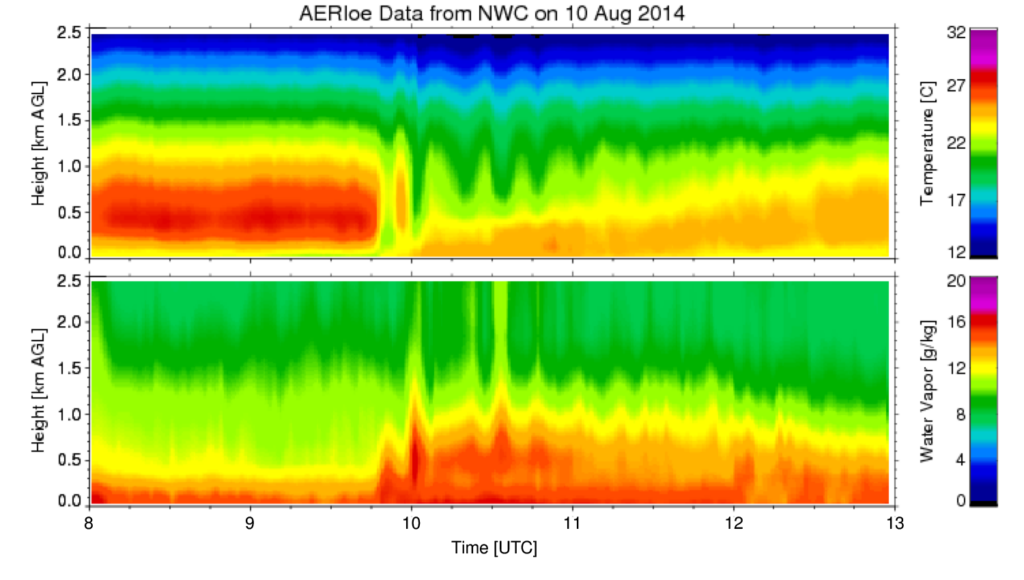
AERIplus provides a retrieval accuracy for temperature at better than one degree K.  The water vapor retrieval accuracy is approximately 5% in absolute water vapor compared to well calibrated radiosondes from the surface to an altitude of three kilometers.

AERI Data Highlights


Since AERI can monitor the thermodynamics where the atmosphere usually changes most rapidly, atmospheric stability tendency information is readily available from the system.  High temporal resolution retrieval of convective available potential energy (CAPE), convective inhibition (CIN), and PBL equivalent potential temperature are provided in near real-time from all five AERI systems at the ARM SGP site, offering a unique look at the atmospheric state.  In addition to observing boundary layer evolution, cold/warm frontal passages, dry lines, and thunderstorm outflow boundaries have also been observed.   This source of meteorological data has shown excellent skill in detecting rapid synoptic and mesoscale meteorological changes within clear atmospheric conditions.  Since AERplus data is useful for nowcasting temperature inversion strength and destabilization due to equivalent potential temperature advection, it is useful for operational weather and airport monitoring applications.  Currently, the National Weather Service conducts special radiosonde launches to determine inversion strength and stability information prior to significant convective initiation.  The AERIplus retrievals offer a way to monitor atmospheric stability at less than 10-minute temporal resolution, providing important tendency information and forecast lead-time.  Coupled with a wind profiler or Vertical Azimuth Display (VAD) winds from a Doppler radar within a network, moisture convergence calculations show promise to predict the onset of precipitation (Petersen et al. 2000)

The AERI instrument has been successful in the detection of several meteorological phenomena due to high retrieval accuracy and excellent temporal resolution.  Two case studies demonstrate how the AERIplus retrievals quantitatively monitored rapid atmospheric destabilization.

  • 24 May 1998
Figure 4 shows AERIplus water vapor retrievals in the PBL along with less than 10-minute temporal resolution parcel equivalent potential temperature, lifted index, CAPE, and CIN on 24 May 1998.  A cold front had moved through northern Oklahoma drying and stabilizing the atmosphere between 0000 and 1200 UTC.  The front moved back to the north as a warm front, indicated by the superimposed NOAA 404 MHz wind profiler wind barbs (winds veer from easterly to southeasterly between 1200 and 1600 UTC), and brought a rapid advection of moisture within the PBL between 1600 and 2400 UTC.

AERIplus water vapor mixing ratio
Figure 4:The upper panel shows a time-height cross section of AERIplus derived water vapor mixing ratio retrieved on 24 May 1998. 

Rapid destabilization of the atmosphere at less than 10-minute resolution is shown where the lifted index decreases from 0 C at 1200 UTC.  A swift rise in CAPE values from 1600 UTC to  2400 UTC indicates the rapid increase in energy available for explosive convection.  Most importantly the AERIplus retrievals provide an excellent methodology for monitoring the inversion inhibiting the thunderstorm development.  This is indicated by the CIN values near -900 J/kg at 1600 UTC and rapidly diminishing by 2400 UTC.  The decay of the CIN was not caused by erosion of the inversion but rather by a rapid moisture increase due to advection.  These data were derived entirely through remote sensing of the infrared spectrum.  In fact, no radiosondes were launched from the CART site on 24 May 1998.  A supercell developed northwest of the SGP site at 2330 UTC, spawning an F3 (on the Fujita-Pearson scale) intensity tornado that occurred within three miles of the site location.  Additional information can be found in Lehmiller et al. 2000.

  • 3 May 1999
On 3 May 1999 at least 63 tornadoes were reported in the states of Oklahoma and Kansas.  One F5 tornado tracked through the southern suburbs of Oklahoma City, destroying approximately 10,000 homes and businesses.  More than fifty people lost their lives in the states of Oklahoma and Kansas due to this outbreak (Speheger et al. 2002).

Convective Indicies
Figure 5:  Time series of equivalent potential temperature, CIN and CAPE derived from AERIplus retrievals for Purcell, Lamont and Vici, Oklahoma on 3 May 1999.  Circles indicate validation radiosonde data points.

Two of the AERI instruments, one in Lamont and the other in Purcell, Oklahoma, retrieved the decrease in convective inhibition (CIN) just prior to the onset of the severe convection.  Figure 5 (panel 2) indicates this trend in CIN first at Purcell between 1900 to 2100 UTC and next at Lamont in north-central Oklahoma between 2300 and 2400 UTC. The lowering of CIN at Purcell, between about 1900 and 2100 UTC, corresponds to the rapid development of thunderstorms in regions south and west of OKC.  The location and initiation time of the first supercell thunderstorms was southwest of Lawton, Oklahoma at approximately 2030 UTC.  At Lamont, CIN decreased gradually beginning at 1900 UTC to about 2300 UTC on 3 May, before a fast decline by 2330 UTC. It should be noted that while high temporal monitoring of CIN is useful for operational forecaster nowcasting, CIN is only one part of the thunderstorm initiation problem.  Parcel lift may be high enough to overcome CIN (Thompson and Edwards, 2000)

CIN can quickly decrease when there is

  • rapid destabilization due to PBL heating and moisture advection and/or 
  • rapid erosion of the temperature inversion  

The lowest average 100-hPa parcel equivalent potential temperature at Lamont and Purcell slowly increases (figure 5; panel 1).  There was a erosion of the temperature inversion leading to the resultant decrease in CIN in both the AERIplus retrievals as well as two radiosondes launched by the DOE ARM program on the afternoon of May 3, 1999.  In this case, the real-time AERI stability information would not have enhanced forecasters knowledge of exact thunderstorm development since the systems were not located near the Lawton, Oklahoma area.  However, stability tendency and AERI location stability comparisons may help the forecaster better define the region of expected convective development.  Additional information about this study can be found in Feltz and Mecikalski (2002).

In addition to observations of stability indices related to severe convective events.  AERI has robust observations of synoptic scale events in the planetary boundry layer:

  • Planetary Boundary Layer Evolution
Boundary Layer Evolution
inversion
  • Cold Frontal Passages

cold front cold front
  • Moisture Return Flow
moisture return flow

A more complete description of the AERIplus retreival and the AERI observations of stability indicies can be found in:

Feltz, W.F., W. L. Smith, H. B. Howell, R. O. Knuteson, H. Woolf, H. E. Revercomb, 2002:  Near continuous profiling of  temperature,    moisture, and atmospheric stability using the Atmospheric Emitted Radiance Interferometer (AERI).  Accepted to the J. Appl. Meteor.


Last updated June 18, 2004 by SSEC Webmaster